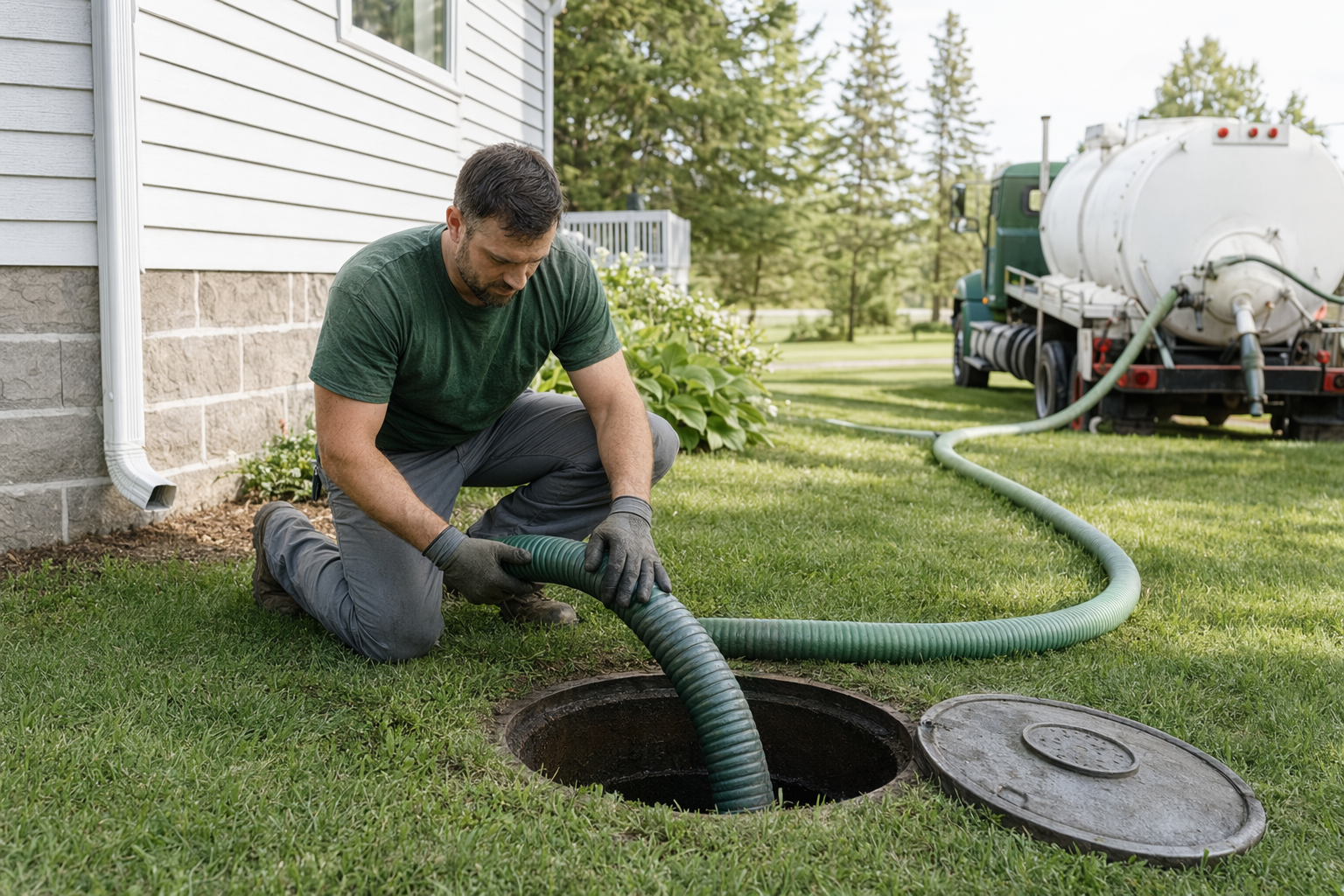
What Happens During a Septic Pump-Out
During a septic pump-out, a septic service truck comes to your home, finds and opens the tank access lids, and pumps out the waste inside the tank. That includes the floating scum layer, the liquid in the middle, and the sludge layer at the bottom.
A good visit is not only about removing waste. The pro may also do a basic visual check of the tank condition, baffles or tees, and liquid level. If they see signs of damage, root intrusion, backup, or possible drain field trouble, they should tell you what they observed and whether more diagnosis may be needed.
For many homeowners, pumping is routine maintenance. For others, it happens because of slow drains, odors, gurgling, or sewage backup. If you are seeing warning signs now, read Septic warning signs — slow drains, odors, gurgling, and wet spots in the yard. If sewage is backing up into the house, that is more urgent, and Emergency septic service — sewage backup, overflow, and what to do right now may be the better next step.
A pump-out can help restore tank capacity, but it does not guarantee that every septic problem will disappear. If the tank is not the only issue, more work may be needed.

The short answer
Here is the simple version:
- The company confirms the tank location and access lids.
- They uncover the lids if needed.
- They open the tank carefully.
- They pump out the contents with a vacuum hose.
- They may rinse or backflush solids so the tank empties more fully.
- They do a basic visual check for obvious issues.
- They close the lids securely and clean the area.
- They give you a service record or receipt.
A typical pump-out often takes about 20 minutes to an hour once the tank is accessible. Time varies with tank size, access, and whether there are signs of a bigger problem.
If you want more background on pumping schedules, timing, and typical ranges, see Septic tank pumping and cleaning — how often, what it costs, and how to find a pro.
What you need to know
A few things surprise homeowners the first time.
- The smell can be strong. That is normal while the tank is open.
- You may be asked to limit water use during the visit.
- If the lids are buried, digging to reach them can add time and cost.
- Pumping is maintenance, not a full repair.
- The pro may recommend an inspection if they see possible trouble.
It also helps to know what a pump-out does not do. It does not clean or rebuild a failed drain field. It does not prove the whole septic system is healthy. It does not replace permits or local rules for repair or replacement work.
If a pro says you may have a drain field issue, be cautious about quick promises. Failing systems can be health and groundwater hazards. Keep children and pets away from wet sewage areas, and do not try to fix a failed system yourself. Septic repairs and replacements often require permits and licensed or certified installers. Always verify the contractor's license, the permit requirements, and your local health department rules yourself.
Typical pumping prices vary by region, tank size, and access. There may also be extra charges for digging, filters, emergency calls, or difficult access. These are typical ranges, not quotes. Ask for the total price before work starts and get it in writing when you can.
If you are not even sure where your tank is, or whether lids are easy to reach, that is common. Many homeowners only learn this when service is needed.
Steps to take
If you think you need a pump-out, do these things first:
1. Watch for symptoms.
- Slow drains
- Toilet gurgling
- Sewage smell
- Wet or soggy areas near the system
2. Find any records you have.
- Last pumping date
- Tank size, if known
- Inspection reports
- A site plan, if you have one
3. Clear access if possible.
- Move cars away from the work area
- Unlock gates
- Keep pets and children inside
- Point out the tank location if you know it
4. Ask a few basic questions before booking.
- Is pumping the right first step, or should it be inspected first?
- What is included in the service?
- Is digging extra?
- Will they check filters, baffles, or tees if accessible?
- What is the full expected price range before work starts?
5. Get written details.
- Company name
- Scope of work
- Price or price range
- Any extra fees
- Notes about what they found
If you are weighing maintenance versus diagnosis, Pump First or Inspect First? can help. If you want to compare local options, Get matched with a trusted septic pro is the fastest next step.
Common mistakes
These are the big ones to avoid:
- Waiting too long. Small warning signs can turn into backups or yard flooding.
- Assuming pumping fixes everything. It may help, but some systems need inspection or repair.
- Choosing only by the lowest price. A very low price may not include digging, filters, or proper service notes.
- Not confirming access. Buried lids can delay the visit and change the price.
- Driving heavy vehicles over the tank or drain field. That can damage the system.
- Letting children or pets near sewage, wet soil, or open lids.
- Trying to pump your own tank. That is unsafe and not a good DIY job.
- Forgetting to ask for records. Your receipt and notes matter for future service and home resale.
Another common mistake is treating additives like a substitute for pumping. In general, regular maintenance matters more than miracle products. Good habits, careful flushing, and timely service usually do more to protect the system.
If you have ongoing backup, strong indoor odor, or wet ground over the drain field after pumping, you may need more than maintenance. In that case, ask whether inspection or drain field diagnosis is the next step, not just another pump-out.
Get matched with a pro
If you need septic pumping, Leachstead can help you compare your next step. We are a free matching and information service for homeowners, not a septic company.
You tell us what is going on, in your language. We help you get matched with local septic pros for pumping, inspection, repair, and other Septic services we help you find a pro for. You compare options, confirm the price before work starts, and choose what works for you.
If a problem seems urgent, say that clearly when you request help. If it is routine maintenance, mention your last pumping date if you know it. Either way, ask for written pricing, what is included, and whether any permits or licensed installation work could be required if a bigger issue is found.
Start here, Get matched with a trusted septic pro.
Common questions
Do I need to be home during a septic pump-out?
Often yes, or at least available by phone, especially if the tank location is unclear or the pro needs approval for added digging or access work. Some companies can do routine pumping without you there if access is simple and arranged in advance.
Will a septic pump-out fix slow drains and bad smells right away?
Sometimes, but not always. If the tank was overdue for pumping, symptoms may improve. But slow drains, odors, or backups can also come from clogs, damaged parts, or drain field problems. Pumping is maintenance, not a guarantee that the whole system is fine.
How often should a septic tank be pumped?
It depends on tank size, household size, water use, and what goes down the drains. Many homes need pumping every 3 to 5 years, but some need it sooner or later. Service records and a local pro's recommendation can help you set the right schedule.