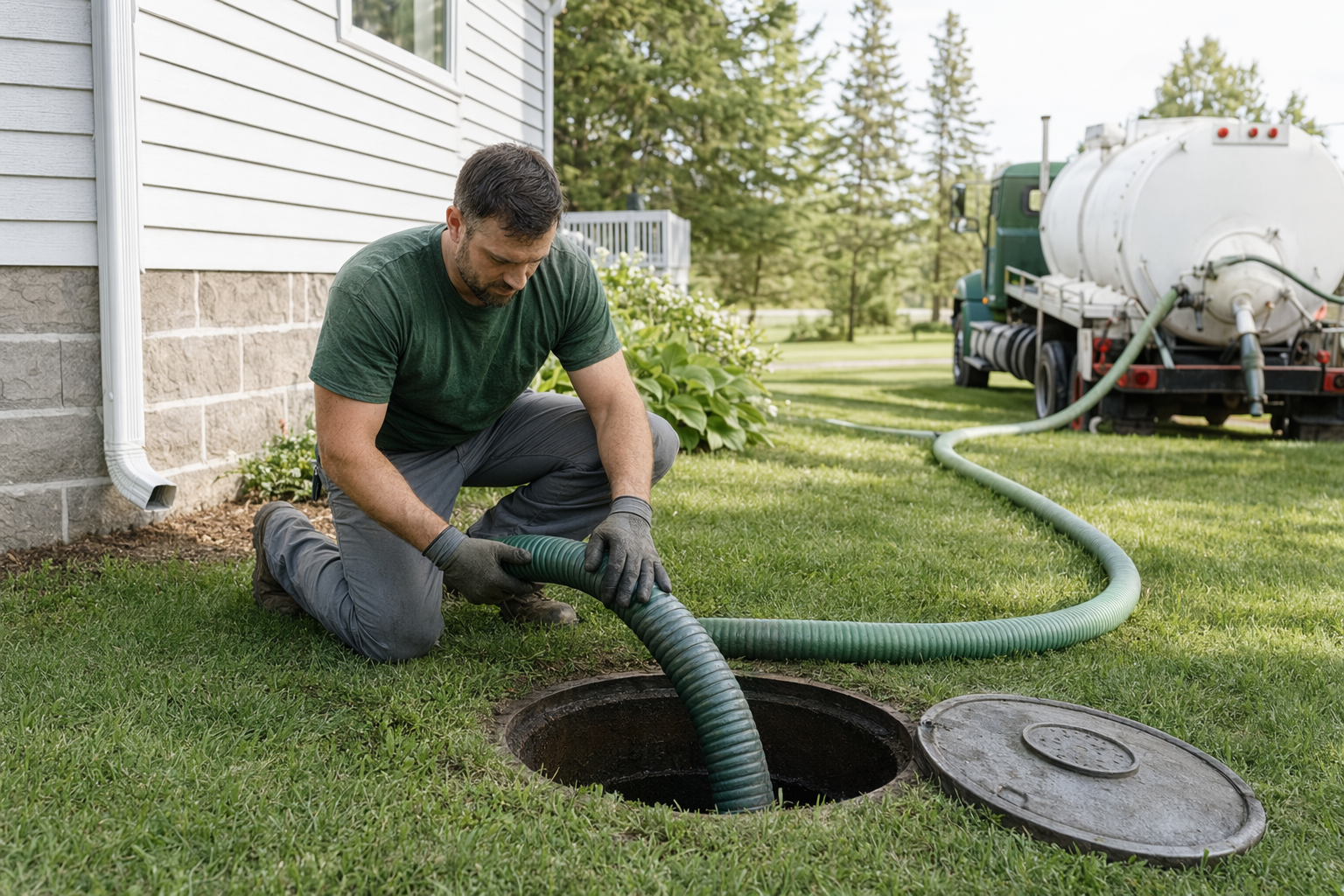
Signs my septic tank is full
Common signs include:
- Sinks, tubs, and showers draining slowly in more than one part of the house
- Toilets flushing slowly or making gurgling sounds
- Sewage smell inside, near the tank, or near the drain field
- Wastewater backing up into tubs, showers, or floor drains
- Extra-green grass or a wet, soggy patch over the tank or drain field
- The need to pump more often than usual
A full tank is one possible cause. But these signs do not prove the tank alone is the issue. They can also point to a clogged line, a blocked baffle, a flooded or failing drain field, tree roots, or too much water use in a short time.
If you are seeing several warning signs at once, read more on septic warning signs and treat it as a problem that needs attention soon.

The short answer
Yes, a full septic tank can cause slow drains, odors, gurgling, and backups. If your tank is overdue for pumping, pumping may help. But if wastewater is coming back into the house, or the yard is wet and smells like sewage, the problem may be bigger than a full tank.
The safest simple rule is this:
- If there is sewage backup or overflow, stop sending water into the system.
- Keep children and pets away from wet or contaminated areas.
- Call a licensed septic professional to inspect the system and explain what they found.
A pump-out can be routine maintenance. It can also be part of diagnosing a larger problem. You do not want to guess.
What you need to know
A septic system has a tank and a drain field. The tank holds wastewater long enough for solids to settle. The liquid then moves out to the drain field. Over time, solids build up in the tank, which is why tanks need periodic pumping.
Here is the important part: when a tank gets too full, solids can move where they should not go. That can affect the rest of the system. Also, a system can show “full tank” symptoms even when the real problem is downstream in the drain field.
A few things can make symptoms worse:
- Too much water use, like many loads of laundry in one day
- Wipes, grease, paper towels, or other items that should not be flushed
- Long gaps between pump-outs
- Heavy rain or high groundwater around the drain field
- Old, damaged, or poorly maintained parts
If you are not sure when the tank was last pumped, that alone is useful information. Many homes need pumping every few years, but there is no one schedule that fits every home. Tank size, household size, water use, and what goes down the drains all matter. See septic tank pumping for a practical overview.
Also remember, pumping is not a cure-all. If the drain field is saturated or failing, pumping may give only short-term relief. A proper inspection can help sort out whether you need maintenance, repair, or more testing. Local rules often require permits and licensed or certified septic work, so always verify the contractor's license, the permit, and your local health-department requirements yourself.
Steps to take
If you think your septic tank is full, stay calm and do the basics first.
- Use less water right away. Stop long showers, laundry, dishwasher cycles, and extra toilet flushing.
- Watch for sewage backup. If wastewater is backing up into the home, treat it like an urgent problem.
- Keep people and animals away. Raw sewage and wet drain-field areas can carry germs and can affect groundwater.
- Do not open the tank yourself. Septic tanks contain dangerous gases and can be deadly. Do not lean over an open tank or try a DIY fix on a failing system.
- Call a licensed septic pro. Ask whether they recommend pumping, inspection, or both based on your symptoms.
- Get the price in writing before work starts. Ask what is included, what is not, and whether there may be added charges for digging, access, filters, or repairs.
- Keep records. Save the date, company name, findings, and any photos or paperwork.
If there is active backup or overflow, see emergency septic service. If you are ready to compare local options, you can get matched with a trusted septic pro.
Typical pumping ranges vary by location, tank size, access, and condition. They are not quotes. A written quote before work starts is the safer move.
Common mistakes
These mistakes can make a bad day worse:
- Waiting too long. Slow drains and odors are early warnings. Ignoring them can lead to a backup.
- Assuming it is always “just a full tank.” Sometimes pumping helps. Sometimes the real problem is a damaged line or drain field.
- Using additives as a shortcut. Additives and treatments are not a guaranteed fix for a full or failing system.
- Overloading the system with water. Doing laundry, long showers, and dishwashing all at once can push a stressed system harder.
- Flushing the wrong things. Wipes, grease, feminine products, cat litter, and paper towels do not belong in a septic system.
- Trying to pump or repair it yourself. Septic work can be dangerous and often requires permits and licensed professionals.
- Not checking credentials. Before work begins, verify the license, insurance, permit needs, and local rules yourself.
For more quick homeowner answers, visit Quick septic answers or browse septic services to understand the difference between pumping, inspection, and repair.
Get matched with a pro
Leachstead is a free matching and information service. We are not a septic company, and we do not perform pumping, inspections, or repairs. We help homeowners compare local septic professionals and understand the next step.
If you are dealing with slow drains, odors, a soggy yard, or a backup, you can get matched for free. You compare options, ask questions, confirm price before work starts, and choose who to hire.
Good questions to ask a pro:
- Do my symptoms suggest pumping, inspection, or possible drain-field trouble?
- What is included in the visit?
- Will I get written findings or photos?
- Are permits required for any repair work?
- Are you licensed or certified for septic work in my area?
You do not need to feel embarrassed. Septic problems are common, and early action usually gives you more options.
Common questions
Can a septic tank be full even if only one drain is slow?
Maybe, but one slow drain is often a local plumbing clog rather than a whole septic-system problem. A septic issue is more likely when several drains are slow, toilets gurgle, odors appear, or wastewater backs up.
If I pump the tank, will that fix the problem for sure?
Not always. Pumping can help if the tank is overdue for maintenance, but it does not guarantee the whole system is healthy. If the drain field is saturated, damaged, or failing, symptoms may return and more inspection may be needed.
Is a wet spot in the yard always a sign my tank is full?
No. A wet or smelly area can mean septic trouble, but it may point to the drain field, a leak, surface water, or another issue. Keep children and pets away from the area and have a licensed septic professional evaluate it.