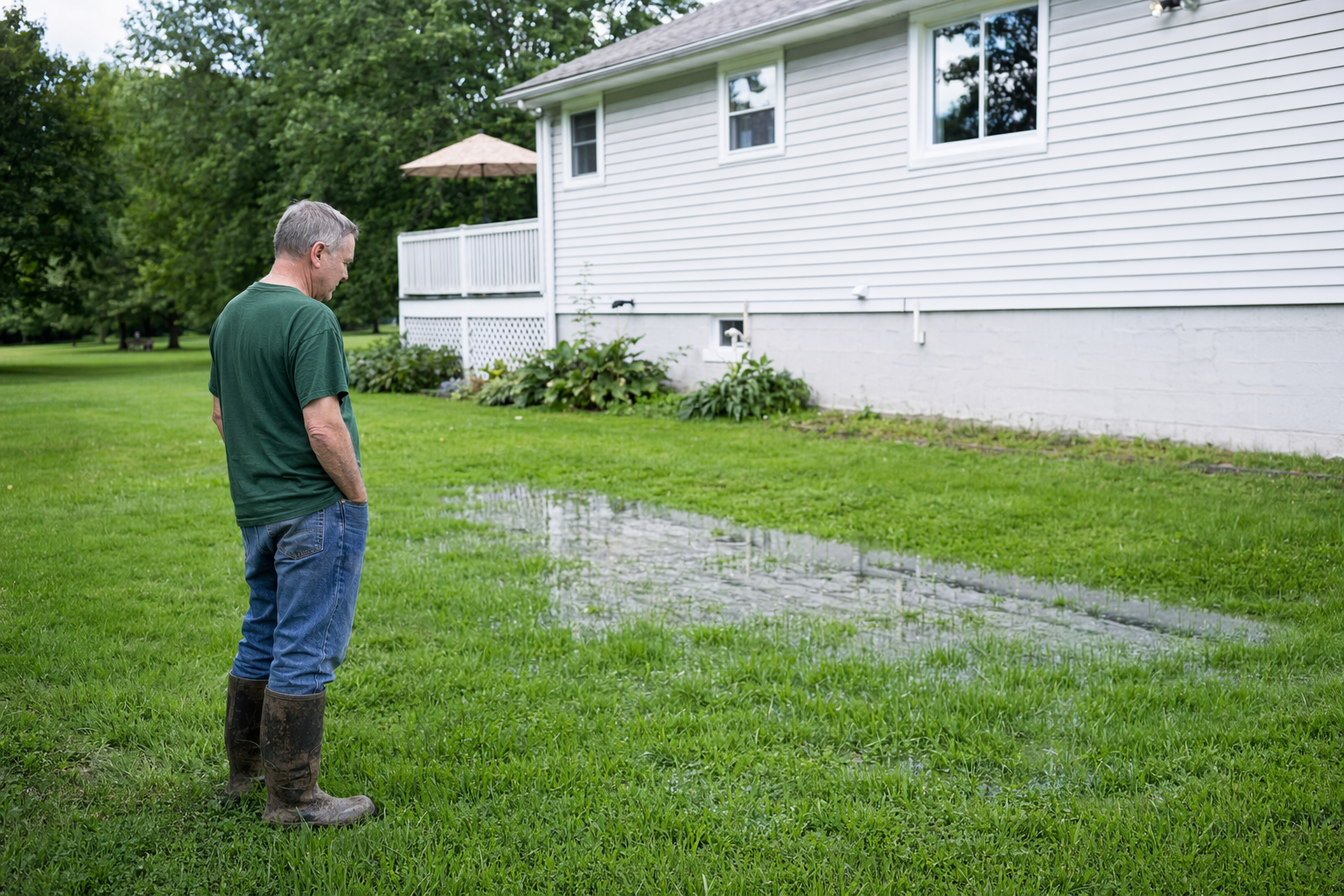
Septic warning signs to take seriously
A septic system often gives you clues before it fails completely. The hard part is that each clue can look small on its own. A slow sink might seem like a simple clog. A bad smell outside might seem like weather. But when these signs keep happening, or show up together, they can point to a septic problem.
Common warning signs include:
- Drains that are slow in more than one fixture
- Toilets that gurgle, bubble, or flush sluggishly
- Sewage odors inside the house or near the tank or drain field
- Water or sewage backing up into tubs, showers, or floor drains
- Bright green, extra lush, or soggy patches in the yard
- Standing water near the drain field, especially in dry weather
- A high-level alarm on an aerobic or pump system
One symptom alone does not always prove septic trouble. A single slow sink can still be a local clog. But if multiple drains are slow, toilets gurgle when water runs elsewhere, or you smell sewage and see wet ground outside, treat that as a real warning.
If sewage is backing up into the home, or you have standing wastewater in the yard, keep children and pets away and get help now. Raw sewage is a health hazard. Leachstead is a free matching service, not a septic company, but you can get matched with a local septic pro for pumping, inspection, or repair.

Why it matters
Septic problems rarely get cheaper by waiting. A minor issue can become a messy emergency.
Here is why early action matters:
- Health and safety. Raw sewage can carry harmful bacteria and contaminate surfaces, soil, and nearby water.
- Home damage. Backups can damage flooring, drywall, trim, and personal belongings.
- Fewer repair options. A system that might have been helped by pumping, cleaning a filter, or fixing a broken part can move closer to drain field failure if ignored.
- Higher costs. Typical ranges, not quotes, can go from a few hundred dollars for routine pumping to thousands for repairs, and much more for full replacement.
Typical US ranges homeowners often see are:
- Routine pumping, about $300 to $700
- Septic inspection, about $250 to $600 depending on scope and region
- Some repairs, from several hundred to several thousand dollars
- Drain field work, often $2,000 to $15,000+ depending on what is wrong
- Full system replacement, often $8,000 to $25,000+, sometimes higher for difficult sites or alternative systems
Those are typical ranges, not quotes. Final price depends on your tank size, access, soil, groundwater, permits, local rules, and what the inspection actually finds. It is smart to compare written estimates and confirm the price before work starts. For broader ranges, see our septic cost guide.
Sometimes repair is possible. Sometimes replacement is the honest answer, especially with a badly failed or undersized system. A trustworthy pro should explain what they found, what is likely causing it, and what options you have without making unrealistic promises.
How a septic system works, and why warning signs show up
A basic septic system has two main parts, the tank and the drain field.
- The tank holds wastewater long enough for solids to settle and oils to float.
- The drain field sends partially treated water into soil, where it filters and disperses.
When everything is working, wastewater moves through the house plumbing, into the tank, and then out to the drain field at a steady pace.
Warning signs appear when that flow is interrupted.
Common causes include:
- The tank is overdue for pumping. Too much sludge or scum leaves less room for wastewater.
- There is a clog. It may be in house plumbing, the inlet or outlet baffle, the effluent filter, or the line to the tank.
- The drain field is saturated or failing. Water cannot soak into the soil the way it should.
- Too much water is entering too fast. Long showers, leaking toilets, and many loads of laundry in one day can overload the system.
- A component failed. Pumps, floats, alarms, filters, or other parts can stop working.
- The system was damaged. Driving over the drain field, building on it, or root intrusion can cause serious trouble.
That is why the same few symptoms show up again and again. Slow drains, gurgling, smells, and wet spots all point to wastewater not moving where it should.
If you want a simple overview of the parts, read how a septic system works.
What to watch for inside and outside the home
Here is what homeowners most often notice first.
Inside the house
- Slow drains in several fixtures. If the shower, sink, and toilet are all acting up, think bigger than a single clog.
- Toilet gurgling or bubbling. Air can get pushed back through the plumbing when wastewater has trouble moving out.
- Bad odors. A sewage smell in bathrooms, the basement, or near drains should not be ignored.
- Backups into the lowest drain. Wastewater often shows up first in a basement shower, tub, or floor drain.
Outside the house
- Soggy or spongy ground. Wet soil over the drain field, especially when it has not rained much, is a serious sign.
- Standing water. Puddles near the tank or drain field can mean the system is overwhelmed or failing.
- Unusually green grass. Extra lush growth can happen when wastewater is surfacing where it should not.
- Outdoor sewage odor. A persistent smell near the tank, lids, or drain field deserves attention.
Alarm or electrical warning signs
Some systems have pumps, floats, or alarms. If an alarm goes off, do not ignore it. Reduce water use right away and call for service. The problem may be electrical, mechanical, or related to the tank or field.
What makes a warning sign more urgent
Call sooner rather than later if:
- The problem is getting worse day by day
- More than one symptom is happening at once
- Wastewater is visible indoors or outdoors
- The yard is wet and smells like sewage
- You have a private well nearby
- Heavy rain makes the problem much worse every time
If you are not sure whether you need pumping, an inspection, or emergency help, visit services to see the kinds of septic help homeowners commonly need.
Common mistakes homeowners make
People often wait because they hope the problem will go away on its own. That is understandable, but it can make things worse.
Common mistakes include:
- Assuming it is just one drain. A septic issue can look like a plumbing clog at first.
- Using lots of chemical drain cleaners. These rarely solve a septic problem and can create other issues.
- Pumping and assuming that fixes everything forever. Pumping helps if the tank is too full, but it does not repair a failed drain field, broken baffle, crushed line, or bad pump.
- Ignoring wet yard spots after rain season ends. If the area stays wet in dry weather, pay attention.
- Driving or parking over the drain field. This can compact soil or damage pipes.
- Overloading the system with water. A leaking toilet or marathon laundry day can push a stressed system over the edge.
- Trying DIY repairs on a failed system. A failing drain field or sewage backup is not a safe home project.
A few practical steps are okay while you wait for help:
- Use as little water as possible
- Stop laundry and long showers
- Keep people, pets, and vehicles away from wet or smelly areas
- If sewage is indoors, avoid contact and limit access
But do not dig into the system, open tanks carelessly, enter a tank, or try to rebuild a drain field yourself. Septic work often requires permits and licensed or certified installers, and rules vary by county and state. Always verify the contractor's license, the permit, and your local health-department requirements yourself. For routine care that helps prevent future trouble, see septic maintenance.
When to get matched with a pro
You do not need to panic over one slow sink. But you should get help when the signs point to a system problem, not just a simple clog.
A good time to get matched with a pro is when:
- Two or more drains are slow
- Toilets gurgle when sinks, showers, or laundry run
- You smell sewage inside or outside
- You see wet, lush, or soggy patches over the drain field
- You have had no pumping in several years and symptoms are starting
- An alarm is sounding on a pump or aerobic system
- Wastewater backs up into the home
The right service depends on the symptom:
- Possible full tank or overdue maintenance: Septic tank pumping
- Need to understand what is wrong: Septic inspection
- Wet yard, saturated field, or suspected field failure: Drain field repair
- Backup or overflow happening now: emergency septic service is often the right next step
If a pro says replacement may be needed, that can be true. Some systems are too damaged, too old, or too poorly sited to keep patching. In those cases, replacement may protect the home and the property better than repeated short-term fixes. But do not feel pressured to agree on the spot. Ask what they found, what tests support that opinion, whether permits are required, and what repair options still exist.
Leachstead does not perform septic work or approve contractors. We are a free information and matching service. You compare options and choose. If you are ready, get matched with a local septic professional and ask for a written estimate before work begins.
Common questions
Can slow drains mean my septic tank is full?
Yes, they can, especially if more than one drain is slow at the same time. But slow drains can also come from a plumbing clog, a blocked filter, a line problem, or a failing drain field. A pump-out may help if the tank is overdue, but it is not the answer to every septic problem.
Is a wet spot in the yard always a septic failure?
Not always. Irrigation, drainage problems, or recent heavy rain can also leave wet ground. But a soggy or extra-green area over the drain field, especially with sewage odor or in dry weather, is an important warning sign. Keep children and pets away and have it checked.
Should I call for pumping or an inspection first?
It depends on the symptoms and maintenance history. If the tank is overdue for routine service, pumping may be a reasonable first step. If you have repeated problems, wet yard spots, alarms, or signs of drain field trouble, an inspection may be more useful. A local septic pro can explain which service fits your situation.