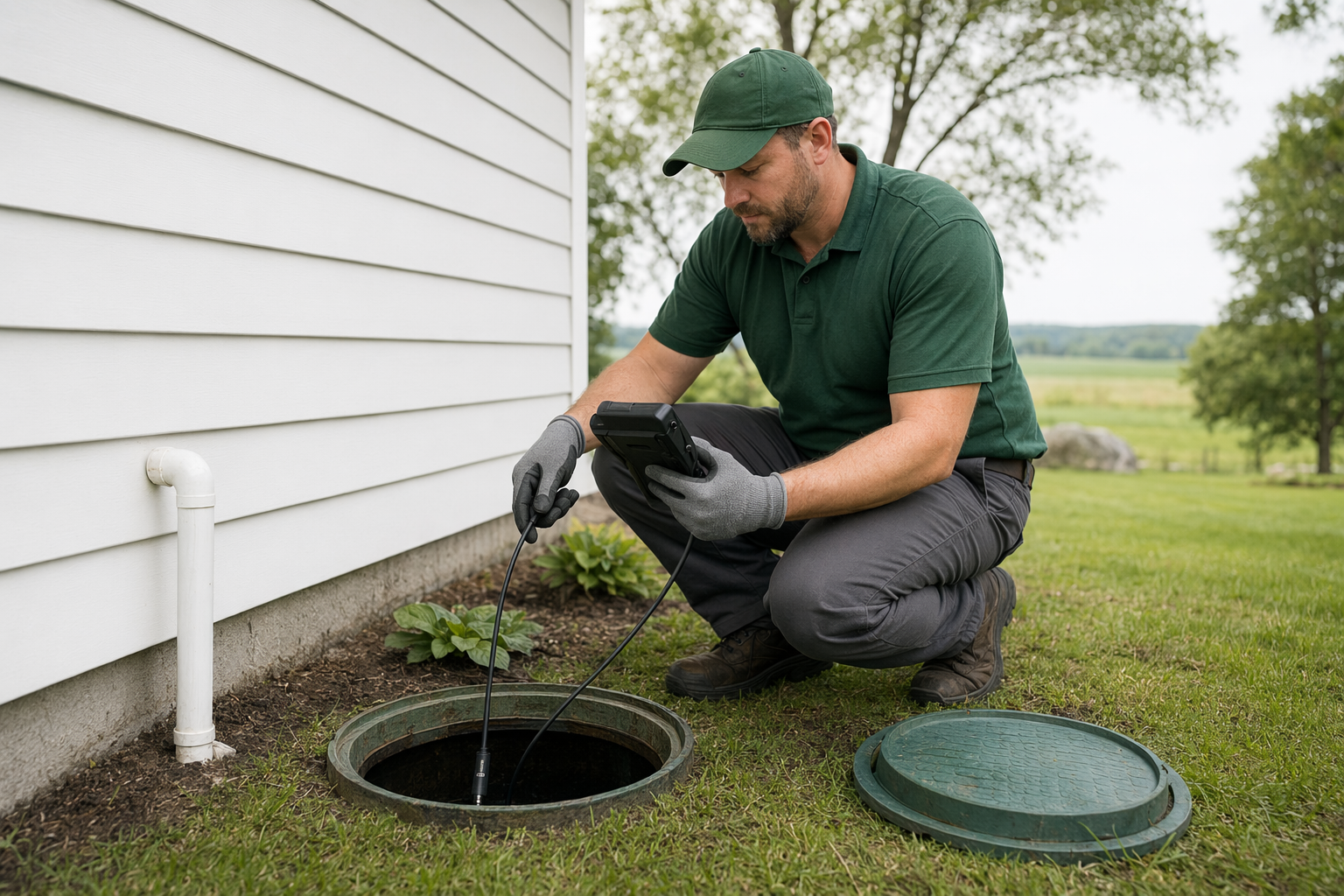
Pump first or inspect first?
For routine maintenance, pumping first usually makes sense. If the tank is due, or you have not pumped in years, a pump-out may be the normal next step.
For a mystery problem, repeated backup, soggy yard, strong odor, or a home purchase, an inspection often makes more sense first. An inspection can help you learn whether the issue is just a full tank, or a bigger problem involving the tank, baffles, pipes, or drain field.
A simple way to think about it:
- Pump first when you are doing scheduled upkeep, or you strongly suspect the tank is just overdue.
- Inspect first when symptoms keep coming back, you need answers before buying or selling, or you are worried the system may be failing.
If sewage is backing up into the house, or you have raw sewage outside, treat it as a health issue. Keep children and pets away. Limit water use. You may need emergency septic service and then a follow-up inspection.
Option A explained, pump first
Pumping means removing the waste and scum from the tank so it can keep doing its job. It is a normal part of septic maintenance, not a repair.
When pumping first is often reasonable:
- You are on a regular maintenance schedule
- The tank has not been pumped in a long time
- The home has had heavier use than usual, like guests or a larger household
- Drains are slowing, but this is the first time and there are no major yard symptoms
Why homeowners choose this first:
- It is often the most direct step for an overdue tank
- It can reduce strain on the system
- A pumper may notice obvious problems during the visit, such as damaged lids, a broken baffle, or unusually high liquid levels
But pumping has limits:
- It may not fix the real problem if the drain field is saturated or failing
- It may give only temporary relief if a line is blocked or roots are involved
- It does not replace a formal inspection when you need diagnosis or documentation
Typical pumping costs are often a few hundred dollars, but prices vary by tank size, access, location, and local disposal costs. These are typical ranges, not quotes. Learn more at septic tank pumping and septic costs explained.
Important, do not try to pump a septic tank yourself. Septic gases and raw sewage are dangerous.
Option B explained, inspect first
An inspection is about finding out what is happening, not just emptying the tank. The inspector may check the tank, liquid levels, inlet and outlet parts, signs of backup, and whether the drain field appears to be accepting wastewater normally.
When inspecting first is often the better choice:
- You are buying or selling a home
- The system was pumped recently, but problems returned
- You have a wet or soggy area near the drain field
- There is sewage odor indoors or outside
- Toilets gurgle, drains are slow, and the cause is not clear
- You want a clearer picture before agreeing to repairs
Why homeowners choose this first:
- It can help separate a full tank from a bigger system problem
- It can identify warning signs of drain field trouble
- It can help you plan next steps and compare written quotes
But inspection also has limits:
- It is not a guarantee that every hidden issue will be found
- It may still lead to pumping, repair, or further testing
- Local rules and real estate requirements vary
If you are dealing with repeated symptoms, an inspection can be the better first dollar spent. Read more about septic inspection and common septic warning signs.
How to decide
Use the situation in front of you.
Choose pump first if:
- You are doing normal maintenance
- The tank is overdue
- This is the first mild slowdown, and there is no wet yard or sewage backup
Choose inspect first if:
- You need answers, not just a pump-out
- Problems came back after pumping
- You see standing water or soggy soil over the drain field
- You smell sewage in the house or yard
- You are buying a home, selling, or documenting system condition
Get urgent help first if:
- Sewage is backing up into tubs, showers, or toilets
- Wastewater is surfacing outdoors
- People in the home rely on the plumbing and cannot safely wait
A few practical tips:
- Ask when the tank was last pumped, and get records if you can.
- Write down symptoms, when they started, and whether they happen all the time or only during heavy water use.
- Ask the pro what service they recommend first, and why.
- Get the price in writing before work starts.
- If major repair or replacement is suggested, get a second opinion.
Septic work often needs permits and licensed or certified installers, especially for repairs, drain field work, or replacement. Verify the contractor's license, the permit, and your local health-department rules yourself. If you want background first, visit our septic guides or browse all services.
Get matched with a pro
You do not have to guess alone. Leachstead is a free matching and information service. We help homeowners connect with local septic pros for pumping, inspection, and repair.
Tell us what is happening, slow drains, odors, backup, soggy yard, or routine maintenance. You can compare your options and choose what feels right for your home.
Start here, get matched.
Before you hire anyone:
- Ask what they recommend first, pump or inspect, and why
- Ask whether permits may be required for any repair work
- Confirm they are properly licensed or certified for the job in your area
- Get a written quote and understand what is included
If the system is failing, no one should promise that it can definitely be saved. The right next step depends on what a qualified pro finds on site.
Common questions
If my drains are slow, will pumping the tank fix it?
Maybe, but not always. If the tank is simply overdue, pumping may help. If the problem is a blocked pipe, damaged part, or failing drain field, pumping may only help for a short time or not at all.
Should I pump before a septic inspection?
Not automatically. Sometimes an inspection is more useful before pumping, especially if you want a clearer picture of current conditions. In other cases, the inspector may recommend pumping as part of the process. Ask the pro how they prefer to evaluate your system.
What if a company tells me I need a full replacement right away?
Take it seriously, but do not feel forced to say yes on the spot unless there is an immediate safety issue. Ask for the reason in writing, ask whether permits are required, confirm local rules yourself, and consider a second opinion. Replacement costs can vary a lot by site and system type.