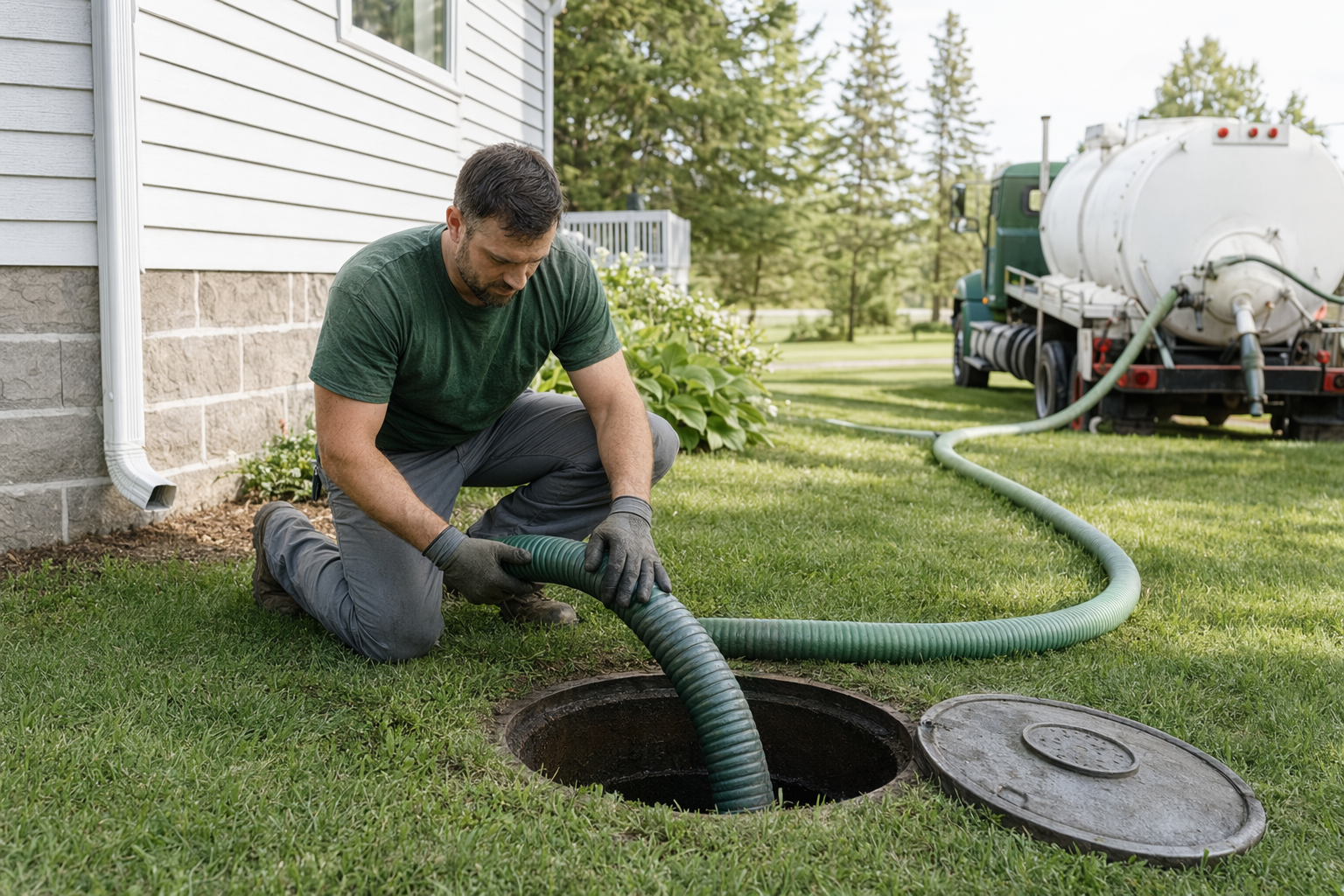
When your tank needs pumping
A septic tank does not stay empty on its own. Over time, heavy solids sink to the bottom and form sludge. Oils and grease float and form scum. The liquid in the middle flows out to the drain field.
When sludge and scum get too thick, the tank cannot separate waste the way it should. Solids can move out of the tank and into the drain field. That is when a routine service call can turn into a much bigger repair.
Your tank may be due for pumping if:
- It has been 3 to 5 years since the last pump-out
- You do not know when it was last pumped
- Drains are getting slower in more than one fixture
- Toilets gurgle or flush sluggishly
- There is a sewage smell near the tank or yard
- The grass over the tank area is unusually green or wet
- A recent inspection measured high sludge or scum levels
If you already have sewage backing up into the home, or wastewater surfacing in the yard, that is more than a maintenance reminder. Keep children and pets away from the area and look for emergency septic service right away. Raw sewage can be a health and groundwater hazard.
If you are not sure whether your problem is just a full tank or something more serious, these septic warning signs can help you understand the difference.
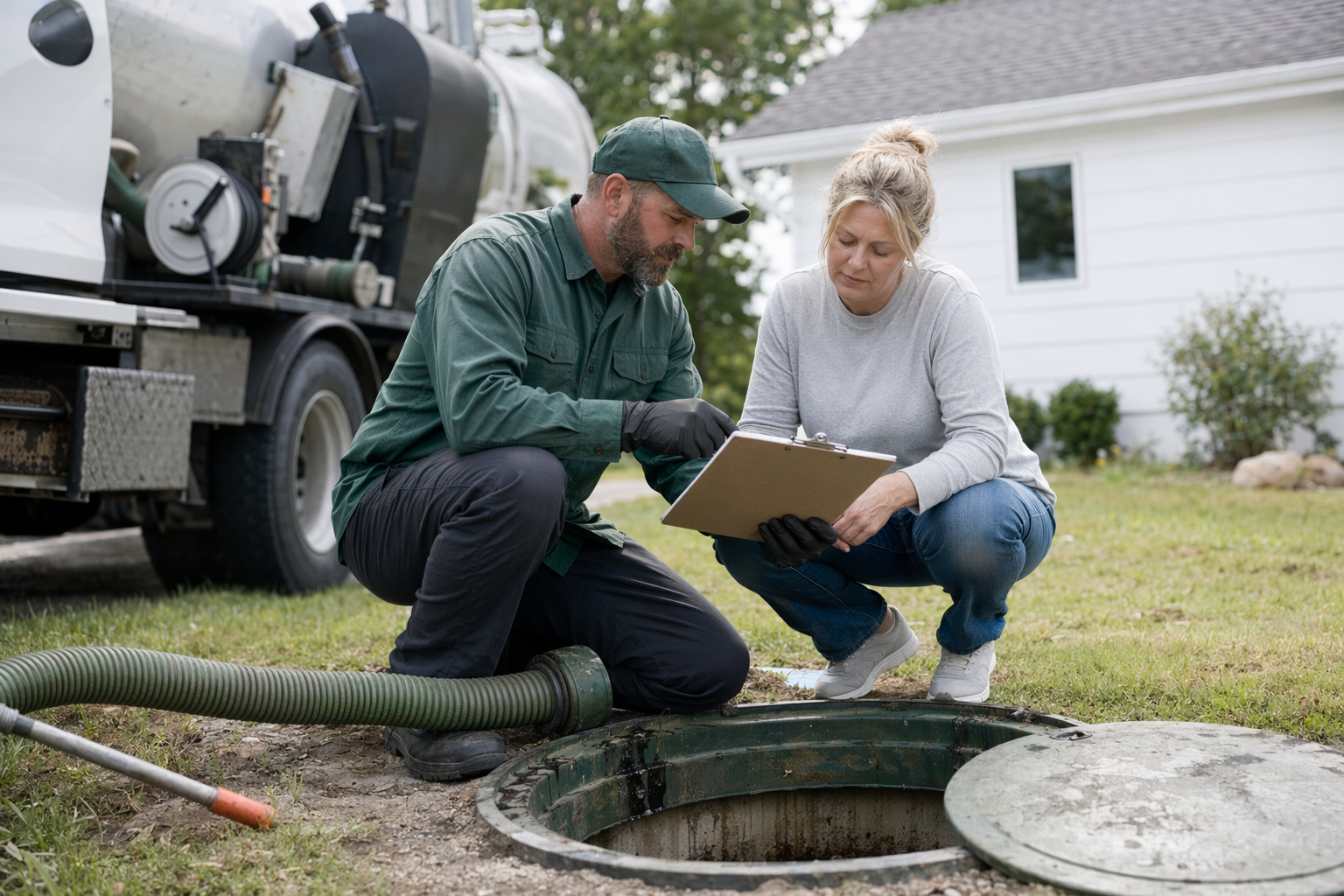
What a proper pump-out includes
A real pump-out is more than just "sucking some liquid out." A good septic pumping company should explain what they are doing and what they found.
A proper pump-out usually includes:
- Finding and opening the tank access lid or lids
- Measuring sludge and scum levels, or at least checking tank condition
- Pumping out the tank contents, including solids, not just the liquid layer
- Backflushing or stirring as needed so thick solids come out too
- Looking for obvious problems such as damaged baffles, cracks, root intrusion, or a clogged outlet
- Closing the tank securely when done
- Telling you if they saw signs that you may need an inspection or repair
Some companies may charge extra for things like:
- Digging to reach buried lids
- Extra hose distance
- Emergency or after-hours service
- Filter cleaning, if your system has an effluent filter
- A second compartment in the tank
Ask one simple question before you book: "Will you pump the whole tank, including solids, and check for visible damage?"
Also ask whether the price includes opening the lid, basic inspection of accessible parts, and disposal fees. Get the total confirmed before work starts.
Important, pumping is not a cure-all. It can help if the tank is simply overdue. But if the drain field is failing, if the outlet is broken, or if roots or collapse are blocking flow, pumping may only give short relief or no relief at all. In those cases, the next step may be an inspection or drain field diagnosis, not repeated pumping.
How often to pump by household size
There is no one schedule that fits every home. How often you need pumping depends on tank size, number of people in the home, water use, garbage disposal use, and what gets flushed.
A common rule of thumb in the US is every 3 to 5 years. Homes with more people often need it sooner. Small households with a larger tank may go longer. But the safest answer comes from records and measurements, not guessing.
Typical starting points:
- 1 to 2 people in the home, often about every 4 to 5 years
- 3 to 4 people, often about every 3 to 4 years
- 5 or more people, often about every 2 to 3 years
You may need more frequent pumping if:
- Your tank is on the smaller side
- You use a garbage disposal often
- You do a lot of laundry in a short time
- There are frequent guests or a large family
- Wipes, grease, paper towels, or other non-flushable items have gone in
You may be able to go longer if:
- There are fewer people in the home
- Water use is low and spread out
- You keep good service records
- A pro has measured the tank and found solids are still below pumping level
The best long-term plan is simple:
- Keep a service log
- Ask for the tank size if you do not know it
- Have a pro tell you what interval makes sense for your home
If you are new to septic, how Leachstead works explains how we help homeowners compare local pros. For more routine care, our septic guides can help you avoid common mistakes that fill a tank faster.
Signs you waited too long
Sometimes the warning signs are mild at first. Sometimes they show up all at once before a holiday, a storm, or a family visit.
Common signs the tank may be overdue, or that a bigger problem is developing:
- Slow drains throughout the house, not just one sink
- Toilets that gurgle, bubble, or flush weakly
- Sewage odors inside or outside
- Wet, soft, or soggy ground near the tank or drain field
- Wastewater backing up into tubs, showers, or floor drains
- Very green grass over one part of the yard
Here is the honest part. If pumping is delayed too long, solids can reach the drain field and shorten its life. Once a drain field is badly damaged or saturated, pumping the tank alone usually will not fix it. Some systems can be repaired. Some cannot. In some cases, replacement, not repair, is the realistic answer.
That does not mean panic. It does mean do not keep guessing, using additives, or trying DIY fixes on a failing system. A licensed septic professional may recommend an inspection first, especially if there is standing wastewater, repeated backups, or signs of drain field failure. You can also read more about repair vs replacement if you are worried the problem has gone beyond routine pumping.
Until a pro evaluates it:
- Reduce water use
- Keep kids and pets away from wet or sewage-affected areas
- Do not dig into the area yourself
- Avoid driving or parking over the tank or drain field
- Be careful around wells, ditches, and surface water
Septic rules, permits, and repair requirements vary by area. Always verify local health-department rules, the permit needed, and the installer's or contractor's license yourself.
Choosing a pumping company
A good pumping company should be clear, licensed as required in your area, and willing to answer basic questions without talking down to you.
Look for a company that:
- Works on septic systems regularly, not only general plumbing
- Explains what is included in the pump-out
- Gives written pricing or a written estimate before work starts
- Can tell you whether permit or local reporting rules may apply in your area
- Will note visible issues and recommend inspection when needed
- Has experience with your tank access situation, including buried lids or risers
Ask these questions before booking:
- What exactly is included in the pump-out?
- Will you pump the full tank and remove solids, not just liquid?
- Are there extra charges for digging, lid access, filter cleaning, hose length, or emergency service?
- If you see damage, will you show me photos or explain the next step?
- Are you licensed or certified if my local area requires it?
A few red flags:
- A very low phone price with lots of vague "extra" charges later
- Pressure to approve major repairs on the spot without explanation
- Claims that additives alone can replace pumping
- No written record of service
- No answer when you ask about local licensing or permits
Leachstead is not a septic company. We are a free matching and information service. You compare options and choose the pro. If you want help finding someone local, you can get matched for free.
It also helps to save your records after every visit. Keep the date, company name, what was pumped, tank size if known, and any notes about condition. Those records can save time and money later.
Typical cost ranges
For most homeowners, septic tank pumping typically runs about $250 to $700 in the US. That is a common range, not a quote. Some jobs come in lower, and some run higher.
Price usually depends on:
- Tank size
- How easy the lids are to reach
- Your location and local disposal costs
- Whether the job is routine or urgent
- Extra digging or long hose runs
- Whether the company also cleans a filter or documents issues found
Typical ranges you may see:
- Small, easy-access routine pump-out, often $250 to $450
- Average residential tank, often $300 to $600
- Larger tanks, difficult access, or extra digging, often $500 to $900+
- Emergency, weekend, or after-hours calls, often add $100 to $500+
Related costs that sometimes surprise homeowners:
- Locating the tank if no one knows where it is
- Digging to buried lids
- Installing risers for easier future access
- Separate inspection charges
- Extra work if the company finds broken lids, damaged baffles, or signs of drain field trouble
Spending a few hundred dollars on timely pumping can help avoid much larger costs later. But if the system is already failing, pumping may not prevent repair or replacement. If a pro says the problem goes beyond a full tank, get a written explanation and consider a second opinion before approving major work.
For broader pricing help, see our septic cost guide. And always compare written quotes, confirm what is included, and make sure the total price is clear before the truck starts working.
Common questions
Is septic tank pumping the same as septic tank cleaning?
People often use the terms the same way. In everyday use, both usually mean removing the waste from the tank. The important part is not the word, it is whether the company pumps out the solids as well as the liquid and checks for obvious problems.
Will pumping fix slow drains and sewage smell?
Sometimes, if the tank is simply overdue. But not always. Slow drains, odors, backups, or wet ground can also mean a clog, damaged baffle, blocked line, or a failing drain field. Pumping may help for a short time or not at all if the real problem is elsewhere.
Can I wait until there is a problem before pumping?
That is risky. Waiting for a backup or soggy yard can let solids move into the drain field, where repairs can be much more expensive. Routine pumping is usually cheaper and simpler than dealing with a neglected system.