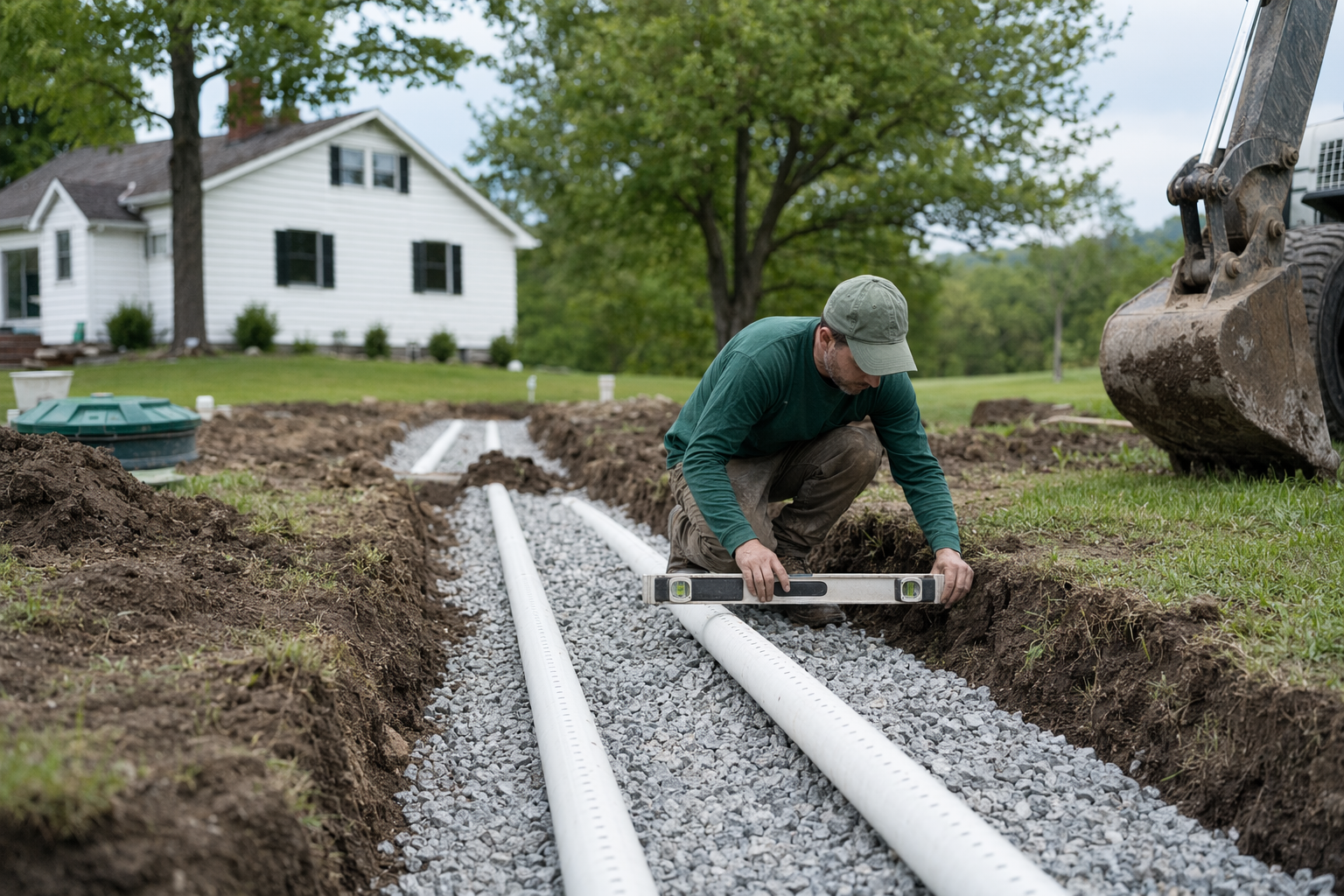
How a drain field works
The drain field, also called a leach field, is the part of the septic system that sends treated wastewater from the tank into the soil.
Here is the simple version:
- Wastewater leaves the house and goes into the septic tank.
- In the tank, solids settle and lighter scum floats.
- The liquid in the middle flows out to the drain field.
- Perforated pipes or chambers spread that liquid into gravel and soil.
- The soil filters and treats the water before it moves farther underground.
That means the drain field is not just a place for water to "go away." It is part of the treatment process. It needs the right soil, the right amount of space, and enough time to rest between doses of wastewater.
If the field stays too wet, gets crushed, gets invaded by roots, or gets overloaded for too long, it can stop accepting water the way it should. Then the wastewater backs up, rises to the surface, or both.
If you want the full basics of tank plus field in one place, see How a septic system works.
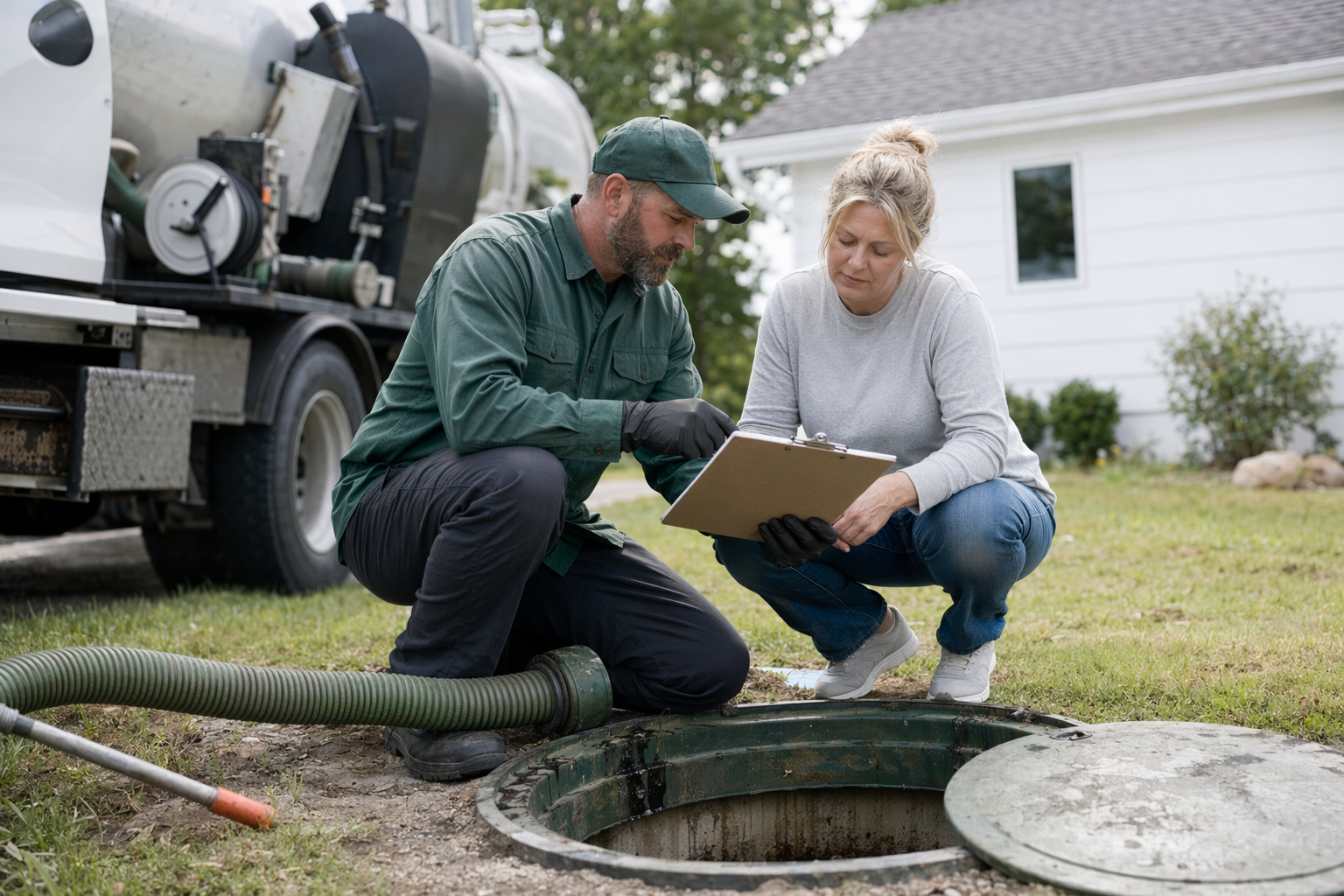
Signs of a failing leach field
A bad drain field usually gives warning signs before total failure, but not always. Common signs include:
- Slow drains in more than one sink, tub, or toilet
- Toilets that gurgle or flush poorly
- Sewage odor in the yard or near drains
- Wet, soggy, or greener-than-normal grass over the field
- Standing water near the field, especially when it has not rained much
- Septic backup into the house
- An alarm on certain alternative systems
One important point: these symptoms do not always mean the drain field itself is the problem. A full tank, clogged pipe, blocked outlet filter, or plumbing issue can look similar. That is why a good diagnosis matters.
A licensed septic pro may check the tank level, the outlet, the line to the field, and signs of ponding in the trenches. In some areas, they may recommend camera work, probing, hydraulic testing, or other evaluation methods. Rules vary by location.
If sewage is backing up into the home, treat it as urgent. Keep children and pets away from contaminated areas. Do not try to dig into a wet field yourself. Raw sewage can carry harmful germs, and a failing field can threaten groundwater and nearby wells. For immediate steps, see Emergency septic service and Septic safety.
Common causes, overloading, compaction, roots, and grease
Drain fields usually fail for a reason. Sometimes it is age. Often it is stress over time.
### Overloading
Too much water is one of the biggest causes.
Examples:
- Leaking toilets or faucets
- Doing many loads of laundry in one day
- Long showers from a larger household than the system was designed for
- Sump pumps, roof drains, or other clear water routed into the septic system, which should not happen
- A tank that has not been pumped on schedule, sending more solids toward the field
When the field gets more water than it can absorb, the soil stays saturated. Once that happens for long enough, the field may lose the oxygen balance it needs to treat wastewater properly.
### Compaction
Drain fields are easy to damage from above.
Heavy vehicles, trailers, paving, sheds, decks, above-ground pools, and even repeated equipment traffic can compress the soil and crush pipes or chambers. Compacted soil does not absorb water well.
That is why homeowners should never drive or build over the field. Local setback and permit rules also matter. Verify those with your local health department before any work. A good primer is Septic permits and regulations.
### Tree and shrub roots
Roots seek moisture. Septic lines and fields provide it.
Roots can enter pipes, block flow, and damage distribution lines. They can also make future repair harder if large trees are planted too close. If roots are suspected, the right fix depends on where the roots are and how much damage they caused. Cutting roots without a plan can create new problems.
### Grease and solids
Cooking grease, wipes, paper towels, hygiene products, and other non-flushables can shorten the life of both the tank and the field. Even when those items do not clog a pipe right away, they can increase solids carryover and reduce how well the system works.
Bacterial additives are often marketed as a simple answer, but they do not reliably fix a saturated or failed field. A physically damaged or badly clogged field usually needs real evaluation and real work, not a bottle. Good day-to-day habits still matter, and Septic maintenance can help you protect what you have.
Repair, rejuvenation, or replacement
This is the hard part, and it is where honesty matters.
Sometimes a drain field can be helped. Sometimes it cannot.
### When a repair may be possible
A pro may recommend repair when the problem is limited and the field still has some life left.
Examples can include:
- Repairing a broken pipe from the tank to the field
- Replacing a distribution box that has settled or failed
- Clearing certain blockages in lines, if the field itself is not badly damaged
- Redirecting surface water away from the field
- Fixing plumbing leaks or usage habits that are overloading the system
- Pumping the tank if it is overdue, to reduce immediate stress on the system
These steps may improve performance, but they are not magic. Pumping a tank does not repair a failed drain field. It may only buy a little time if the field is the real issue.
### What "rejuvenation" usually means
Some companies use terms like rejuvenation, restoration, aeration, jetting, fracturing, or treatment. In the right situation, a pro may try to improve flow into soil that is partially clogged, especially if the field is not physically collapsed and the soil conditions are suitable.
That said, rejuvenation is not a guaranteed save. It is best understood as an attempt that may help in selected cases, not a sure cure. Ask what problem they believe they are solving, how they diagnosed it, what permits may be required, and what outcomes are realistic.
### When replacement is the honest answer
Replacement is often needed when:
- The field is old and at the end of its service life
- Wastewater is surfacing repeatedly
- The soil remains saturated even after tank pumping and water-use changes
- The field area is badly compacted or built over
- Pipes or chambers are crushed, collapsed, or widely invaded by roots
- Solids have migrated into the field for a long time
- Local code does not allow patchwork repair for the condition found
- A professional evaluation shows the site no longer supports a safe repair
Replacement may mean a new drain field only, or a larger system replacement if the tank, layout, or soil conditions also need to change. In some yards, the new system may need a different design than the original, such as a mound or other alternative system.
Most substantial septic repairs and replacements require permits and licensed or certified installers. Always verify the contractor's license, the permit, and your local rules yourself before work starts. Leachstead is a free information and matching service, not the contractor and not the permitting authority.
If you are comparing options, Get matched to talk with local pros, and ask for written quotes with the scope of work clearly spelled out.
Protecting a new or repaired field
A drain field lasts longer when it gets rest, airflow, and lighter use.
Good habits:
- Pump the septic tank on a normal schedule for your household size and tank size
- Fix leaking toilets and faucets quickly
- Spread laundry over the week instead of doing it all in one day
- Keep grease, wipes, paper towels, diapers, cat litter, and hygiene products out of the system
- Keep vehicles, heavy equipment, and structures off the field
- Direct roof runoff and surface water away from the area
- Plant only grass over the field unless a local pro says otherwise
- Keep deep-rooted trees and shrubs well away from the field
- Keep records of pumping, inspections, and repairs
Also, know where the field is. Many homeowners do not find out until there is a problem. Marking the area can help prevent accidental damage from parking, fencing, landscaping, or future projects.
If you recently bought the home or inherited an older system with few records, a septic inspection can help you understand what you have and what shape it is in. Start with our services if you are not sure whether you need pumping, inspection, or repair first.
Typical cost ranges, not quotes
Drain field work is one of the most expensive parts of septic ownership. Exact price depends on the diagnosis, soil, access, permits, local labor, and whether the existing layout can be repaired or must be redesigned.
Typical US ranges, not quotes:
- Basic diagnosis or site visit, often about $150 to $500
- Septic tank pumping, often $250 to $700, if needed as part of troubleshooting
- Minor line or distribution box repair, often $500 to $2,500
- Root removal or limited pipe repair, often $1,000 to $3,500
- Drain field rejuvenation attempts, where appropriate, often $2,000 to $8,000
- Partial drain field repair or limited trench replacement, often $3,000 to $10,000
- Full drain field replacement, often $7,000 to $25,000+
- Full septic system replacement, including tank and field, often $10,000 to $30,000+, and sometimes more for difficult sites or alternative systems
Those numbers can go higher when:
- The lot is small or hard to access
- The water table is high
- Soil conditions are poor
- A pump, mound, aerobic, or other alternative design is required
- Extensive permitting, engineering, or site work is needed
- Landscaping, concrete, or hardscape must be removed and restored
Before approving work, ask for:
- A written diagnosis
- The exact scope of work
- Whether permits are included
- Whether pumping, restoration, or reseeding is included
- What is excluded from the price
- How changes will be handled if more damage is found
Homeowners usually do best by comparing at least two written quotes when time allows. You compare and choose. For broader price context, see Septic costs explained.
Common questions
Can a failing drain field be saved without replacing it?
Sometimes, but not always. If the problem is limited, such as a damaged pipe, a bad distribution box, or temporary overloading, repair may help. In selected cases, a pro may try a rejuvenation approach. But if the soil is badly saturated, the field is physically damaged, or the system has been failing for a long time, replacement may be the more honest answer.
Will pumping the septic tank fix a saturated leach field?
Usually no. Pumping can relieve pressure for a short time if the tank is overdue, but it does not repair a failed field. If the drain field cannot absorb wastewater, symptoms often return. Pumping is often part of troubleshooting, not the final fix.
Is it safe to walk on or dig into a wet drain field myself?
Be careful. Keep children and pets away from wet or sewage-contaminated areas. Do not dig into a failing field yourself. Raw sewage can be a health hazard, and septic systems can contain unsafe gases and unstable ground. A licensed septic pro can evaluate the problem more safely, and local rules may require permits for repair or replacement work.