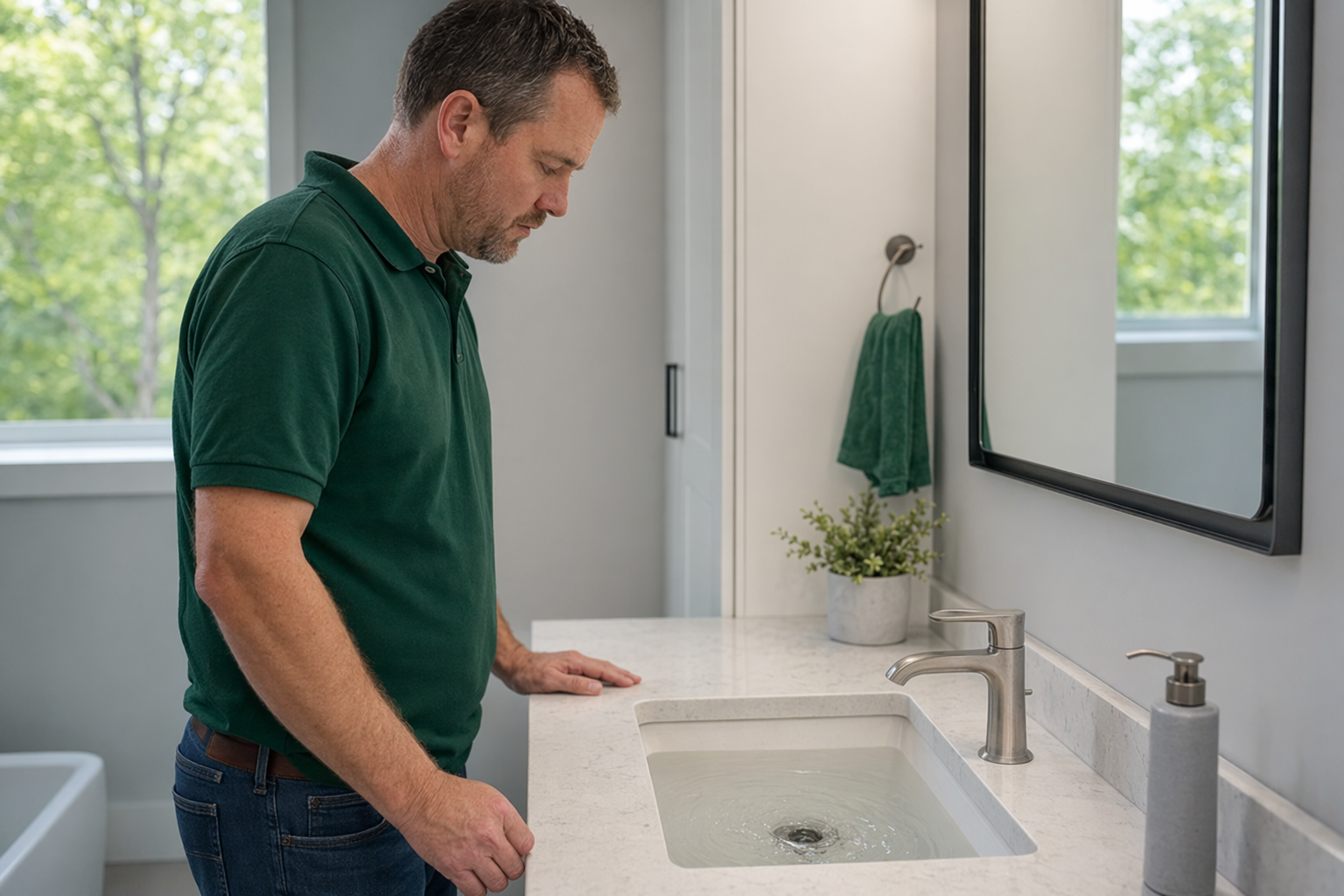
Why are my toilets gurgling and drains slow?
A gurgling toilet usually means air is being pulled or pushed through the plumbing because wastewater is not flowing normally. Slow drains mean water is meeting resistance somewhere.
If you have a septic system, common reasons include:
- the septic tank is overdue for pumping
- a clog in the house plumbing or main line
- a blocked plumbing vent on the roof
- the drain field is saturated or failing
- heavy water use has overwhelmed the system for the moment
One slow sink by itself can be a simple local clog. But if the toilet, tub, and sink all seem slow, or the toilet gurgles when another fixture drains, that points to a bigger system problem.
These are classic septic warning signs. They should not be ignored, especially if you also notice odors, wet ground, or sewage coming back into the house.
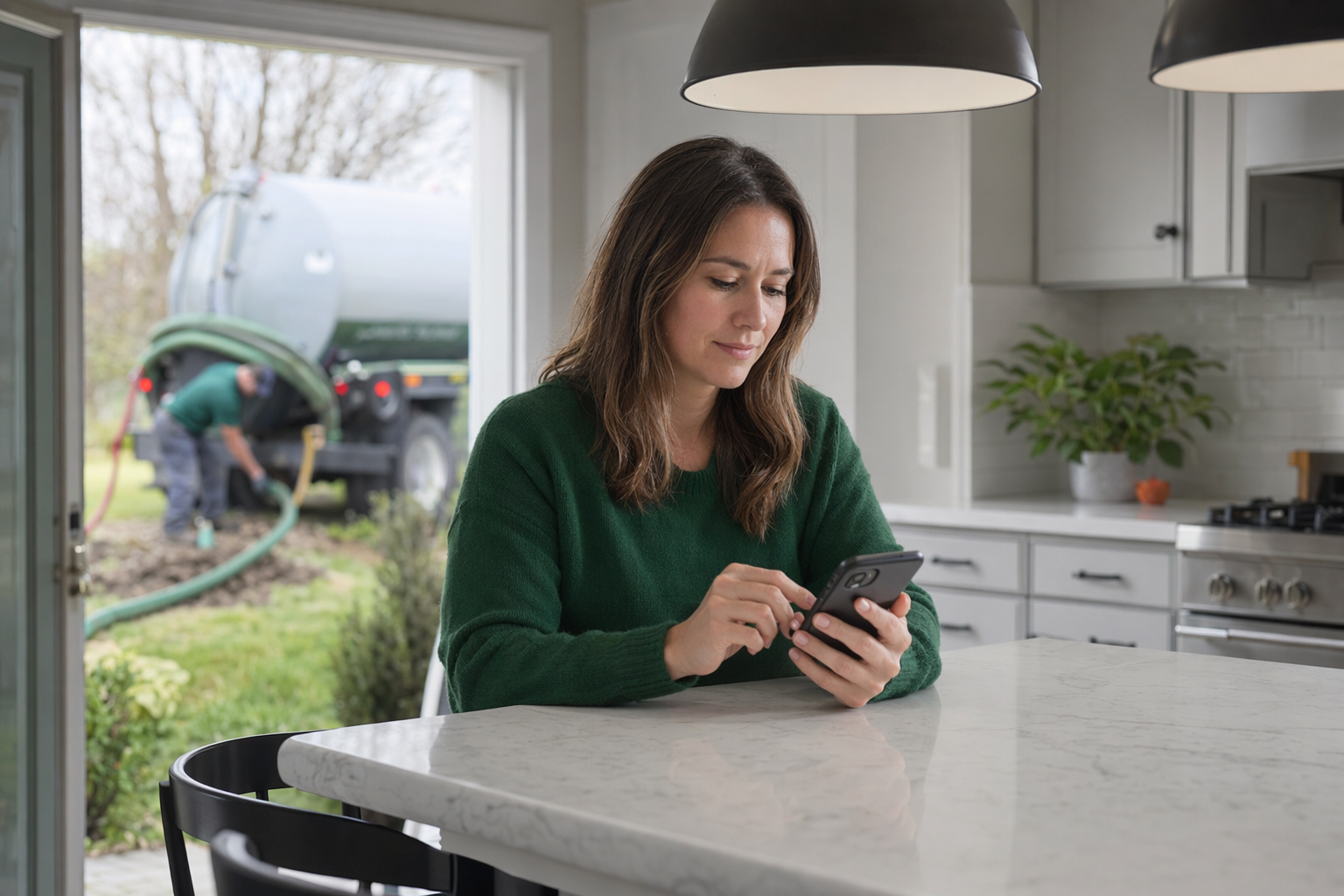
The short answer
Your toilets gurgle and drains run slow because air and wastewater are not moving through the system the way they should.
In plain terms, that usually means one of three things:
- There is a blockage somewhere.
- The tank may be too full.
- The drain field or another part of the septic system may not be accepting wastewater well.
Sometimes the problem is minor. Sometimes it is the early stage of a backup. The safest approach is to reduce water use right away and get the system checked if more than one drain is affected, or if the problem keeps coming back.
What you need to know
A septic system has a tank that holds wastewater and a drain field that lets treated water soak into the soil. If either part cannot do its job, the plumbing in the house often shows the first signs. If you want a simple overview, see how a septic system works.
A few clues can help you think about what is going on:
- Only one fixture is slow: Often a local clog, like hair in a sink or tub drain.
- Several fixtures are slow: More likely a main line, septic tank, or drain field issue.
- Toilet gurgles when the washer drains or tub empties: Often means the system is struggling to move air and water properly.
- Bad smell inside or outside: Could mean a backup, venting issue, or septic trouble.
- Wet, soggy, or extra-green yard near the drain field: Could mean the drain field is overloaded or failing.
Weather and water use matter too. After heavy rain, the soil around a drain field can become too saturated to accept more water. Long showers, back-to-back laundry, and lots of guests can also overload a system that is already near its limit.
Important safety note: raw sewage is a health hazard. Keep children and pets away from any backup or wet sewage area. Do not dig into a soggy drain field or try to open septic components yourself if the system seems to be failing.
Also, avoid guessing. A pump-out may help in some cases, but not every gurgling toilet problem is fixed by pumping alone. In other cases, an inspection is the better first step. A licensed local septic professional can tell you what they see on site. You can also review the types of services homeowners commonly need.
Steps to take
If your toilet is gurgling and drains are slow, take these steps:
1. Use less water right now.
Stop extra laundry, long showers, and dishwasher loads until you know more. Less water can help prevent a backup.
2. Check whether it is one drain or many.
If only one sink or tub is slow, it may be a local clog. If several fixtures are affected, the problem is more likely in the main line or septic system.
3. Watch for urgent signs.
These include sewage backing up into tubs or toilets, strong sewage odor, or wet ground over the drain field. If that is happening, treat it as urgent. Emergency septic service may be needed.
4. Think about your last pump-out.
If you cannot remember the last time the tank was pumped, or it has been years, ask a pro whether septic tank pumping makes sense as a first step. Typical ranges are not quotes, and local pricing varies.
5. Write down what you notice.
Note when the gurgling happens, which drains are slow, whether odors are present, and whether the yard is wet. This helps the pro troubleshoot faster.
6. Ask questions before work starts.
Get a written quote. Ask what service is being recommended first, what that service does and does not tell you, and whether permits could be required for any repair.
7. Verify license, permit, and local rules.
Septic work often requires permits and licensed or certified installers. Always verify the contractor's license, the permit needs, and your local health-department rules yourself.
If you are not sure where to start, Leachstead can help you get matched with a local septic pro. You compare options and choose.
Common mistakes
These problems are common. So are these mistakes:
- Waiting too long. Gurgling and slow drains are often early warnings. Waiting can turn a smaller problem into a messy backup.
- Using lots of water to "push it through." Extra water can make a septic problem worse.
- Pouring harsh chemicals down drains. Chemical drain cleaners may damage plumbing, disrupt the tank, or simply fail to fix the real problem.
- Assuming pumping always solves it. Sometimes it helps. Sometimes the real issue is a clog, vent problem, or failing drain field.
- Driving or parking over the drain field. That can compact soil and damage system parts.
- Trying a risky DIY fix on a failing system. If sewage is surfacing or backing up, this is not a safe home project.
- Not confirming the scope and price first. Ask for a written quote and make sure you understand the first recommended step.
If the symptoms keep coming back after a recent pump-out, that is another reason to get a closer look. Repeating symptoms can mean the issue is beyond a full tank.
Get matched with a pro
You do not need to figure this out alone. Leachstead is a free matching and information service for homeowners. We are not a septic company, and we do not do the work ourselves. We help you connect with local septic professionals so you can compare and choose.
If your toilet is gurgling, your drains are slow, or you are worried about a backup, get matched with a trusted septic pro. If you want more quick answers first, visit our help center.
The main goal is simple: act early, stay safe, and get clear information before the problem becomes bigger.
Common questions
Can a full septic tank make toilets gurgle?
Yes, it can. A full or overloaded tank can slow the flow of wastewater and affect how air moves through the plumbing. But gurgling can also come from a clog, vent issue, or drain field problem, so a full tank is not the only possible cause.
Is it safe to keep using water if my toilet gurgles and drains are slow?
Use as little water as possible until you know the cause. If more than one drain is affected, or if you notice odors, wet ground, or sewage backup, cut water use right away and get professional help. Raw sewage can be a health hazard.
Should I call a plumber or a septic company first?
It depends on the symptoms. One slow sink or tub may point to a simple plumbing clog. But if several drains are slow, the toilet gurgles when other fixtures run, or the yard smells or stays wet, septic service is often the more relevant first call. Ask for a written quote and confirm what they plan to check.