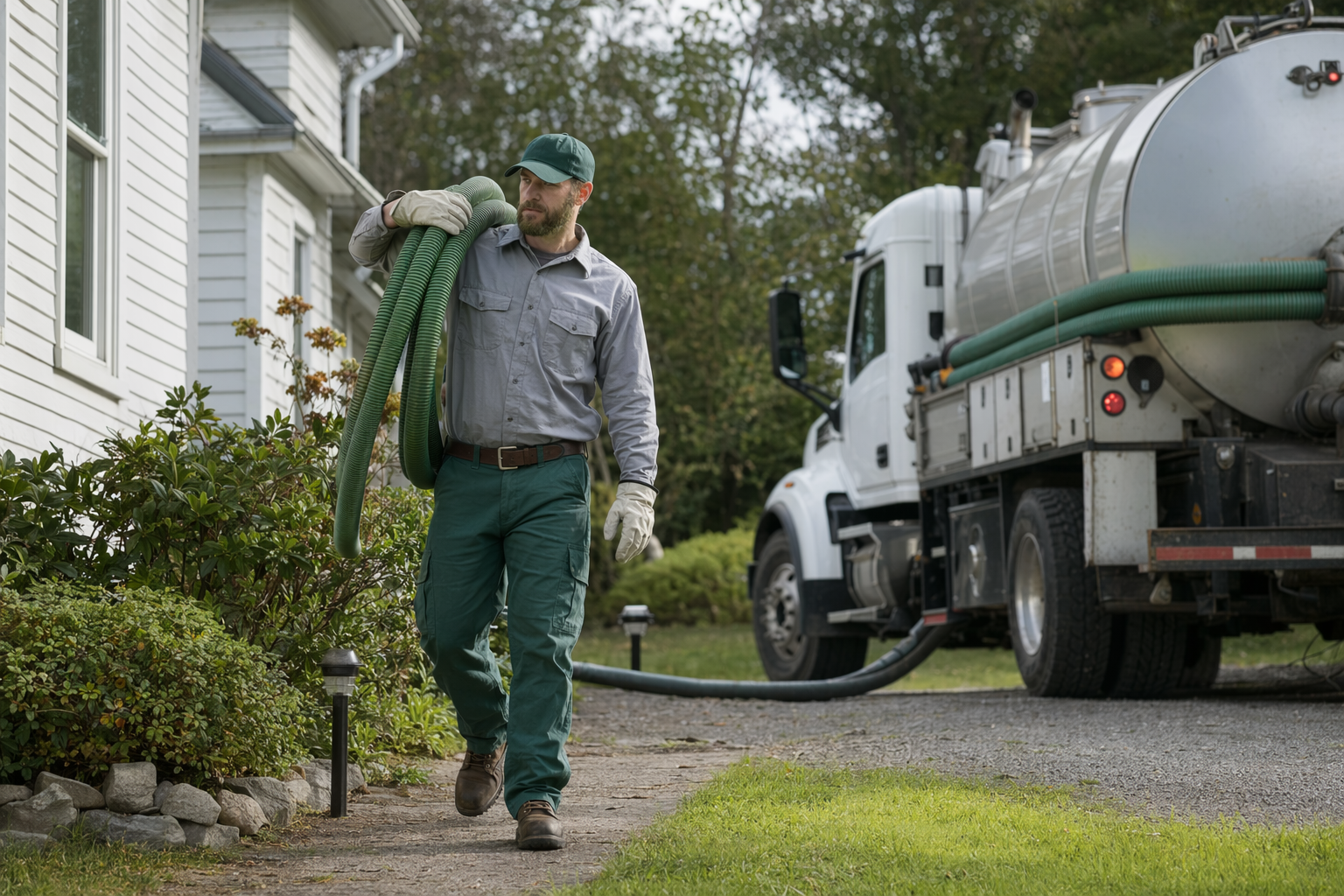
What to do in the first few minutes
If sewage is backing up into a tub, shower, toilet, floor drain, or sink, act quickly but stay calm.
- Stop using all water immediately. Do not flush toilets. Do not run faucets. Do not start the washer or dishwasher.
- Keep people and pets out of the area. Close the bathroom, basement, or affected room if you can.
- Turn off HVAC in the affected area if sewage is in the air path. This can help limit odors and contamination spreading through vents.
- Do not touch raw sewage with bare hands. If you must go near it, wear boots and disposable gloves.
- Do not try to open the septic tank yourself. Tanks can contain dangerous gases and serious fall hazards.
- Call for emergency septic service. A septic pumper or septic repair company can figure out whether the immediate need is pumping, blockage clearing, diagnosis, or all three.
If the backup is near electrical outlets, appliances, or a finished basement with power on the floor, stay back and use caution. If needed, contact an electrician or your utility for general safety guidance before entering wet areas.
If you are not sure whether the problem is septic or something else, warning signs like multiple slow drains, toilet gurgling, sewage smell, and wet yard spots often point to septic trouble. See septic warning signs for the common pattern.
Stop using water
This is the most important step, and it is the one many homeowners skip.
Your septic system works by holding wastewater in the tank, then sending partially treated liquid to the drain field. If the tank is overfull, the outlet is blocked, or the drain field is saturated or failing, every gallon you add can make the backup worse.
That means:
- No toilet flushing
- No showers or baths
- No sink use
- No washing machine
- No dishwasher
- No water-softener backwash
If you have a large household, tell everyone right away. Put a note on each toilet and sink. If possible, leave the home and use another bathroom elsewhere until the system is checked.
Emergency pumping may create temporary storage room in the tank, but that does not always solve the root problem. If the drain field is flooded, collapsed, clogged, or otherwise failing, the backup can return. In some cases, repair is possible. In other cases, replacement is the real answer. Learn more about the bigger picture in when a septic system fails.
If you need help fast, Leachstead can get you matched with a local septic pro. You compare options and choose.
Health and safety with raw sewage
Raw sewage is a health hazard. It can contain bacteria, viruses, and parasites. It can also contaminate floors, walls, belongings, soil, and nearby groundwater.
Important safety basics:
- Keep children and pets away.
- Avoid skin contact.
- Do not track sewage through the house.
- Do not use fans that could spread contamination to clean areas.
- Do not hose sewage into a yard, storm drain, ditch, or street.
- Do not dig into a wet, smelly drain field or tank area yourself.
If sewage got onto carpets, drywall, insulation, or furniture, cleanup may require a restoration or cleanup company in addition to a septic pro. Soft, porous materials often cannot be fully cleaned once heavily contaminated.
Wash hands well after any contact. Remove contaminated shoes and clothing carefully. If you have questions about protecting your family, wells, and groundwater, read Septic safety.
A failing drain field is not a DIY project. It can expose you to waste, damage the property more, and create groundwater risks. Stay clear of soggy or sunken areas, and keep a safe distance from any well, stream, pond, or other water source. Local health departments and permitting offices set the rules in your area, so always verify local requirements yourself.
Emergency pumping and cleanup
When you call for emergency septic service, the first goal is usually to reduce immediate overflow risk and identify the cause.
A septic pro may do some or all of the following:
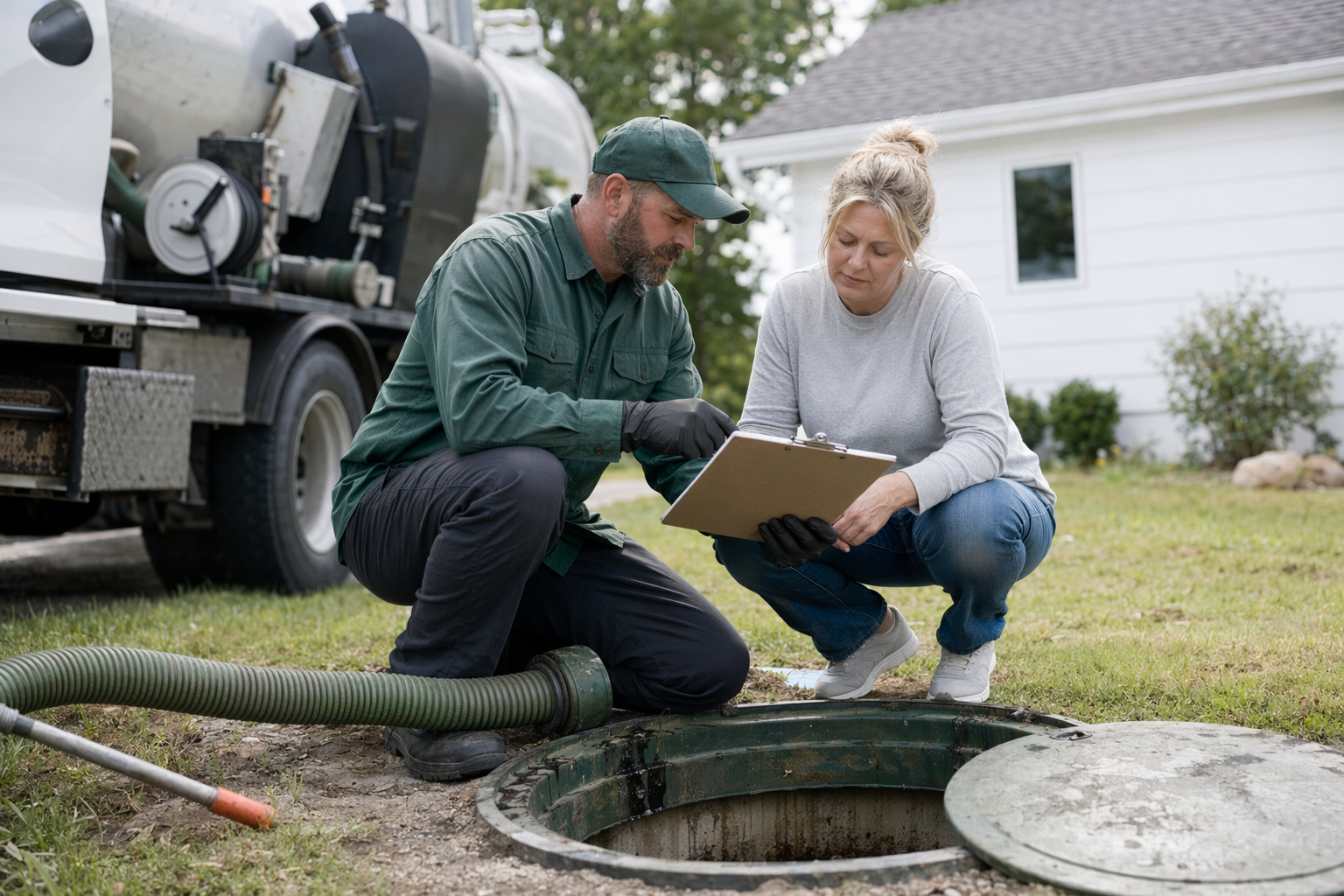
- Locate and open the tank access lids
- Measure liquid levels in the tank
- Pump the tank
- Check for a blockage between the house and tank
- Check whether effluent, meaning wastewater leaving the tank, is moving properly
- Look for signs the drain field is saturated or failing
- Recommend cleanup steps for contaminated areas
Emergency pumping often helps when the tank is overdue for service or badly overloaded. Typical pumping itself may take 20 minutes to an hour once the truck has access, but the full visit can take longer if lids are buried, access is poor, or diagnosis is needed.
It is important to be honest here. Pumping is not always a fix.
- If the baffle, filter, or outlet is blocked, more work may be needed.
- If the line from the house to the tank is clogged or damaged, pumping alone will not solve it.
- If the drain field is waterlogged or failing, the system may back up again even after pumping.
- If the tank, line, or field is damaged, repair or replacement may be recommended.
Ask the company to explain what they found in plain language. Ask whether the pumping is a temporary emergency step or whether they believe more diagnosis is needed. If major repair or replacement is suggested, get it in writing and consider a second opinion. Septic replacement and drain field work usually require permits and licensed or certified installers, depending on local rules. Verify the license, the permit, and your county or local health department requirements yourself.
For routine service details, see septic tank pumping. For more service categories we help homeowners find, visit our septic services.
Finding 24/7 septic help
Not every septic company offers true after-hours service, and not every plumber handles septic systems. For a backup involving the tank, main line to the tank, or drain field, you usually want a septic specialist, not just a drain cleaner.
When calling for emergency help, be ready to share:
- Your address and best callback number
- What is backing up, toilet, tub, basement drain, multiple fixtures, or outside overflow
- When it started
- Whether you also have odors, gurgling, or a soggy yard
- Whether the system was pumped before, and about when
- Whether lids are easy to access or buried
- Whether the truck can reach the tank area
Good questions to ask:
- Do you provide after-hours or weekend septic emergency service?
- Are you a septic pumping company, a repair company, or both?
- What is your emergency trip charge?
- Is pumping included, or billed separately?
- If you find a drain field problem, what happens next?
- Are permits typically needed for repairs in this area?
- Are you licensed or certified for the type of work you may perform?
Get the price confirmed before work starts. Ask for written estimates for any repair beyond the emergency visit. Typical ranges are useful, but your property, access, soil, local labor, and permit requirements can change the cost a lot.
If English is not your first language, that should not stop you from getting help. Leachstead is a free matching and information service. We are not a septic company, but we can help you get matched and understand how it works in plain language.
Typical cost ranges
Emergency septic costs vary a lot by region, tank size, time of day, and what is actually wrong. These are typical ranges, not quotes.
- Emergency trip or after-hours fee: about $100 to $350
- Standard septic pumping during an emergency visit: about $300 to $700 for many homes
- Large tank, difficult access, or heavy solids: often $700 to $1,000+
- Digging to reach buried lids: often $50 to $300+, sometimes more if access is difficult
- Adding risers for easier future access: often $300 to $900+
- Line clearing or basic troubleshooting: often $150 to $600+, depending on what is needed
- Septic inspection or deeper diagnosis after the emergency: often $250 to $800+
- Drain field repair: often $2,000 to $10,000+
- Major septic replacement: often $7,000 to $25,000+, and sometimes more for complex or alternative systems
A cheap pump-out is not always the cheapest outcome if the real problem is a failing field, broken pipe, or crushed tank. On the other hand, a sales pitch for full replacement is not always the only answer either. That is why written findings matter.
If a pro says the system has failed, ask what evidence supports that conclusion, what short-term steps are possible, and whether repair versus replacement depends on local code, soil conditions, age, or damage. Many major septic jobs require permits, site review, and licensed installers. Confirm all of that yourself with the contractor and your local authority.
For broader price ranges, visit Septic costs explained.
Common questions
Can I stay in the house during a sewage backup?
Sometimes, but only if you can fully avoid the affected area and stop all water use. If sewage is in living space, near HVAC airflow, or affecting the only bathroom, many homeowners choose to leave until the area is safe and the system is checked.
Will pumping the tank stop the backup for good?
Not always. Pumping can be an important emergency step, but it may only be temporary if the real problem is a blocked line, outlet issue, or failing drain field. Ask the septic pro what they found and whether more diagnosis is needed.
Should I call a plumber or a septic company?
If the problem appears limited to one sink or toilet, a plumber may help. If multiple drains are slow, toilets gurgle, sewage is backing up, or the yard near the septic area is wet or smelly, a septic company is often the better first call.