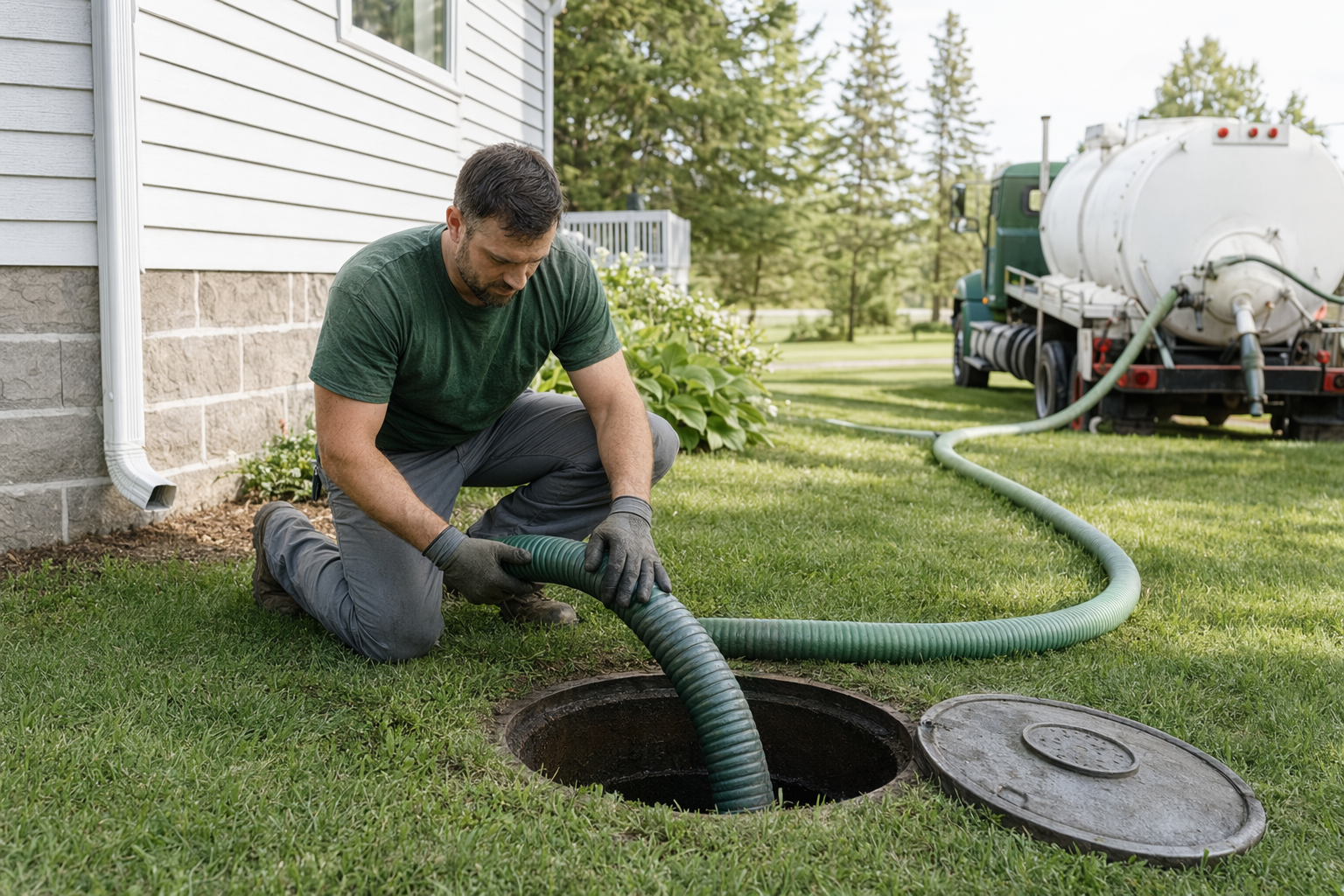
How Often Should I Pump My Septic Tank?
A common rule of thumb is every 3 to 5 years. That is the direct answer most homeowners need.
But there is no one schedule that fits every house. Some tanks need pumping sooner. Others can go a little longer. The safest plan is to use the 3 to 5 year range as a starting point, then adjust based on your tank, your household, and what a septic pro sees during service.
If you already have warning signs, do not wait for a routine date on the calendar. Slow drains, toilet gurgling, sewage odors, or a soggy area near the drain field can mean you need help sooner. See Septic warning signs if you are not sure what counts as a real problem.

The short answer
Most homes should plan for septic pumping every 3 to 5 years.
You may need pumping more often if:
- You have a small tank
- A lot of people live in the home
- You use a garbage disposal often
- You do many loads of laundry back to back
- You have guests often or a short-term rental
- Your system is older or has a history of trouble
You may be able to go longer, but only if a qualified septic pro checks the tank levels and says the timing still looks reasonable.
Pumping is routine maintenance. It is not the same as fixing a failing drain field or diagnosing every problem. If your system is backing up into the house, treat that as urgent. You may need emergency septic service or an inspection, not just a pump-out.
What you need to know
Your septic tank holds wastewater long enough for solids to settle and scum to rise. The liquid in the middle flows out to the drain field. Over time, the solids build up. Pumping removes that buildup before it causes bigger trouble.
A few things matter most:
- Tank size. Bigger tanks usually hold more before they need service.
- Household size. More people means more wastewater.
- Water use habits. Long showers, leaking toilets, and heavy laundry days add stress.
- What goes down the drain. Grease, wipes, paper towels, and other non-flushable items fill a tank faster and can clog the system.
- Garbage disposal use. Food waste adds extra solids.
What pumping does:
- Removes sludge and scum from the tank
- Helps protect the drain field from excess solids
- Gives the pro a chance to notice visible problems
What pumping does not do:
- It does not guarantee your whole system is healthy
- It does not always solve backups, odors, or yard flooding
- It does not replace a true inspection when one is needed
If you do not know your past service history, start by looking for old records. Ask the previous owner, your county or local health office, or the company that last serviced the property if records exist. If you still cannot confirm a pumping date, many homeowners choose to schedule service and start a fresh maintenance log.
For broader care tips, read Septic maintenance.
Steps to take
Here is a simple way to handle it:
1. Check your records
Look for the last pump-out date, tank size, and any notes about the system. If you have no records, that is common.
2. Think about your household
Ask yourself how many people live there, whether you use a disposal, and whether drains have been slow or noisy.
3. Do not wait for a backup
Pumping is cheaper and less stressful as routine care than as part of an emergency.
4. Get a written quote before work starts
Typical pumping ranges vary by region, tank size, access, and condition. They are not quotes. Ask what is included, such as digging, lid access, filter cleaning, and disposal fees.
5. Ask what the pro observed
A pumping visit can reveal clues, but it is not always a full inspection. If there are concerns, ask whether a separate septic inspection makes sense.
6. Keep a simple schedule
Save the invoice and set a reminder for your next likely service window.
If you are not sure whether you need pumping, inspection, or repair, you can get matched with a local pro and compare options. Leachstead is a free matching and information service. You compare and choose.
Important safety note: if you see raw sewage, standing wastewater, or a failing drain field, keep children and pets away. Do not try to fix a failed system yourself. Septic work often requires permits and licensed or certified installers, and local rules vary. Always verify the license, the permit, and your local health-department requirements yourself.
Common mistakes
These are the mistakes that cause a lot of avoidable trouble:
- Waiting until there is a major backup
By then, the problem may be bigger than a full tank.
- Assuming pumping fixes everything
Sometimes the issue is a clog, baffle problem, damaged line, or failing drain field.
- Flushing the wrong things
Wipes, diapers, paper towels, grease, cat litter, and hygiene products do not belong in a septic system.
- Using additives as a shortcut
Additives are not a guaranteed substitute for pumping or repair.
- Ignoring wet spots or sewage smell outside
Those can be signs of a drain field problem, not just a full tank.
- Not confirming access and price first
Extra digging, hard-to-find lids, or damaged risers can affect the final bill.
- Hiring without checking basics
Verify the company is properly licensed if your area requires it, and confirm any needed permits before repair work begins.
If you are comparing service types, the full services page can help you understand what kind of pro to ask for.
Get matched with a pro
If your tank is overdue, your drains are slow, or you just want peace of mind, Leachstead can help you take the next step.
We are not a septic company. We do not do the pumping or inspection ourselves. We are a free service that helps homeowners get matched with a trusted local septic pro.
You can:
- Describe the problem in plain English
- Ask for help in your language
- Compare written quotes and availability
- Choose the pro and timing that work for you
Start here to get matched with a trusted septic pro.
Common questions
If my drains are slow, does that always mean my tank needs pumping?
No. A full tank is one possible cause, but slow drains can also come from a plumbing clog, a blocked filter, a damaged line, or drain field trouble. If you also have gurgling, odors, or wet ground outside, do not assume it is only a routine pump-out.
Can I wait longer than 5 years if nothing seems wrong?
Maybe, but it is risky to guess. Some systems show few symptoms until the problem is more serious. The safer approach is to review records, consider household use, and ask a qualified septic pro what schedule makes sense for your tank and home.
How much does septic pumping usually cost?
Costs vary by region, tank size, access, and what the crew finds. Typical ranges are not quotes. Ask for a written price before work starts, and confirm whether digging, lid access, filter cleaning, and disposal fees are included.