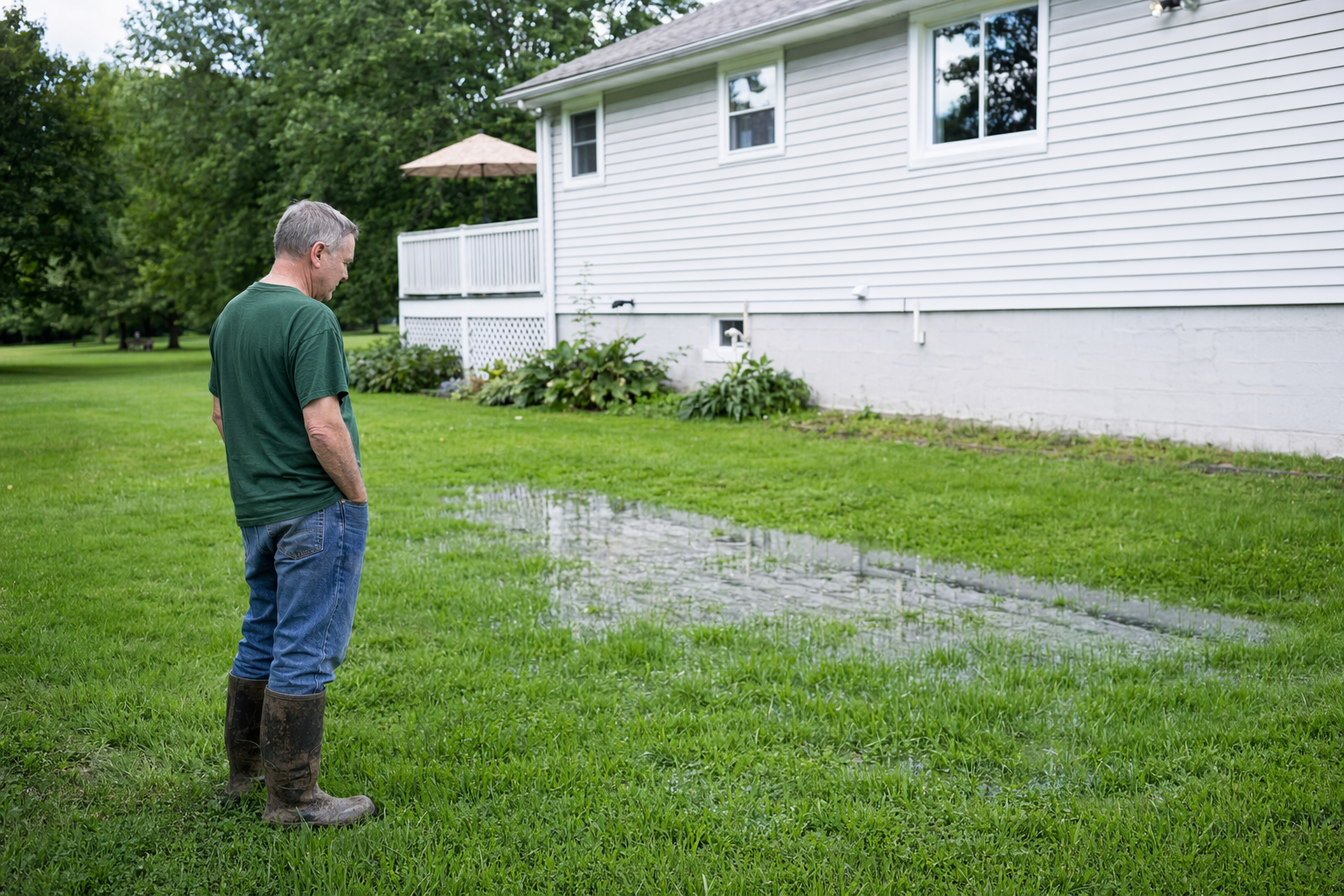
A Wet, Soggy Spot Over My Drain Field
If the ground above your drain field is wet, soft, or unusually green, that is a warning sign. In some cases, it happens after heavy rain and improves as the soil dries out. In other cases, it can mean wastewater is not draining properly and is rising too close to the surface.
A drain field, also called a leach field, is the part of the septic system that sends treated wastewater into the soil. When that area stays soggy, the system may be overloaded, blocked, damaged, or failing.
Watch for other clues too, like slow drains, toilet gurgling, sewage smells, or backups in the house. If you are seeing more than one symptom, read Septic warning signs and plan to get help soon.

The short answer
A wet spot over the drain field is not normal if it keeps coming back, smells bad, or appears during dry weather. It may point to a septic problem that needs professional attention.
What to do now:
- Cut back on water use right away.
- Keep children and pets away from the wet area.
- Do not drive, dig, or build over that part of the yard.
- If sewage is backing up into the house, treat it like an urgent problem and look at emergency septic service.
- Arrange an inspection by a licensed septic professional.
Leachstead is a free matching and information service. We are not a septic company, but we can help you get matched with a trusted septic pro in your area.
What you need to know
A soggy drain field does not always mean full replacement, but it does mean you should take it seriously.
Common reasons for a wet spot include:
- Too much water going into the system in a short time, from laundry, long showers, guests, or leaks.
- A full septic tank that needs pumping.
- A clogged pipe or blocked distribution area.
- Soil that is already saturated from rain or flooding.
- Damage from vehicles, construction, or tree roots.
- A drain field that is no longer treating water the way it should.
A few important points:
- Pumping the tank may help in some situations, but it does not fix every drain field problem.
- Septic additives are not a reliable cure for a soggy yard or a failed field.
- Raw sewage and failing drain fields can expose your family, pets, well water, and groundwater to contamination. Keep your distance.
- Septic repair and replacement work often requires permits and licensed or certified installers. Rules vary by county and state. Always verify the contractor's license, the permit, and your local health department requirements yourself.
If you want a clearer picture of repair and replacement possibilities, see Drain field repair and Septic services. Those pages explain the types of help homeowners often ask for, but only an on-site pro can tell you what makes sense for your property.
Steps to take
Here is a simple plan.
- Use less water now.
- Delay laundry and long showers.
- Fix obvious leaks if you can do so safely.
- Spread out dishwasher and bathing use.
- Stay away from the wet area.
- Keep kids and pets out.
- Do not mow deeply into muddy ground if it may splash contaminated water.
- Do not let vehicles or heavy equipment cross the area.
- Make a few notes before the visit.
- When did you first notice the soggy spot?
- Has it been raining a lot?
- Is there an odor?
- Are drains slow or toilets gurgling?
- When was the tank last pumped?
- Gather any records you have.
- Past pump-out receipts.
- Inspection reports.
- A site plan, if you have one.
- Schedule professional help.
- Ask whether they do septic inspections, pumping, drain field diagnosis, or all three.
- Ask for written pricing before work starts.
- Get more than one opinion if the recommended work is large.
A good next step for many homeowners is an inspection, sometimes along with pumping if the tank is overdue. The right order depends on the symptoms and the system. A local licensed pro can walk you through that after seeing the site.
If you are ready, you can get matched for free. You compare options and choose who to contact.
Common mistakes
These mistakes can make the problem worse:
- Ignoring it because the house still drains.
A soggy field can become a backup later.
- Assuming rain is the only cause.
Rain can contribute, but a septic issue may still be there underneath.
- Pumping again and again without finding the cause.
Pumping can be part of the solution, but repeated pumping without diagnosis may waste money.
- Using additives or harsh drain chemicals as a fix.
These products usually do not solve a saturated or failing field.
- Driving, parking, or placing heavy items over the drain field.
Weight can compact soil and damage pipes.
- Digging into the area yourself.
A failing drain field is not a safe DIY project.
- Hiring without checking credentials.
Ask whether the pro is properly licensed for septic work in your area. Confirm permits if repair or replacement is proposed.
For more quick answers like this, visit Help.
Get matched with a pro
A wet spot over the drain field is one of those problems that is easier to deal with early. If it is caught sooner, you may have more options. If it is ignored, the mess and cost can grow.
Leachstead is not a septic contractor. We do not inspect, pump, or repair systems. We are a free service that helps homeowners understand the problem and connect with local septic professionals.
When you get matched with a trusted septic pro, you can:
- Describe what you are seeing in plain language.
- Ask for an inspection, pumping, or repair evaluation.
- Compare written quotes and services.
- Choose the company you want to work with.
Typical ranges, not quotes, can vary a lot by location, access, permits, soil, and system type. Confirm the price, scope of work, and permit responsibility before work begins.
Common questions
Can heavy rain alone cause a soggy spot over the drain field?
Yes, heavy rain can saturate the soil and make the area look wetter for a while. But if the spot smells, stays wet during dry weather, or comes with slow drains or backups, there may also be a septic problem.
Should I pump the septic tank if the drain field is wet?
Maybe, but not automatically. If the tank is overdue, pumping may be part of the response. It does not fix every drain field issue, so a professional diagnosis is still important.
Is it safe to mow or walk on a wet drain field?
Use caution. Keep children and pets away, and avoid close contact with wet soil that may contain wastewater. Do not drive or place heavy equipment on the area. If the ground is very wet or sewage is visible, leave it alone and call a licensed septic pro.