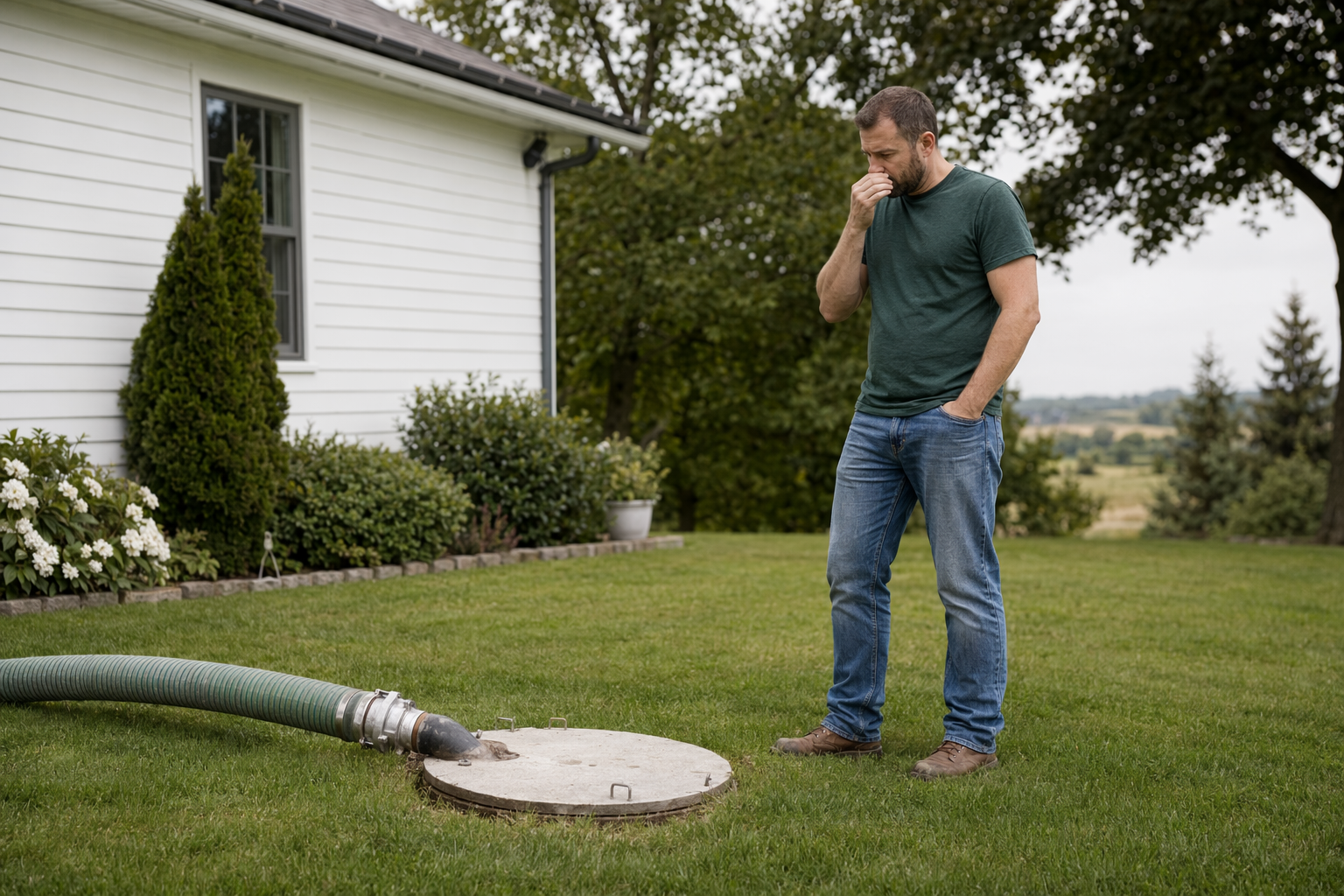
Sewage Smell In or Around the House — What It Means
A sewage smell is not just unpleasant. It is a sign that something in the plumbing or septic system may be wrong.
If the smell is inside, common causes include a dry floor drain, a loose toilet seal, a clogged drain, or a venting problem. If the smell is outside, especially near the tank or drain field, it can point to a full tank, an effluent problem, or a saturated drain field.
One smell by itself does not tell you exactly what has failed. But when odor shows up with slow drains, gurgling toilets, backups, or a wet patch in the yard, the septic system moves higher on the list. See more related red flags in Septic warning signs.

The short answer
A sewage smell in or around the house often means one of these:
- A plumbing trap has dried out, letting sewer gas come back inside.
- A toilet wax ring or seal may be leaking gas.
- A drain or vent line may be clogged or damaged.
- The septic tank may be overdue for pumping.
- The drain field may be overloaded, flooded, or failing.
If you also have sewage backing up, stop using water as much as you can and treat it like an urgent problem. Keep children and pets away from any wastewater or soggy area outside. Raw sewage can carry germs, and a failing system can affect soil and groundwater.
If there is an active backup or overflow, emergency septic service is usually the right next step.
What you need to know
Start with where the smell is strongest.
Smell inside the house
- If it is strongest near a shower, laundry room, basement drain, or guest bathroom, a drain trap may have dried out. The trap is the curved section of pipe that holds water and blocks sewer gas.
- If it is strongest around one toilet, the toilet seal may be failing.
- If several fixtures smell and drains are slow, there may be a clog or vent issue, or the septic system may be struggling.
Smell outside the house
- If the odor is near the septic tank lids or risers, the tank may be overdue for service, or there may be a lid or seal issue.
- If the odor is near a soggy or extra-green area, the drain field may be saturated.
- Heavy rain can make an existing septic problem easier to notice because the soil cannot absorb as well.
Other clues matter
Watch for these patterns:
- Slow sinks and tubs
- Toilets that gurgle
- Wastewater backing up into the lowest drains
- Wet ground over the drain field
- Strong odor after laundry or long showers
Those signs together often mean this is more than a minor smell problem. You may need septic tank pumping and cleaning or an inspection to figure out whether the issue is the tank, the plumbing, or the drain field.
Keep in mind, pumping is not a cure for every odor. If the drain field is failing, pumping may only provide temporary relief. A licensed septic pro can inspect the system and explain the next steps. Septic work often requires permits, and rules vary by county or health department, so verify the license, permit, and local requirements yourself.
Steps to take
Here are practical first steps.
1. Cut back water use right away.
Take short showers. Delay laundry. Run the dishwasher later. Less water gives the system less to handle.
2. Check for the simple indoor causes.
If a sink, shower, or floor drain is rarely used, run water into it for a minute. That can refill a dry trap and stop sewer gas.
3. Notice the pattern.
Ask yourself:
- Is the smell inside, outside, or both?
- Did it start after heavy rain?
- Are drains also slow?
- Is there any wet or soggy area in the yard?
4. Look, do not dig.
You can walk the yard and note wet spots or odor, but do not open tanks, enter any pit, or try to repair a failed system yourself. Septic gases and raw sewage are dangerous.
5. Keep people and pets away from wastewater.
If you see black water, gray water, or sewage on the ground, block off the area.
6. Call for professional help if the smell continues or comes with other signs.
A septic pro may recommend pumping, inspection, line cleaning, or further testing depending on what they find. You can compare options through our septic services or go straight to get matched.
If you are not sure whether this is just odor or a more serious warning sign, the help center has quick answers for common septic problems.
Common mistakes
These mistakes can make the situation worse:
- Ignoring the smell for weeks or months. Small problems can turn into backups or yard contamination.
- Using lots of water to "flush it through." More water often makes a septic problem worse.
- Pouring harsh chemicals down drains. This can damage plumbing, upset the tank biology, or hide the real issue without fixing it.
- Assuming a pump-out fixes everything. Pumping helps if the tank is full, but it does not guarantee the drain field or lines are okay.
- Letting kids or pets near a soggy, smelly area. Wastewater exposure is a health risk.
- Hiring without checking basics. Septic work commonly needs licensed or certified pros and permits. Always verify credentials, written scope, and local rules yourself.
It also helps to get the price in writing before work starts. Typical ranges are not quotes. The final cost depends on access, tank size, local labor, permit needs, and what the inspection finds.
Get matched with a pro
If the sewage smell is getting stronger, keeps coming back, or comes with slow drains, gurgling, backups, or a wet yard, it is time to have it checked.
Leachstead is a free matching and information service. We are not a septic company. We help homeowners compare local septic pros, in your language, so you can ask questions, review written quotes, and choose what feels right for your home.
Use get matched to request help. If needed, ask about pumping, inspection, and whether the drain field should be evaluated too.
Common questions
Can a sewage smell go away on its own?
Sometimes, if the cause is a dry drain trap in a rarely used sink, shower, or floor drain. But if the smell keeps coming back, or you also have slow drains, gurgling, or wet ground outside, do not assume it solved itself. Those signs need professional attention.
Does a sewage smell always mean my septic system has failed?
No. The odor can come from a simple plumbing issue, like a dry trap or bad toilet seal. But it can also point to a full tank, clogged line, or drain field problem. The smell alone is not enough to diagnose the system. A licensed pro can inspect and explain what they find.
Should I get pumping or an inspection first for a sewage smell?
It depends on the signs. If the tank is due or overdue for service, pumping may be part of the solution. If there are repeated odors, backups, soggy ground, or concern about the drain field, an inspection may also be important. Ask the pro what they recommend and get the scope and price in writing before work starts.