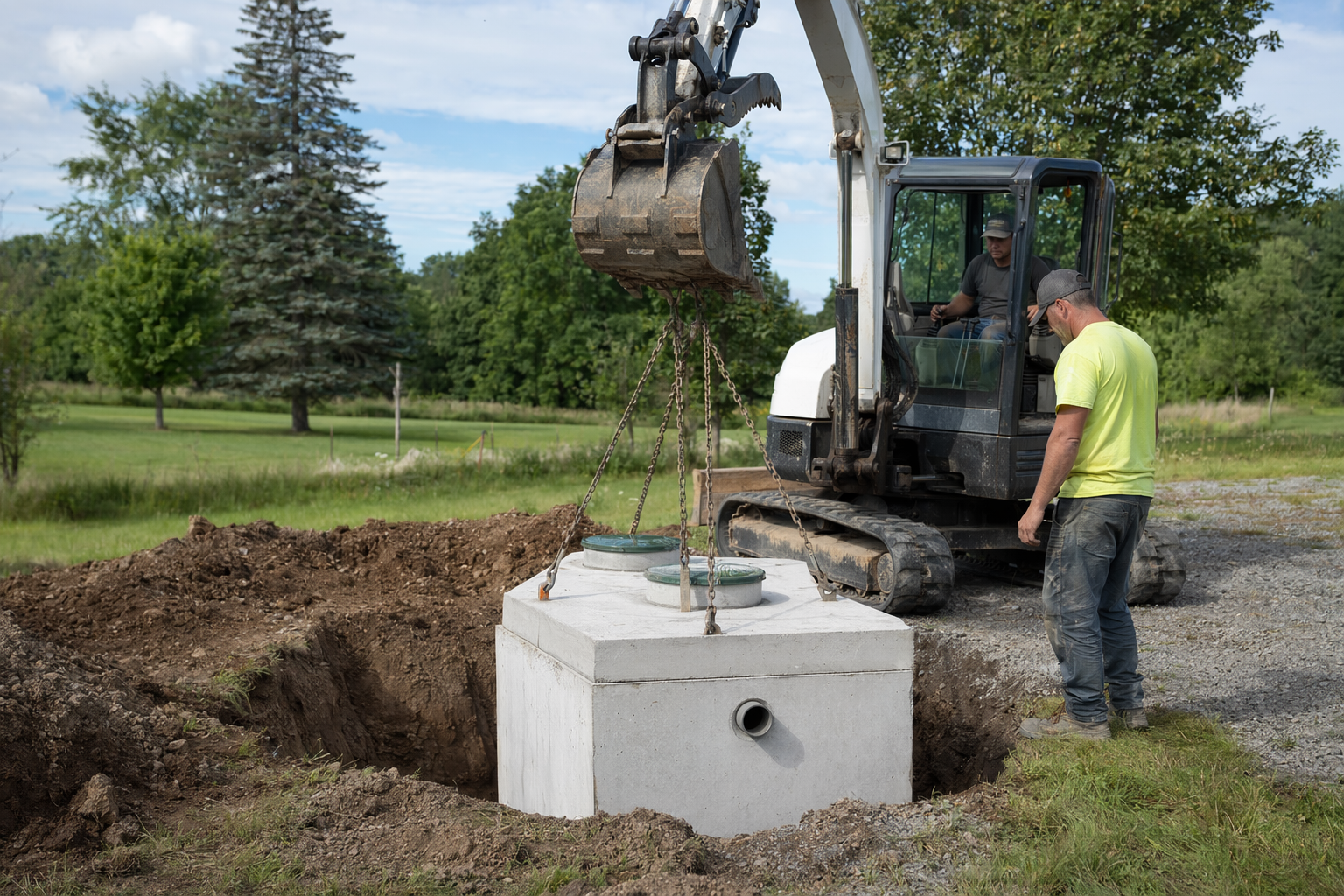
How much does a new septic system cost?
For many homes in the US, a new septic system often falls in the range of about $8,000 to $25,000 or more, not a quote. A simple conventional system on an easy site may land near the lower end. A difficult site, larger home, or alternative system can push the price much higher.
If you are replacing a failed system, the total can include more than just the tank. You may also be paying for site testing, design, permits, excavation, drain field work, inspections, and restoration of the yard afterward.
If you want a broader look at septic pricing, see our septic cost guide.

The short answer
The short answer is this: the price depends heavily on what your land can support and what your local rules require.
Two neighbors can get very different prices, even if their homes are similar. That is because septic systems are built for the property, not just the house.
Typical factors that change cost include:
- Type of system, conventional or alternative
- Tank size and household size
- Soil conditions and perc test results
- High groundwater, rock, slope, or a small lot
- Whether this is a brand-new install or a replacement
- Permit, design, and inspection requirements
- Excavation difficulty and access for equipment
- Removal or abandonment of old septic parts
- Electrical work, pumps, or alarms for some systems
A low price is not always a better price. A system still has to match the site and pass the required local steps.
What you need to know
There is no true one-size-fits-all septic price. Before anyone can give a solid written quote, they usually need to know what kind of system your property is allowed to have.
A few important things to know:
- Conventional systems usually cost less than alternative systems. If your soil drains well and your lot has enough usable space, a conventional setup may be possible.
- Alternative systems can cost more. Mound, aerobic, drip, and other special designs are often used when soil, water table, or lot limits make a standard system hard or impossible.
- Permits matter. Septic installation and replacement usually require permits, approved designs, and inspections. Rules are local, so homeowners should verify permit needs and health-department requirements themselves.
- Replacement work can uncover surprises. Old tanks, damaged lines, poor access, root problems, and saturated drain fields can change the scope.
- The cheapest bid may leave things out. Ask what is included. For example, is the quote covering design, permits, tank, drain field, pump chamber if needed, inspection fees, and yard restoration?
If you are not sure whether you need a repair or full replacement, our guide on repair vs replacement costs and decisions can help you understand the difference.
Also, if sewage is backing up into the house or surfacing in the yard, keep children and pets away from the area. Raw sewage is a health and groundwater hazard. This is not a DIY job when a system is failing.
For installation basics, permits, and system types, you can also read about septic system installation and replacement.
Steps to take
If you think you may need a new septic system, here is a calm way to move forward:
- Confirm the problem. Slow drains or odors do not always mean full replacement. In some cases, pumping or inspection comes first.
- Gather any records you have. Look for old permits, drawings, pump-out receipts, inspection reports, and repair invoices.
- Ask what type of system your property can support. Soil conditions and local rules often decide this.
- Get written quotes. Compare scope, not just price. Confirm what is included before work starts.
- Verify license and permit details yourself. Septic work usually requires licensed or certified professionals and local permits.
- Ask about the full project timeline. Design, permit review, weather, inspections, and equipment access can all affect scheduling.
- Plan for temporary disruption. Parts of the yard may be dug up, and some systems need room for machinery.
Good questions to ask a contractor include:
- Is this quote for repair, replacement, or further evaluation?
- What system type are you recommending, and why?
- What is included in this price, and what could cost extra?
- Who handles permits and inspections?
- Will old components be removed, replaced, or abandoned according to local rules?
- What kind of site restoration is included?
If you are still sorting out symptoms, our quick septic answers page can help you narrow down what may be going on first.
Common mistakes
Homeowners often make the same few mistakes when they are stressed and trying to solve the problem fast.
- Assuming every backup means total replacement. Sometimes the issue is elsewhere. Inspection can matter before major digging starts.
- Focusing only on the tank price. The drain field, design, permits, excavation, and site conditions often drive the total cost.
- Accepting a verbal price only. Get a written quote and review what is included.
- Skipping permit questions. Always verify permit needs, installer licensing, and your local rules yourself.
- Ignoring safety. Stay away from sewage-exposed areas, keep kids and pets out, and do not try to repair a failed drain field yourself.
- Comparing bids that are not equal. One quote may include design and restoration, while another may not.
If your yard is wet or sewage is surfacing, that can point to drain field trouble. Our page on drain field and leach field repair explains that side of the problem in plain English.
Get matched with a pro
If you need help finding someone local, Leachstead can help you compare your next step. We are a free matching and information service for homeowners, not a septic company.
You can request to get matched with a trusted septic pro for pumping, inspection, repair, or replacement. You compare options, ask questions, and choose what works for your home and budget.
If you want to see the kinds of help available first, visit our septic services page.
Before agreeing to work, remember to:
- Ask for a written quote
- Confirm what is included in the price
- Verify the license or certification
- Verify permit responsibility
- Check local health-department or building-rule requirements yourself
A new septic system can be a big expense. But clear information, written pricing, and the right local pro can make the process much easier to manage.
Common questions
What is included in the cost of a new septic system?
It depends on the property and the quote. A full project may include site evaluation, design, permits, the tank, drain field, excavation, materials, labor, inspections, and some yard restoration. Always ask what is included and what could cost extra.
Why do septic replacement quotes vary so much?
Quotes can vary because properties are different. Soil, slope, groundwater, lot size, access for equipment, local permit rules, and system type all affect the price. A conventional system may cost less than an alternative system required for a difficult site.
Can I just replace the tank and keep the old drain field?
Sometimes an existing drain field may still be usable, but not always. That depends on the condition of the field, site rules, and what the installer and local authority require. Do not assume the tank alone is the whole job. A proper evaluation is important.