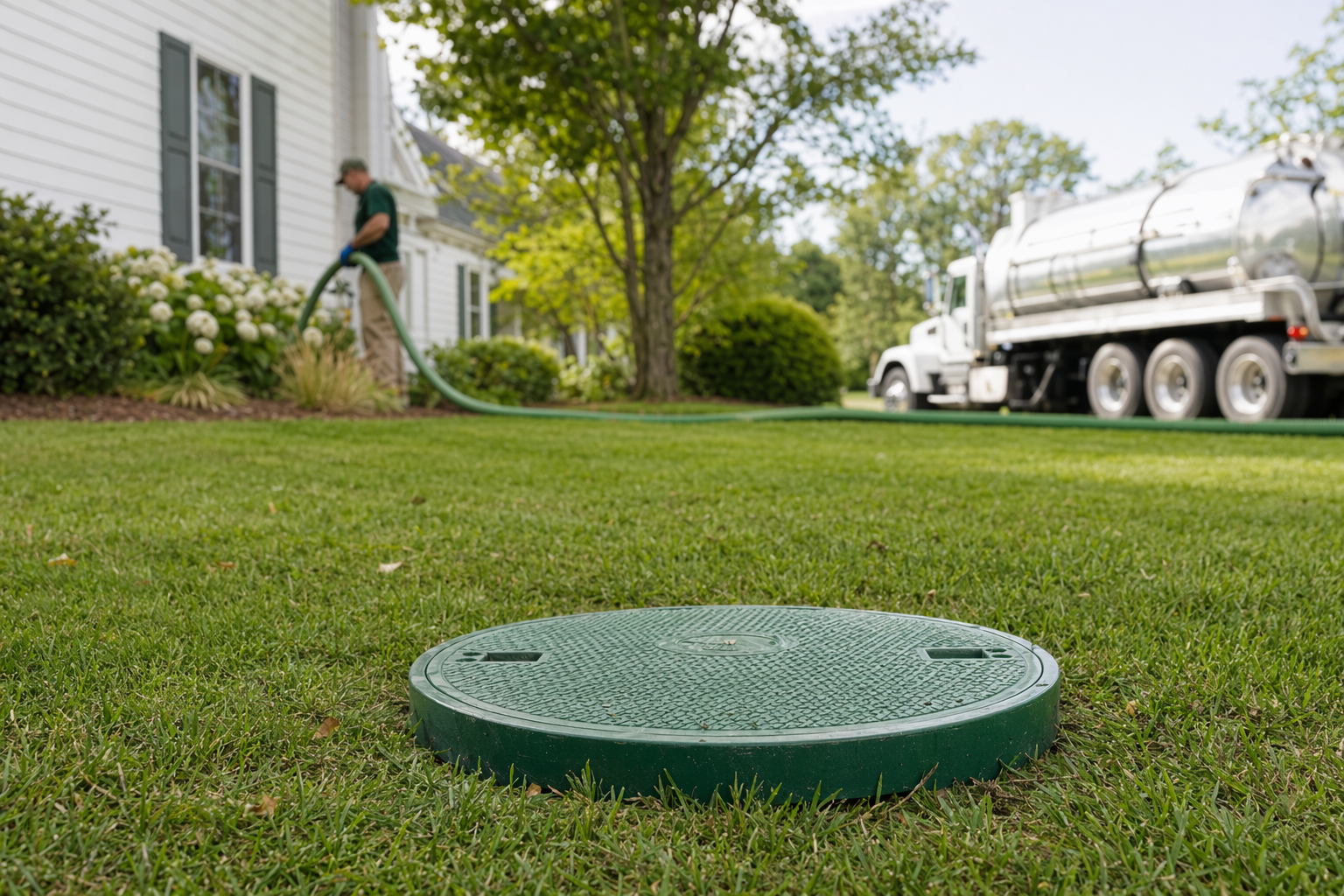
What size is my septic tank?
Most residential septic tanks in the US are commonly 750 to 1,500 gallons, with many single-family homes falling around 1,000 to 1,250 gallons. Larger homes may have 1,500 gallons or more.
But there is no safe way to guess your exact tank size just by looking at the house. Bedroom count, home age, local code, additions, and past replacement work all matter. Two homes that look similar can have different tank sizes.
If you need the real answer for pumping, inspection, repair, or planning, the best sources are:
- the property records or permit records
- old installation paperwork
- a septic diagram, sometimes called an "as-built"
- a licensed septic inspector or pumper who can identify the tank on site
If you are not even sure how the system is laid out, start with how a septic system works.

The short answer
Here is the short version:
- Small homes may have tanks around 750 to 1,000 gallons
- Many 3-bedroom homes often have tanks around 1,000 to 1,250 gallons
- Larger homes may have tanks around 1,500 gallons or more
That said, septic size is usually based more on expected wastewater use, often tied to bedroom count, than on square footage alone. A big house with few bedrooms may be designed differently from a smaller house with more bedrooms.
Also, the tank is only one part of the system. A tank can be a certain size, but the drain field may still be the part that limits performance. If you have slow drains, odors, or wet ground, do not assume tank size is the only issue. Review common septic warning signs and get the system checked if needed.
What you need to know
A few things matter when people ask about septic tank size.
1. Bigger is not always the main issue
A tank that is "too small" is not the most common thing homeowners discover. More often, the issue is overdue pumping, a damaged baffle, a clogged outlet filter, heavy water use, or a drain field problem.
2. The home may have changed since installation
If a house was remodeled, added onto, or converted to more bedrooms, the original septic design may not match current use. That can affect performance and may matter for permits or future sale questions.
3. Tank size affects maintenance planning
Smaller tanks can fill faster, especially with a large family or heavy laundry use. But pumping should be based on the actual condition of the tank, not a guess. Learn more at septic tank pumping.
4. Records are often the fastest path
Your county or local health department may have permit records, diagrams, or inspection notes. Availability varies by area. Septic rules are local, so always verify your own records, permit requirements, and health-department rules yourself.
5. Exact size may require opening and measuring the tank
A septic pro may identify the manufacturer label, compare the tank dimensions, or check records against what is actually installed. Do not open or enter a septic tank yourself. Septic tanks contain dangerous gases and are not safe for DIY inspection.
6. Problems do not always mean the tank is full
Gurgling toilets, sewage smell, or backups can happen for different reasons. If sewage is backing up into the home, keep children and pets away from the area and consider urgent help through emergency septic service.
Steps to take
If you want to find out your septic tank size, take these steps in order:
1. Look for paperwork first
Check your closing documents, old invoices, inspection reports, and any septic drawings.
2. Check local records
Your county, building office, or local health department may have permit files or an as-built drawing.
3. Ask the previous owner, if possible
They may know when it was installed, replaced, or pumped.
4. Find the tank location
If you do not know where it is, read How to Find My Septic Tank and Lid.
5. Have a licensed septic pro confirm it
A pumper or inspector may be able to estimate or verify the tank size based on dimensions, records, and what they see on site.
6. Keep a record for later
Once you know the size, save the paperwork. It helps with pumping schedules, inspections, home sales, and future repairs.
If you are shopping for service, get written quotes, ask what is included, and confirm price before work starts. Typical ranges are not quotes, and the final price depends on access, tank condition, location, and local rules.
Common mistakes
Homeowners often run into the same few mistakes here.
- Guessing by home size alone. Square footage is not enough.
- Assuming every 3-bedroom house has the same tank. Local code and old installations vary.
- Confusing tank size with drain field size. They are related, but not the same thing.
- Assuming a larger tank fixes a failing system. If the drain field is failing, the answer may be more complicated.
- Opening, measuring, or pumping the tank yourself. This is not safe. Raw sewage is a health hazard.
- Ignoring warning signs because the tank was "just pumped". A backup after pumping can point to a different problem.
- Skipping permits and license checks. Septic work often requires permits and licensed or certified installers. Verify the license, the permit, and your local rules yourself.
If you are deciding between maintenance, inspection, or repair, the services page can help you understand the options.
Get matched with a pro
If you want help figuring out your septic tank size, Leachstead can help you get matched with a trusted local septic pro. We are a free information and matching service, not a septic company.
You can request help for:
- pumping and tank access questions
- septic inspections
- drain field concerns
- urgent backup or sewage problems
A local pro may be able to review records, locate the tank, and confirm what is installed. You compare options and choose what works for you. Start here, get matched.
If there is sewage in the house or yard, keep children and pets away, avoid direct contact, and do not treat it as a DIY job. Failing septic systems can be a health and groundwater hazard.
Common questions
Can I tell my septic tank size by counting bedrooms?
You can make a rough guess, but not a reliable answer. Bedroom count is often used in septic design, but actual tank size depends on local code, home age, upgrades, and what was installed.
Does a 1,000-gallon tank mean I need pumping every year?
Not always. Pumping timing depends on tank size, household size, water use, and what goes into the system. A septic pro can inspect sludge and scum levels and advise based on the tank's condition.
If my tank is small, should I replace it with a bigger one?
Maybe, maybe not. A small tank is not always the real problem, and replacement may involve design limits, permits, soil conditions, and drain field requirements. Have a licensed septic professional evaluate the full system before making plans.