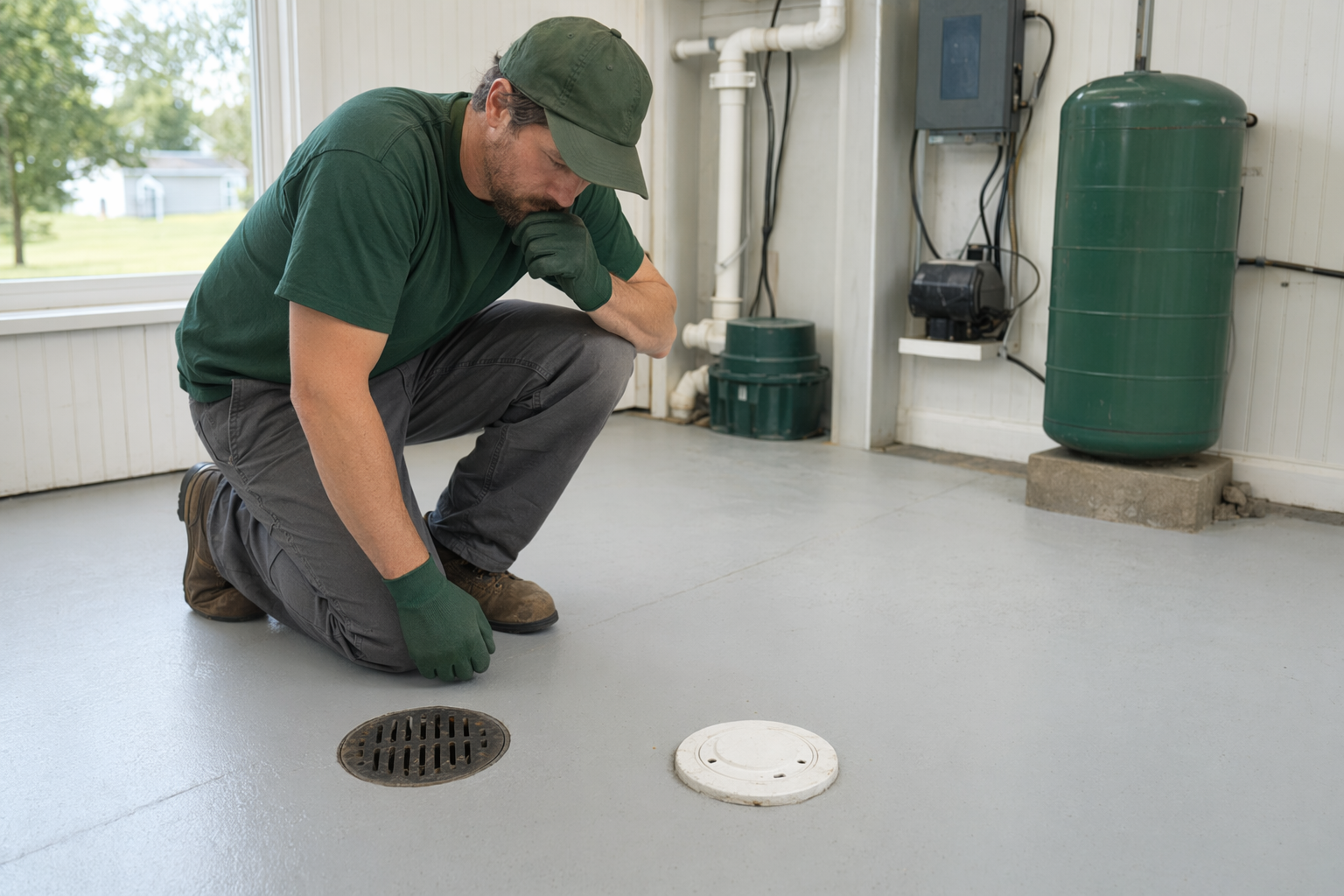
How the problem built up
This is an anonymized, composite story based on common homeowner experiences.
A family in a single-family home had a septic system but did not think much about it. The house seemed fine most of the time. The kitchen sink drained slowly. One bathroom toilet made a bubbling sound after flushing. After heavy laundry days, the downstairs shower took longer to clear.
They told themselves it was probably old pipes, too much holiday cooking, or hair in the drain. Life was busy. No one wanted to deal with it.
There were a few more clues:
- A light sewage smell outside near the yard from time to time
- Wet-looking grass in one area that seemed greener than the rest
- Drains that got worse when several fixtures were used the same day
Those are common warning signs homeowners often miss. If this sounds familiar, our septic warning signs guide explains what those clues can mean in plain English.
Then came the breaking point. The night before guests were due, after back-to-back showers, laundry, and a loaded dishwasher, wastewater backed up into the lowest drain in the home. The family cleaned up what they could, stopped using water, and realized this was not a simple clog.
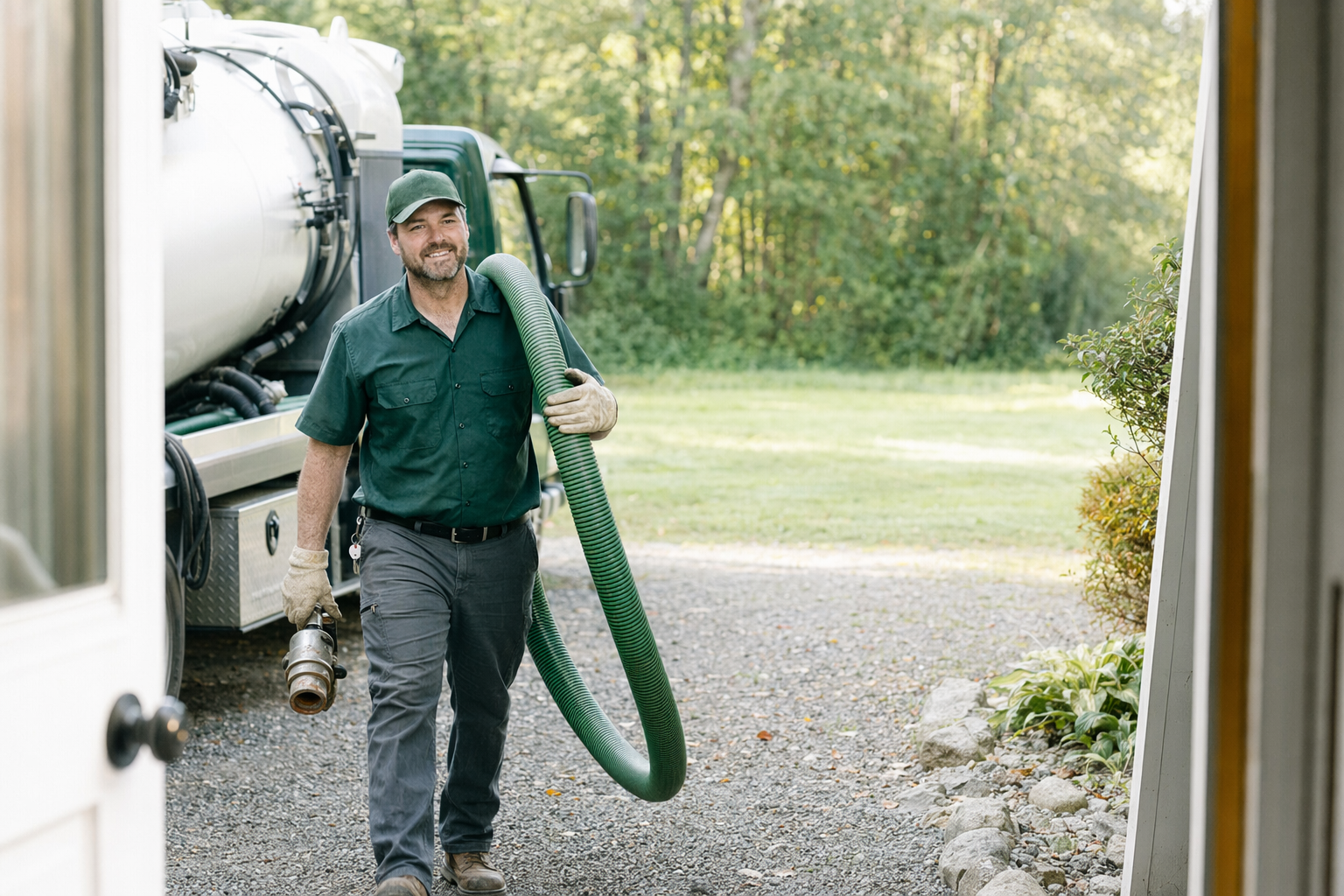
What they did next
At first, they made the same mistake many people make. They hoped it would go away by morning.
Instead, they did the safer thing. They stopped running water right away. They kept children and pets away from the affected area. They did not try to open the tank themselves or dig around the yard. Raw sewage can carry germs, and a failing drain field can be a health and groundwater hazard.
They also understood an important point, this was beyond a DIY fix. A septic backup can be caused by a full tank, a blockage, a damaged line, or trouble in the drain field. Only a qualified local septic pro can inspect the system on site and say what they actually found.
Because it felt urgent, they looked for emergency septic service and learned what to do while waiting. They also realized they had no service records, no recent pump-out date, and no clear idea how their system worked. That is common, especially for homeowners who have lived with city sewer before.
What we helped with
Leachstead is not a septic company. We are a free matching and information service for homeowners.
In this case, we helped the family do three simple things:
1. Understand the likely problem
We shared plain-language information about what slow drains, gurgling, odors, and wet yard spots often mean. We pointed them to how a septic system works so the situation made more sense.
2. Get matched with a local septic pro
We helped them request contact from a trusted local company through get matched. They could compare availability, ask questions, and choose who to hire.
3. Prepare to ask better questions
We encouraged them to ask for written pricing before work started, and to ask whether the visit was for pumping, troubleshooting, inspection, or more than one service. Septic prices can vary by access, tank size, location, and what the pro finds. Typical ranges are useful for planning, but they are not quotes.
We also reminded them to verify the company license, any required permit, and local health-department rules themselves. Septic work often involves permit and licensing requirements, especially if repair or replacement is needed.
The outcome after service
The local pro inspected the system and pumped the tank. In this family’s case, the immediate backup problem eased after the pump-out, and they were able to use the home again with much less stress.
Just as important, they finally got a clearer picture of their septic habits. The household had been putting a lot of water through the system in short bursts. They had also gone too long without routine service.
The visit did not turn into a promise that everything would be perfect forever. No honest pro can promise that from a single visit. But the family left with practical next steps:
- Keep a record of pump-outs and service dates
- Spread out laundry instead of doing many loads in one day
- Watch for repeat warning signs
- Learn what should never be flushed
- Plan regular maintenance instead of waiting for another crisis
For many homes, septic tank pumping is basic maintenance, not a repair. If warning signs come back soon after pumping, more evaluation may be needed.
What you can learn from their mistake
The big lesson is simple. Septic systems usually whisper before they shout.
Slow drains, toilet gurgling, bad smells, and soggy patches in the yard are easy to ignore because they come and go. But they can be the early signs of a system that needs attention.
A few practical takeaways:
- Do not wait for a holiday, party, or house full of guests to take symptoms seriously.
- If sewage backs up, stop using water and keep people and pets away from the area.
- Do not assume every backup is just an indoor pipe clog.
- Do not try to handle a failing septic system yourself.
- Get written estimates and confirm pricing before work starts.
- Verify licensing, permits, and local rules yourself.
If you are seeing the same pattern this family saw, start with education, then get local help. You can read more homeowner stories at stories or explore maintenance basics in our guides.
The good news is not that every septic problem is small. It is that acting early usually gives you more options, less mess, and less stress.
Common questions
If my drains are slow but nothing has backed up yet, should I still call someone?
It is usually smart to pay attention early. Slow drains, gurgling, odors, or a wet yard can be early septic warning signs. They do not always mean the same problem, but waiting can lead to a bigger mess. A local septic pro can assess the system on site.
Does a pump-out always fix a sewage backup?
No. Sometimes pumping helps right away, especially if the tank is overdue for service. But a backup can also involve a blockage, damaged line, or drain field problem. A pump-out is not a guarantee that the whole system is fine.
What should I do right now if sewage is backing up into the house?
Stop using water right away. Keep children and pets away from the area. Avoid DIY septic work or opening the tank yourself. Arrange qualified local help as soon as you can, and ask about emergency service. Clean-up and next steps depend on what the pro finds on site.