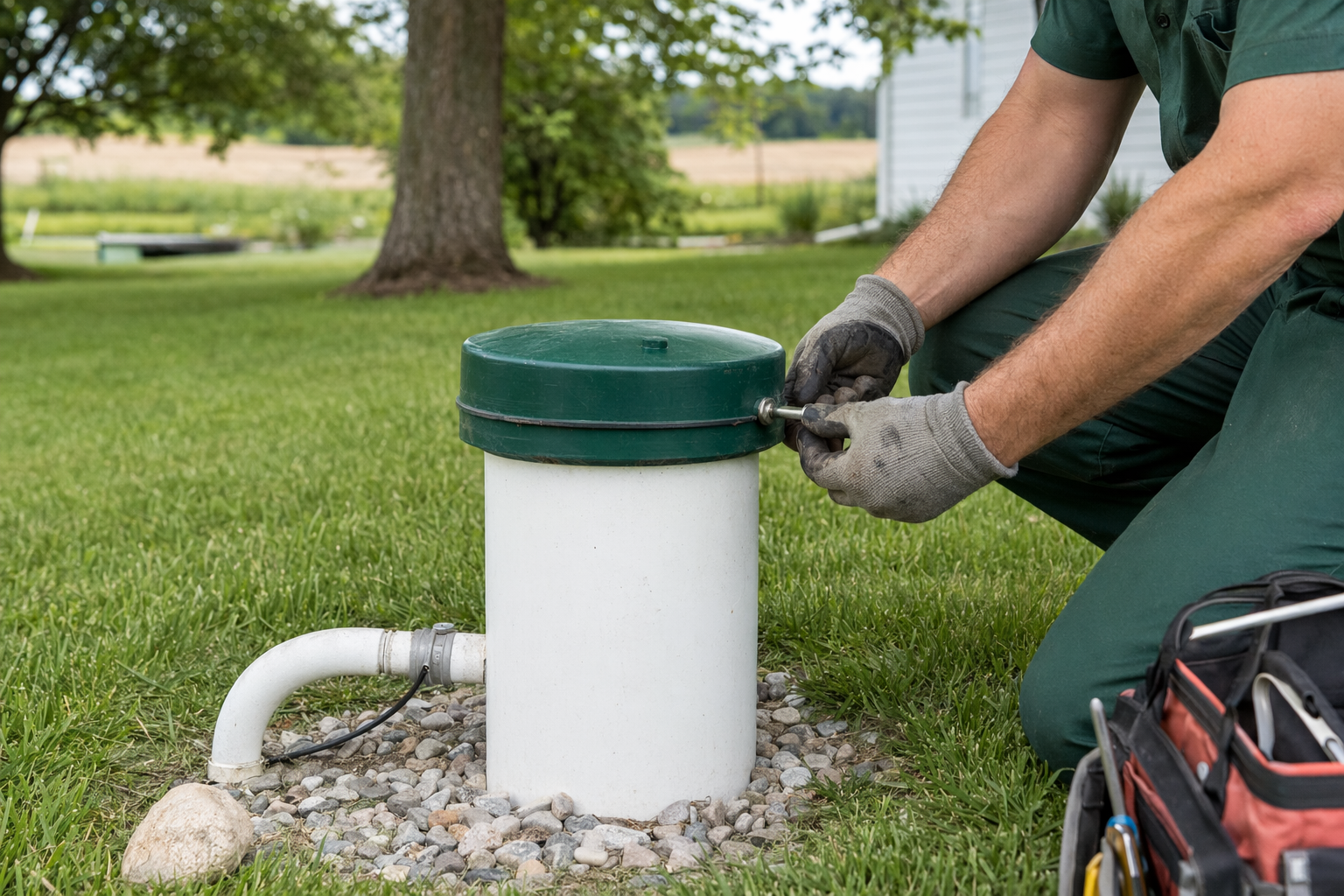
Septic safety, your family, and the groundwater
A septic system handles wastewater from your toilets, sinks, showers, and laundry. When it is working well, waste is treated underground. When it is not, germs and pollution can move where they should not.
That matters because wastewater can carry bacteria, viruses, and parasites. It can also carry nutrients and household chemicals. If sewage reaches the ground surface, a ditch, a creek, or a drinking-water well, it becomes more than a home repair issue.
A failing system can create risks for:
- People in the home
- Children playing in the yard
- Pets
- Neighbors downhill or nearby
- Private wells
- Groundwater and surface water
If you are seeing sewage in the house, standing black or gray water in the yard, or strong sewage odors near the tank or drain field, treat that area as unsafe until a licensed septic professional has assessed it. Do not let children or pets near it. Do not try to dig into a wet drain field yourself.
If you are new to septic, start with the main septic guides and learn how the system works before you decide what kind of help to request.

Why it matters
Many homeowners think of septic trouble as messy and expensive, which it can be. But the health side is easy to underestimate.
Raw sewage exposure can happen through:
- Touching contaminated water or soil
- Splashing during a backup or cleanup
- Breathing in aerosols near disturbed sewage
- Drinking contaminated well water
Common concerns after exposure can include stomach illness, diarrhea, vomiting, skin irritation, and other infections. The exact risk depends on what is in the wastewater and who was exposed. Young children, older adults, pregnant people, and anyone with a weakened immune system may be more vulnerable.
Well contamination is one of the biggest concerns in rural areas. If your home uses a private well, septic failure nearby can affect the quality of the water you drink, cook with, and bathe in. Water movement underground is not always obvious. Pollution can travel beyond your own yard.
This is also why local rules matter. Septic setbacks, which means required distances from wells, property lines, streams, ponds, and buildings, are set locally and can vary by county or state. There is no one safe number that fits every property in the US. Always verify your local health-department rules, permits, and spacing requirements yourself before any repair or replacement work starts.
Money matters too. Fast action can sometimes limit damage. Typical ranges, not quotes:
- Septic pumping often runs about $250 to $600
- A septic inspection often runs about $300 to $900, depending on scope and region
- Drain field repair can range from a few thousand dollars to much more, depending on the cause and design
- Full system replacement often lands in the many-thousands range, commonly around $8,000 to $25,000 or more, depending on soil, permits, site access, and system type
Those are broad homeowner ranges, not a promise. A failing system cannot always be saved. Sometimes replacement is the safer and more realistic answer, especially if the drain field has failed, the site no longer meets code, or the system is very old. You can learn more in Septic costs explained and When a septic system fails.
How it works
A basic septic system has two main parts, a tank and a drain field.
- Wastewater leaves the house and goes into the septic tank.
- Solids settle to the bottom. Grease and scum float to the top.
- The middle liquid layer flows out to the drain field.
- Soil below the drain field helps filter and treat that water.
When any part of that process breaks down, health risks go up.
Common ways systems become unsafe:
- The tank is overdue for pumping, so solids move out where they should not
- The drain field is saturated, damaged, or flooded
- Tree roots, crushed pipes, or blockages stop flow
- Too much water from the house overwhelms the system
- Vehicles, sheds, patios, or heavy loads damage the drain field area
- A very old or poorly installed system no longer works as designed
A key point many homeowners miss is this: pumping a tank can help if the problem is an overfull tank, but it does not fix a failed drain field. If the yard stays wet, sewage resurfaces, or backups return quickly after pumping, the problem may be deeper than the tank.
Also, septic systems need room and the right soil conditions to treat wastewater. That is why permits, site review, and setbacks from wells and water are so important. If someone tells you they can install or move a system without permits, slow down and verify their license and your local rules yourself.
For a simple overview, see how a septic system works.
What to watch for
Some warning signs are obvious. Others are easy to shrug off until the problem gets worse.
Watch for:
- Sewage backing up into tubs, showers, or floor drains
- Toilets that gurgle or drains that stay slow all over the house
- A strong sewage smell indoors or outside
- Wet, mushy, or unusually green patches over the drain field
- Standing water near the tank or drain field
- Toilet or drain problems after heavy rain
- Well water that changes in smell, taste, or appearance
- Frequent need for pumping
A few safety reminders if you see these signs:
- Keep children and pets out of the area
- Do not mow through sewage or wet waste spots
- Do not touch bare-handed soil or water that may be contaminated
- Do not open a septic tank lid unless you are a trained pro, tanks can contain deadly gases and fall hazards
- Reduce water use in the home until the problem is checked
If sewage has entered the home, limit contact and use caution during cleanup. Porous items touched by sewage may need to be thrown away. Hard surfaces usually need careful cleaning. If the backup is significant, many homeowners use a professional cleanup company along with a septic contractor.
If your home has a private well and you suspect septic failure nearby, use extra caution with drinking and cooking water until you have clear guidance from appropriate local authorities or a qualified water-testing provider. Leachstead is an information and matching service, not a health authority, so we keep this guidance general.
For symptom-focused help, you can also read Septic warning signs or request emergency septic service if the situation is urgent.
Common mistakes
A lot of septic damage starts with normal homeowners trying to get by for a few more weeks. That is understandable. It can also make the problem worse.
Common mistakes include:
- Waiting too long after slow drains, odors, or yard wet spots start
- Assuming pumping will solve every septic problem
- Using additives or treatments as a substitute for diagnosis and maintenance
- Letting kids or pets play near wet sewage areas
- Driving, parking, or building over the drain field
- Sending too much water into the system in one day
- Flushing wipes, grease, feminine products, cat litter, or other non-septic-safe items
- Hiring whoever is cheapest without checking license, insurance, permits, and scope of work
- Accepting verbal prices only, with no written quote
One more mistake is trying to DIY a failing system. Basic homeowner maintenance is one thing. Digging into a suspected failed drain field, entering a tank area, bypassing parts, or redirecting sewage on your own is not safe. Raw sewage is a health hazard. Septic tanks are confined spaces and can be deadly.
It is also a mistake to assume repair is always better than replacement. Sometimes a repair is appropriate. Sometimes the field is too far gone, the tank is collapsing, or the property needs a permitted redesign. A good pro should explain what they found, what may help, and what may not. Get written quotes. Confirm whether the price includes pumping, excavation, permits, materials, restoration, and follow-up visits.
If you are comparing options, our services page can help you understand the kinds of septic work homeowners commonly request.
When to get matched with a pro
You do not need to panic over every slow drain. But you should move quickly when there is a clear safety issue or a pattern that points to septic trouble.
Get matched with a local septic pro if:
- Sewage is backing up into the house
- Wastewater is surfacing in the yard
- You smell sewage near the tank, drain field, or well area
- Several drains are slow at once
- The problem returns soon after pumping
- You suspect the drain field is flooded or failing
- You are buying or selling a home with septic
- You have not had the system checked in years and have a private well nearby
A licensed septic professional may recommend pumping, inspection, line locating, baffle checks, drain field evaluation, or a repair or replacement plan. The right first step depends on what is actually wrong. That is why a real assessment matters.
Leachstead is not a septic company. We are a free matching and information service. We help homeowners connect with trusted local septic pros and compare options in plain English. You choose who to contact and which written quote works for you.
Before work starts, ask the pro:
- Are you licensed or certified for this kind of septic work in my area?
- Will permits be required, and who is pulling them?
- Does the quote include pumping, inspection, excavation, soil work, and site restoration?
- What is the likely next step if this does not solve the issue?
- How close is the system to my well, surface water, or property lines, and have local setback rules been checked?
If you need help now, use get matched. If you are not sure what type of service you need, start with Septic services we help you find a pro for.
Common questions
Can a septic problem really contaminate my well?
Yes, it can. A failing septic system can affect nearby groundwater, and private wells draw from groundwater. Risk depends on soil, distance, slope, system condition, and local site factors. Because local rules and site conditions vary, verify setbacks and testing options with your local health department and qualified local professionals.
Is it safe to stay in the house if the septic is backing up?
It depends on how severe the problem is, but treat backups seriously. Keep people and pets away from contaminated areas, reduce water use, and avoid contact with sewage. If sewage is coming into living areas or waste is surfacing outside, get professional help quickly. For urgent situations, request [emergency septic service](/services/emergency-septic-service/).
Will pumping fix a septic system that smells bad and has a soggy yard?
Not always. Pumping can help if the tank is simply too full. But a soggy yard, sewage surfacing, or problems that return soon after pumping can point to a failing drain field or another issue. In that case, pumping alone is usually not the full answer. A licensed septic pro should diagnose the cause before you decide on repair or replacement.