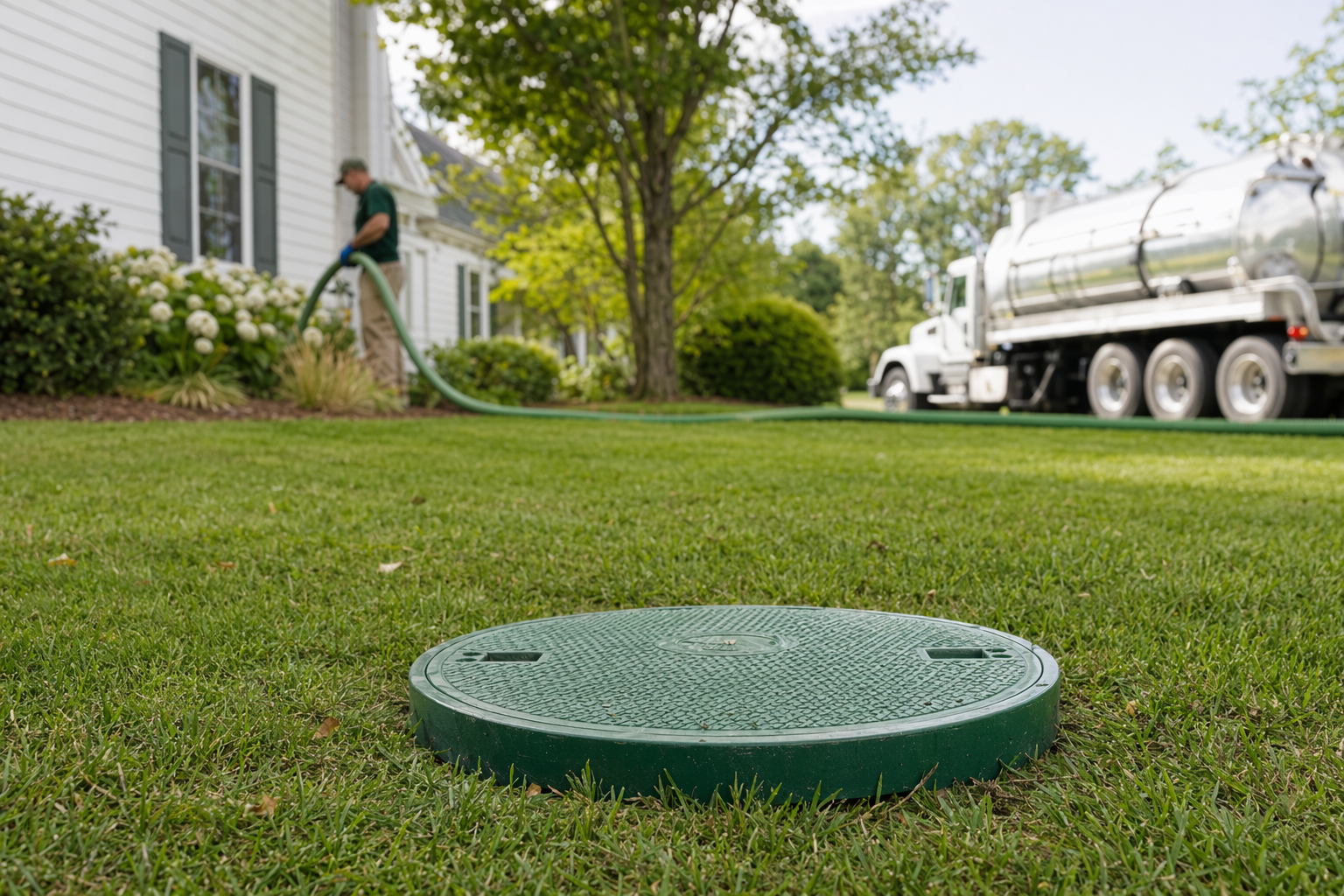
Septic Tank Risers and Easy Access
A septic tank riser is a vertical pipe or collar that connects the tank opening to the surface or just below it. It usually has a secure lid on top. The goal is simple, easy access.
Without a riser, a crew may need to locate the tank, dig up the lid, then cover it again every time the tank is pumped or inspected. With a riser, they can usually open the lid much faster.
For many homeowners, a riser is not a luxury. It is a practical upgrade that can make regular service easier and reduce repeated digging in the yard. If you are not sure where your tank is, start with quick septic answers or learn about septic tank pumping.

The short answer
Yes, septic tank risers are often worth it.
They do not fix a failing septic system. They do not replace pumping, inspection, or repairs. But they can make routine service easier, faster, and cleaner.
A good riser setup usually means:
- less digging at each visit
- easier access for pumping and inspection
- less yard damage over time
- a better chance that routine maintenance actually gets done on schedule
Typical installed price ranges vary by tank depth, materials, number of lids, and local labor. In many areas, homeowners may hear typical ranges from a few hundred dollars to over $1,000, not quotes. Always get written quotes and confirm what is included before work starts.
What you need to know
A few things matter before you add a riser.
Not every tank is the same
Concrete, fiberglass, and plastic tanks can use different riser parts and attachment methods. Older tanks may need extra care if the lid area is damaged or uneven.
There may be one lid or two
Many tanks have separate openings, often one over the inlet side and one over the outlet side. Some service visits need access to both. A homeowner may install one riser and later learn the second opening also needs access.
The lid must be secure
This is a safety issue, not just a convenience issue. The lid should fit properly and stay secured. Children and pets should never be able to open it. A damaged, loose, or missing lid is dangerous.
Depth matters
Some tanks are only a little below grade. Others are much deeper. The deeper the opening, the more parts and labor may be needed.
Local rules may apply
Septic work often involves permits, inspections, and licensed or certified installers. Rules vary by county and state. Before work starts, verify the license, the permit if required, and your local health-department rules yourself. For a broader overview, see septic permits and regulations.
A riser is not a repair
If you have sewage backup, strong odors, a wet yard over the drain field, or multiple slow drains, the real problem may be a full tank, a blockage, or a failing system. A riser helps access the tank. It does not solve the underlying problem. If you have active backup or overflow, keep people and pets away from the area and look into emergency septic service.
Safety comes first
Never climb into a septic tank. Never leave an open tank unattended. Raw sewage and failing septic areas can expose your family, your well, and groundwater to harm. Keep children and pets away, and respect safe distances from wells and water. You can read more in septic safety.
Steps to take
If you are thinking about adding septic risers, here is a simple way to handle it.
1. Find out where the tank and lids are
If you do not know the location, gather old records, inspection reports, or as-built drawings if you have them. A septic pro may also help locate the tank.
2. Ask whether one or both openings need risers
This can prevent a surprise later. Some jobs are easier if both main access points are brought up for service.
3. Get the tank checked at the same time if needed
If you are already due for maintenance, combining the visit can be efficient. Learn more about septic tank pumping and cleaning.
4. Ask what material and lid type will be used
You want parts that fit your tank properly and a lid designed for septic use. Ask whether the lid will sit at grade or slightly below grade.
5. Verify permits and licensing
Do not assume someone else handled this. Ask directly what permit, if any, is needed, and confirm the installer's license or certification yourself.
6. Get a written quote
Ask what is included, parts, digging, backfill, lid, labor, and whether one or two risers are in the price.
7. Keep a record after the work is done
Save the invoice, take photos, and note the tank location for future service. That can save time and money later.
Common mistakes
Homeowners make a few very normal mistakes with risers.
- Thinking a riser will fix septic symptoms. It only improves access. If the system is backing up or the yard is soggy, the cause still needs diagnosis.
- Installing only one access point when two are needed. This can lead to more digging later.
- Choosing convenience over safety. A loose or weak lid is not acceptable.
- Skipping local checks. Even small septic-related work may have local requirements.
- Trying to DIY a problem tank. Opening or working around a damaged tank, sewage, or a failed drain field can be dangerous. This is not a good DIY project when the system is already showing trouble.
- Forgetting future service. If the lawn is landscaped over the area or hidden under heavy features, access can become hard again.
If your bigger question is whether you need pumping, inspection, repair, or something more, visit our septic services to compare the common types of help.
Get matched with a pro
If you want easier septic access, or you are tired of paying for repeated digging, it may be worth talking to a local pro. They can look at your tank depth, lid layout, current condition, and whether risers make sense for your setup.
Leachstead is a free matching and information service. We are not a septic company, and we do not perform septic work. We help homeowners compare options and connect with local septic pros.
You can get matched with a trusted septic pro for pumping, inspection, riser installation, or a second opinion. Ask for a written quote, confirm the price before work starts, and verify the license, the permit, and local rules yourself.
Common questions
Do septic tank risers smell?
A properly fitted riser and lid should not create a constant odor problem by themselves. If you notice strong sewage smell, the lid may be damaged, the seal may be poor, or the system may have another issue that needs attention.
Can a septic riser be at ground level?
Sometimes, yes. In some installations the lid sits at or near ground level for easier access. In others it may be slightly below grade. What is appropriate can depend on the tank, the yard, safety, and local rules.
Should I add risers when I get my tank pumped?
Often that is a practical time to ask. The tank is already being located and opened, so a pro can tell you whether risers are possible and whether one or both openings should be brought up for future service.