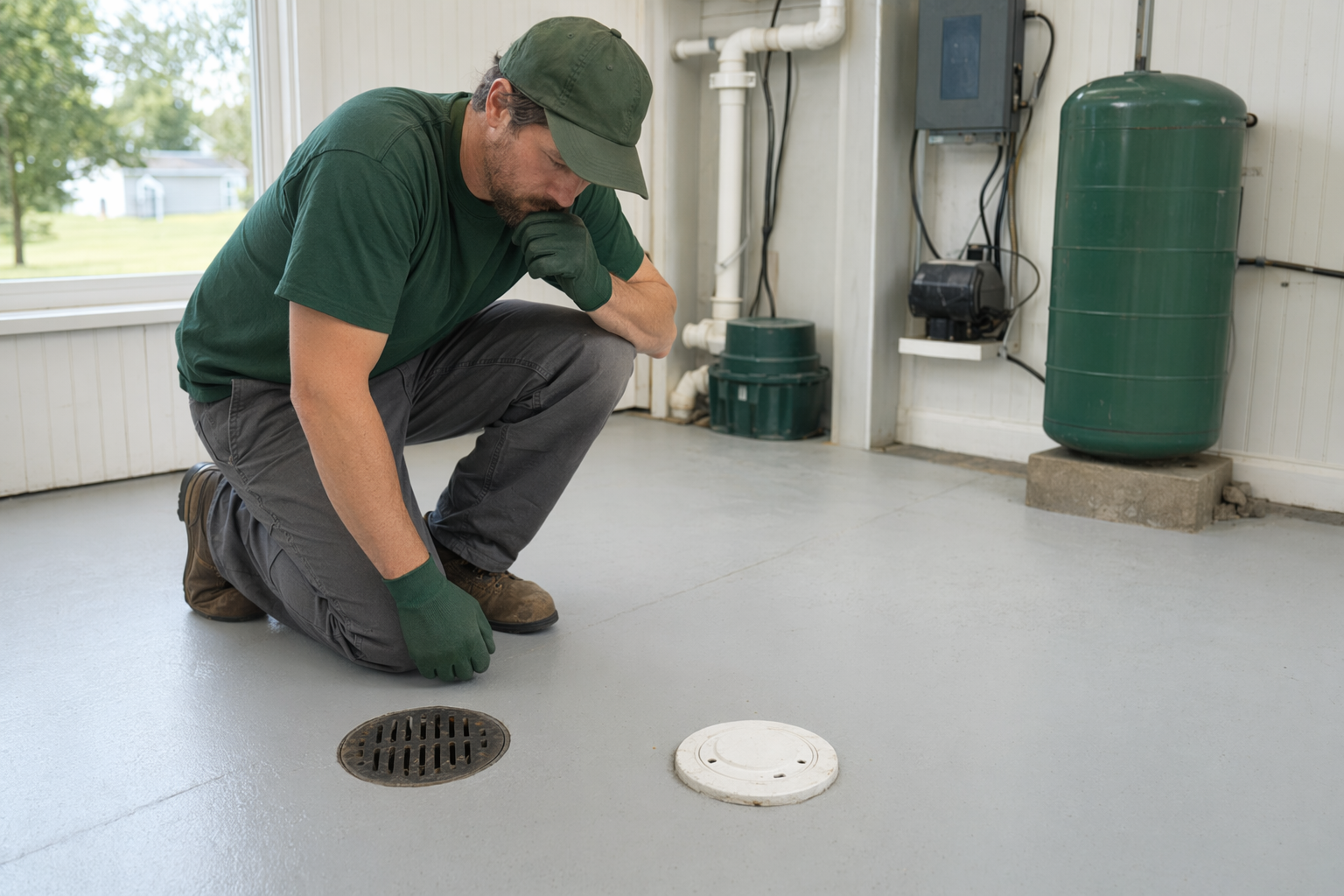
Septic Backing Up Into the House, What to Do
A septic backup inside the home usually means wastewater has nowhere to go. It may show up in a basement drain, shower, tub, or lowest toilet first. You might also notice gurgling, slow drains, or sewage odor before the backup.
This is not just a plumbing annoyance. Raw sewage can carry germs, and a failing septic system can affect the yard, groundwater, and nearby well water. Keep children and pets away from the area. Do not try to "push through" the problem by using more water.
If the backup is active now, treat it like urgent septic trouble. Our guide to emergency septic service can help you understand what usually happens next.

The short answer
Do these things first:
- Stop using all water in the house. No toilets, showers, laundry, or dishwasher.
- Keep everyone away from the spill area. Wear gloves and sturdy shoes if you must go near it.
- If you can do so safely, turn off power to any flooded area before going in.
- Call a licensed septic professional for diagnosis and service.
- If sewage is near a well, stream, ditch, or standing water, ask your local health department what rules apply in your area.
A backup can be caused by a full tank, a clog, a blocked sewer line, a saturated drain field, roots, or system damage. Pumping may help in some cases, but not all. The right next step depends on the real cause.
What you need to know
A septic system has two main parts, the tank and the drain field. The tank holds solids and scum. The drain field lets treated wastewater soak into the soil. If either part is blocked, overloaded, flooded, or damaged, sewage can back up into the home. For a simple overview, see how a septic system works.
A few important points:
- A backup does not automatically mean the whole system must be replaced.
- It also does not mean pumping alone will solve it.
- The same symptom can come from very different problems.
- A proper diagnosis matters before major work starts.
Common causes include:
- Full septic tank. Routine pumping was overdue.
- Clogged building sewer or outlet line. Wastewater cannot move freely.
- Drain field trouble. The soil may be saturated, compacted, or failing.
- Heavy water use. Lots of laundry, long showers, or guests can overload the system.
- Rain or flooding. Wet ground can slow or stop drainage.
- Roots or crushed pipes. Older systems are especially prone to this.
If you have warning signs like slow drains, odors, or wet spots in the yard, they often show up before an indoor backup. See quick septic answers or septic services if you are trying to sort out what kind of help you need.
Also, septic repairs and replacements often require permits. Installers may need specific licenses or certifications depending on your area. Always verify the contractor's license, the permit, and your local health-department rules yourself.
Steps to take
Here is the practical order most homeowners should follow:
1. Stop all water use immediately
Every gallon you send down a drain can make the backup worse.
2. Protect people and pets
Keep kids and animals out of the area. Avoid direct contact with sewage. Open windows if it is safe to do so for ventilation.
3. Do not DIY a failing septic system
Do not enter a septic tank. Do not open lids without the right training and tools. Septic gases and confined spaces are dangerous. Do not dig into the drain field or drive equipment over it.
4. Check for clues, from a safe distance
Look for wet, soggy ground, strong odor outdoors, or backups at the lowest fixtures. Tell the pro what you see, when it started, and whether there was recent heavy rain or unusually high water use.
5. Call for professional septic service
You may need pumping, line clearing, inspection, or drain field diagnosis. Ask what they plan to do first and why.
6. Get the price in writing before work starts
Ask for written scope, not just a verbal estimate. Septic costs vary a lot by access, location, soil, parts, and whether a permit is needed. Typical ranges are not quotes.
7. Ask what happens after the immediate fix
Even if pumping stops the indoor backup, you may still need follow-up inspection to find the underlying problem.
When speaking with a pro, useful questions are:
- Is this likely a tank issue, a line issue, or a drain field issue?
- Are you pumping, inspecting, or both?
- Do you recommend a camera scope or other testing?
- Will permits be needed for any repair or replacement?
- What should we avoid using until the system is cleared?
If you want help finding someone local, you can get matched for free. You compare options and choose who to contact.
Common mistakes
These mistakes can make a bad day worse:
- Keeping the water on. One more shower or load of laundry can spread sewage farther.
- Using chemical drain cleaners. They usually do not fix a septic backup and may create extra hazards.
- Assuming pumping solves everything. Sometimes it does. Sometimes the real problem is the pipe or drain field.
- Letting an unlicensed person start major septic work. Verify license status and permit needs first.
- Ignoring outdoor warning signs. A soggy yard or sewage smell can point to drain field trouble.
- Cleaning without proper protection. Raw sewage is a health risk.
- Accepting a vague price on the spot. Ask for a written quote and confirm what is included.
Be careful with quick promises. No one can honestly guarantee that a failing system can be saved, or predict pass or fail on an inspection, without proper evaluation.
Get matched with a pro
Leachstead is a free matching and information service. We are not a septic company, and we do not perform pumping, inspections, or repairs. We help homeowners understand the problem and connect with local septic professionals.
If sewage is backing up into your house, you can get matched with a local pro. If you are still comparing what kind of help you need, start with septic services or browse more quick septic answers.
Before you hire anyone:
- Ask for a written quote.
- Confirm whether the visit is for pumping, inspection, emergency service, or repair.
- Verify the license and any required permits yourself.
- Ask about cleanup limits, follow-up steps, and when the system is safe to use again.
You compare, ask questions, and choose what works for your home.
Common questions
Can I still use one toilet if only the basement drain backed up?
It is safest to stop using all water until a septic pro checks the system. Wastewater often shows up first at the lowest drain, but the underlying blockage or system problem can still affect the whole house.
Does a septic backup mean my drain field has failed?
Not always. A backup can come from a full tank, a blocked pipe, roots, flooding, or drain field trouble. The symptom alone is not enough to tell. A proper diagnosis is the best next step.
Should I call a plumber or a septic company first?
If you know you are on septic and sewage is backing up, a licensed septic professional is often the best first call because the problem may involve the tank, outlet line, or drain field, not just indoor plumbing. In some cases, you may also need a plumber to rule out an interior drain blockage.