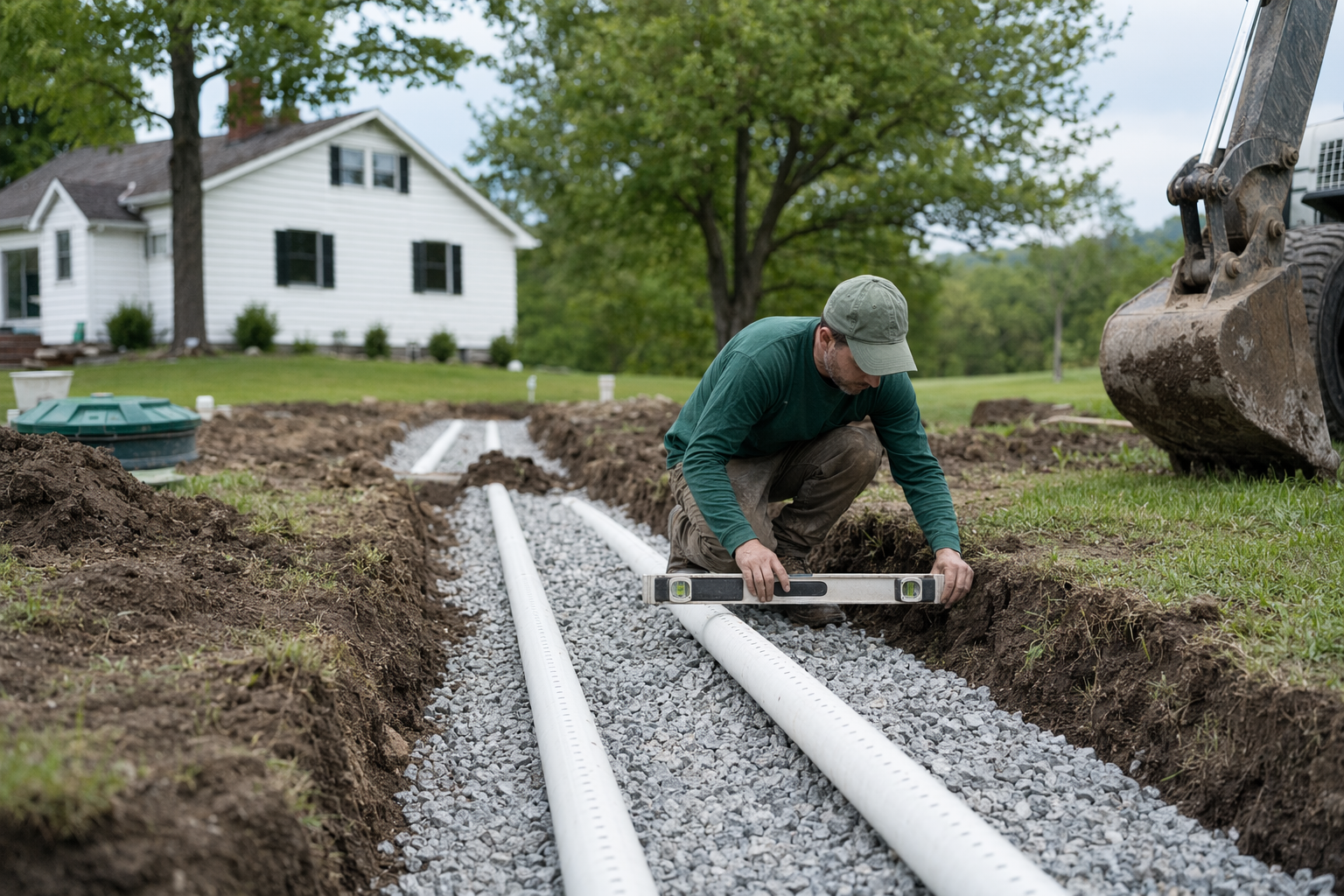
How much does drain field repair cost?
Typical drain field repair costs often fall somewhere between about $500 and $5,000 for limited repairs, but some jobs cost more. If the drain field is badly failed, replacement can run from several thousand dollars to well over $10,000 in many areas. Those are typical ranges, not quotes.
What moves the price most is the cause of the problem:
- A clogged line or damaged pipe can be a smaller repair.
- A crushed section from driving over the area can cost more.
- Root intrusion, standing water, or broken distribution parts may require digging and replacement work.
- A saturated or failed field may not be repairable in a simple way.
- Permit, soil, access, and local rules can add cost.
If you want a broader look at septic pricing, see the septic cost guide.

The short answer
There is no single drain field repair price because "drain field repair" can mean very different things.
A homeowner might be dealing with:
- a minor blockage,
- a broken pipe between the tank and field,
- a damaged distribution box, which is the part that sends wastewater into field lines,
- root damage,
- soil that is too wet to absorb wastewater,
- or a field that has reached the end of its life.
That is why one company may mention a modest repair range, while another says you may need major work. Both can be honest. They may just be talking about different problems.
If you have sewage backing up into the house, strong sewage odor, or a wet soggy area over the field, treat it as a health and groundwater risk. Keep children and pets away from wet or sewage-affected areas. Do not try to dig into or "fix" a failing drain field yourself. If the backup is active, emergency septic service may be the right first step.
What you need to know
A drain field, also called a leach field, is the part of the septic system that lets treated wastewater soak into the soil. When it stops working well, the symptoms often include slow drains, gurgling toilets, sewage smells, or wet ground in the yard.
A few important things can change both cost and the repair plan:
- The real cause. A full septic tank, blocked outlet filter, or plumbing issue can look like a drain field failure. That is one reason inspection matters.
- How long the problem has been going on. A fresh issue may be easier to address than long-term saturation.
- The age of the system. Older fields may have worn out materials or outdated layouts.
- The site. Tight access, tree roots, high groundwater, poor soil, slopes, and landscaping can all add labor.
- Local permitting. Septic work often requires permits and licensed or certified installers. Always verify the contractor's license, the permit, and your local health-department rules yourself.
It also helps to know that pumping the tank is not a cure for a failed drain field. Pumping may give temporary relief and may be needed as part of diagnosis, but it does not rebuild saturated soil or a collapsed line. If you are unsure whether to pump or inspect first, a septic pro can help sort that out, and septic inspection is often part of getting clear answers.
Be careful with quick promises. No one can honestly guarantee that a failing field can be saved without evaluating the system. Additives, miracle chemicals, or aggressive DIY digging can waste money and sometimes make the situation worse.
Steps to take
If you think the drain field may be the problem, here is a calm way to move forward:
- Reduce water use right away. Take shorter showers. Delay laundry. Do not run the dishwasher unless needed. This can reduce backup pressure for the moment.
- Watch for warning signs. Note wet spots, odors, slow drains, backups, or greener grass over the field. This helps when you talk to a pro. You can also review quick septic answers if you are sorting through symptoms.
- Keep people away from wet sewage areas. Raw sewage is a health hazard. Keep children and pets out of the area.
- Get the system evaluated by a qualified septic professional. Ask what they think the cause is, what testing or inspection they recommend, and whether the price covers diagnosis, repair, pumping, restoration of the yard, and permit fees.
- Ask for written quotes. Compare scope, not just price. A lower number may cover less work.
- Confirm permits and licensing before work starts. Septic repairs and field work are regulated in many places.
- Ask what happens if repair is not enough. You want to understand next-step costs before agreeing.
If you are seeing clear field symptoms, drain field repair is the service most homeowners ask about first.
Common mistakes
These mistakes can make a bad situation worse, or make the final bill bigger:
- Assuming it only needs pumping. Pumping can help in some situations, but it does not solve every drain field problem.
- Waiting too long. Continued use can push more wastewater into an already stressed field.
- Driving or parking over the drain field. This can crush pipes and compact soil.
- Letting kids or pets into wet areas. Sewage exposure is not safe.
- Trying a DIY excavation or chemical fix. A failed system is not a good do-it-yourself project.
- Accepting a verbal price only. Always get a written scope and confirm price before work starts.
- Not checking permits and credentials. Septic work usually needs proper licensing and local approval.
- Ignoring the bigger picture. Sometimes a field issue is linked to poor maintenance, leaks in the house, or years of overloading the system.
If a contractor says repair may not be the best long-term option, that does not always mean they are upselling. Sometimes replacement really is the safer path. You can learn more about that decision in repair vs replacement.
Get matched with a pro
Drain field problems are stressful, but you do not have to guess your way through them. Leachstead is a free matching and information service. We help homeowners connect with a trusted local septic pro, in your language, so you can compare options and choose what works for your home.
You can get matched with a trusted septic pro for help with diagnosis, pumping, inspection, drain field repair, or replacement planning. Ask for written quotes, confirm license and permit details yourself, and make sure you understand exactly what is included before work begins.
Common questions
Can a drain field be repaired instead of replaced?
Sometimes, yes. It depends on the cause and the condition of the system. A damaged pipe or distribution part may be repairable, while a badly saturated or worn-out field may need larger work or replacement. A septic professional needs to evaluate it first.
Why are drain field repair quotes so different?
Because companies may be pricing different scopes of work. One quote may cover diagnosis and a limited repair. Another may include excavation, replacement parts, pumping, permits, soil work, or yard restoration. Ask for a written breakdown so you can compare fairly.
Will pumping the septic tank fix a wet drain field?
Not always. Pumping may temporarily reduce the load on the system, and it can be part of the troubleshooting process, but it does not fix every drain field problem. If the soil is saturated or field components are damaged, more work may be needed.