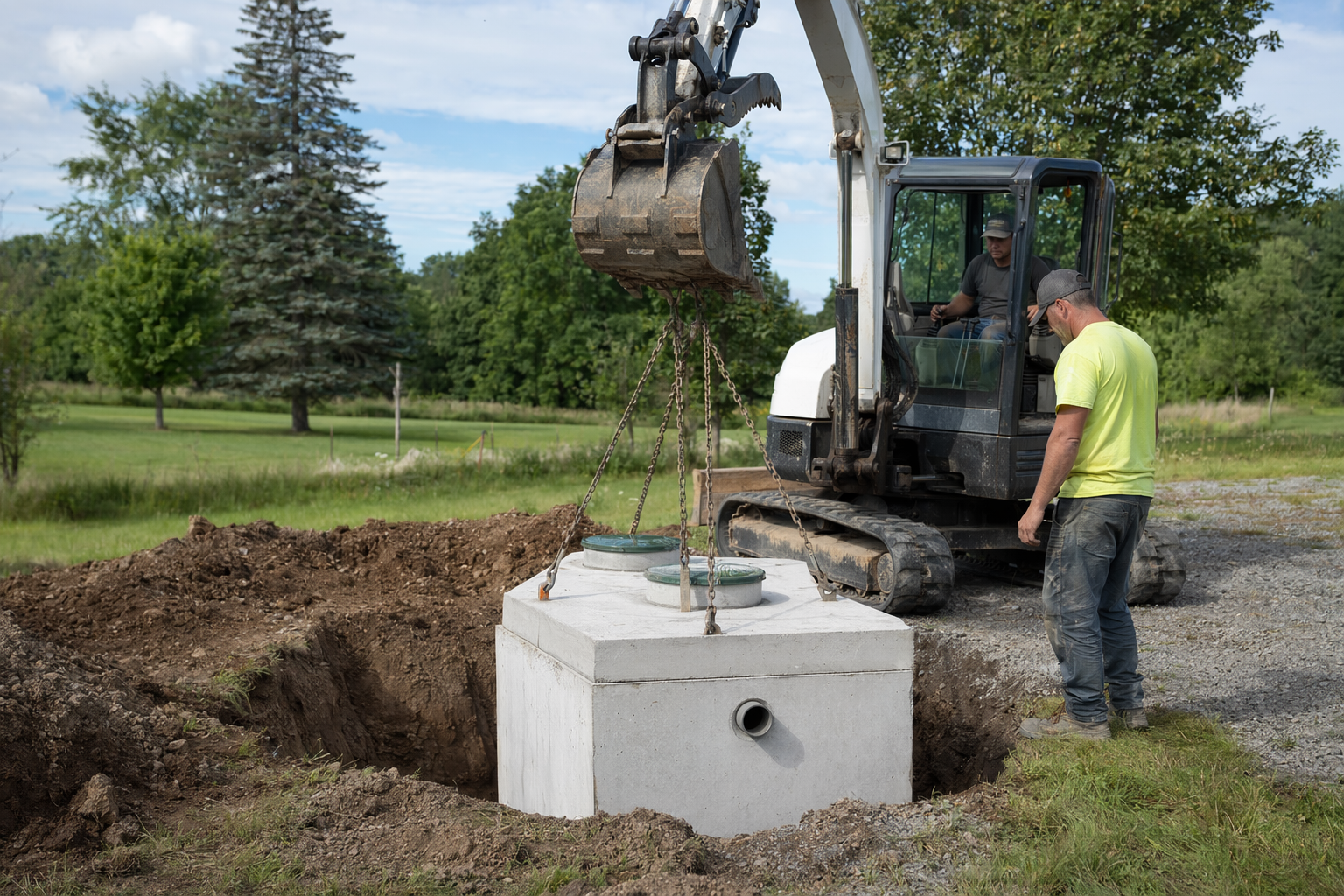
Septic Repair vs Replacement: Which Is Right?
Start with this: if the problem is small and specific, repair may be enough. If the system is worn out, repeatedly backing up, or the drain field is failing, replacement may be the better long-term move.
A repair might fix one part, like a broken baffle, damaged pipe, filter issue, or a small drain field problem. A replacement usually means a new tank, new drain field, or both.
The hard part is that the same symptom can point to very different problems. Slow drains could be a full tank, a clogged line, or a failing field. A wet, smelly yard could be a damaged pipe, or it could mean the soil is no longer treating wastewater properly. That is why a real inspection matters.
If you are seeing backups, sewage odors, gurgling, or soggy ground, keep children and pets away from wet areas and avoid DIY fixes on a suspected failure. Raw sewage can be a health risk and a groundwater risk. You can learn the common red flags in Septic guides for homeowners and compare service types on Septic services we help you find a pro for.

Option A explained, septic repair
Repair is usually the first thing homeowners hope for, and sometimes it is the right call.
A repair may make sense when:
- The issue is clearly limited to one part of the system.
- The tank and drain field are otherwise in decent shape.
- The system is not very old, or it has been maintained well.
- The problem is caused by damage, blockage, or overdue pumping, not overall system failure.
Examples of repair-type work can include:
- Replacing a damaged lid, tee, baffle, or effluent filter.
- Fixing a broken pipe between the house, tank, or field.
- Addressing root intrusion in a line.
- Repairing part of a drain field, depending on the cause and local rules.
- Pumping the tank as part of the diagnosis or to relieve a full tank.
Typical repair costs vary widely. Small repairs may be hundreds of dollars. Larger repairs can run into the low thousands. Drain field work can be much more. These are typical ranges, not quotes. A low price does not always mean a complete fix, and a higher price does not always mean replacement is needed.
One important point: pumping is maintenance, not a cure for a failed system. If the tank is full, pumping may help right away. But if wastewater has nowhere to go after the tank, the symptoms can come back fast. For that reason, many homeowners need more than a pump-out. Learn more about Septic tank pumping and cleaning — how often, what it costs, and how to find a pro and Drain field and leach field repair — failing, flooded, or saturated systems.
Option B explained, septic replacement
Replacement is the bigger job, but sometimes it is the safer and more practical choice.
Replacement may make sense when:
- The drain field has failed and cannot be repaired under local rules.
- The tank is collapsing, leaking badly, or too damaged to keep.
- The system is at the end of its useful life.
- You have recurring backups or sewage surfacing in the yard.
- Multiple major parts need work at the same time.
- Repairs would cost a lot, but still leave you with an old system.
Replacement may involve:
- A new tank.
- A new drain field or leach field.
- Changes to system size or design.
- Soil testing, site review, permits, and inspections.
Typical replacement costs are much higher than repair costs. In many areas, homeowners may see totals from several thousand dollars to much more, depending on the site, soil, system type, and permit requirements. These are typical ranges, not quotes.
It is also not always a simple swap. Some properties need a different system design because of lot size, soil conditions, groundwater, or distance from a well or water. Septic replacement usually requires permits and licensed or certified installers. Always verify the license, the permit, and your local health-department rules yourself. Read more about Septic system installation and replacement — new tanks, drain fields, and permits and Septic permits and regulations — health departments, inspections, and your responsibilities.
How to decide
Do not decide from the symptom alone. Decide from the diagnosis.
Here is a practical way to think about it:
1. Ask what exactly has failed.
Is it one component, or the whole system? Ask the pro to explain the problem in plain English.
2. Ask whether the drain field is still working.
This is often the biggest fork in the road. If the field is failing, replacement becomes more likely.
3. Ask how long the repair is expected to help.
Not a guarantee, just a reasonable expectation based on the condition of the system.
4. Compare the total picture, not just the first price.
A cheaper repair may cost less today, but not if you need another major service soon after.
5. Get written quotes.
Ask what is included, what is not included, whether pumping, permits, restoration, or inspections are extra, and confirm the price before work starts.
6. Ask about permits and local approval.
Septic work often needs permits. Do not assume the contractor will handle every rule automatically. Verify.
7. Get a second opinion if the recommendation feels rushed.
This is especially smart when one company jumps straight to full replacement without clearly showing why.
If you need help understanding warning signs before you call, see When a septic system fails — repair vs replacement and what it really costs and Septic inspection before buying, selling, or after a problem — what inspectors check.
Get matched with a pro
You do not have to guess, and you do not have to figure it out alone in technical language.
Leachstead is a free matching and information service. We are not a septic company, and we do not perform repairs or replacements. We help homeowners get matched with a trusted local septic pro for pumping, inspection, repair, or replacement quotes.
If you are dealing with slow drains, odors, backups, or a wet yard, you can Get matched with a trusted septic pro. You compare your options, ask questions, and choose what feels right for your home.
If sewage is backing up into the house right now, limit water use and seek urgent help through Emergency septic service — sewage backup, overflow, and what to do right now.
Common questions
Can a septic system be repaired instead of replaced?
Sometimes, yes. If the problem is limited to one part, like a pipe, filter, baffle, or another repairable component, repair may be enough. If the drain field or multiple major parts are failing, replacement may be more likely.
How do I know if my drain field is failing?
Common signs include sewage odors, soggy ground, standing water near the field, slow drains, and repeated backups. But those signs can have more than one cause. A licensed septic professional should inspect the system and explain what they found.
Is it worth repairing an old septic system?
It depends on the age, condition, and what has actually failed. A targeted repair can make sense on an older system if the rest is still functioning. But if you are facing repeated problems or expensive major repairs, replacement may be the better long-term value. Get written quotes and compare the full scope before you decide.