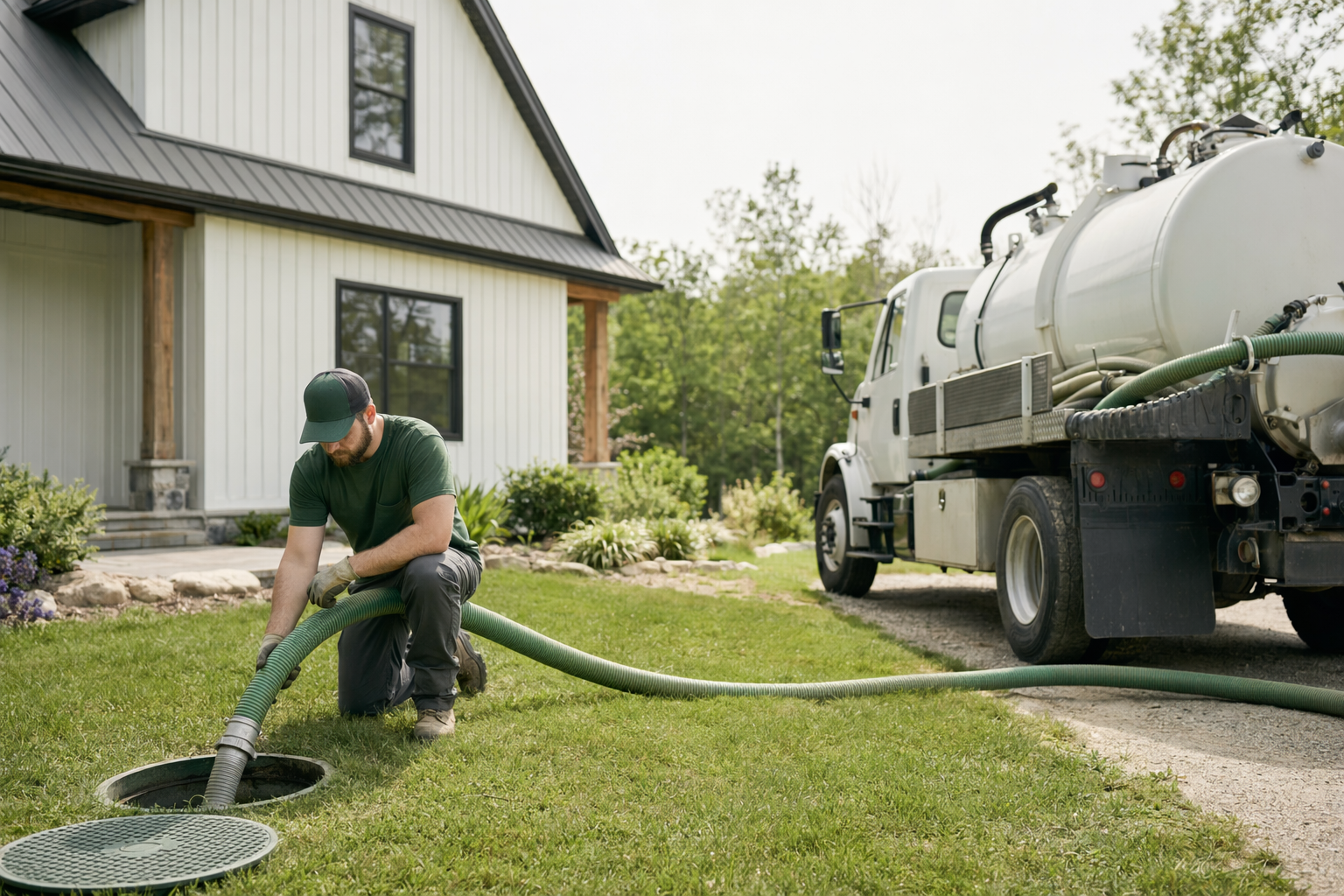
How long does a septic system last?
A common rule of thumb is about 20 to 40 years, sometimes longer. But that number is only a rough guide, not a promise.
A septic system has parts that wear differently:
- The tank may last several decades, especially concrete or well-made plastic tanks.
- The drain field, also called the leach field, may last 20 years or more, but it often fails first if it gets overloaded, flooded, compacted, or damaged.
- Pumps, floats, filters, and other mechanical parts usually have a shorter life.
So the real answer is this: a septic system lasts as long as its materials, soil conditions, water use, maintenance, and installation quality allow. Two homes with the same age system can be in very different shape.
If you are seeing slow drains, odors, sewage backup, or a soggy yard, do not assume age is the only reason. Some problems are maintenance-related. Others point to a failing drain field. You can learn more in When a septic system fails.

The short answer
If you want the quick version, here it is:
- Typical overall lifespan: 20 to 40 years or more
- Tank lifespan: often several decades, depending on material and condition
- Drain field lifespan: often 15 to 30 years or more, sometimes longer with good soil and good care
- Mechanical parts: often much less, sometimes around 5 to 15 years depending on use and maintenance
What shortens septic life:
- Skipping pump-outs
- Flushing wipes, grease, or other harmful waste
- Too much water in a short time
- Driving or building over the tank or drain field
- Tree root intrusion
- Poor original design or installation
- Flooding, high groundwater, or hard soil conditions
What helps a system last longer:
- Regular pumping
- Water-saving habits
- Protecting the drain field area
- Fixing leaks promptly
- Keeping service records
- Getting problems checked early instead of waiting
If you are not sure what kind of help you need, services can show the most common septic jobs homeowners ask for.
What you need to know
Age matters, but condition matters more.
A 30-year-old system may still work fine if it was designed well, installed correctly, pumped on time, and treated gently. A 10-year-old system can have major trouble if the home sends too much water into it, if roots get in, or if vehicles have compacted the drain field.
Here are the main things that affect lifespan:
1. Tank material
Concrete, plastic, and fiberglass tanks can all last a long time. Cracks, corrosion, bad installation, or shifting soil can shorten life.
2. Drain field condition
The drain field is where wastewater is treated in the soil. If solids reach it because the tank was not pumped, or if the soil stays waterlogged, the field can clog and stop working well.
3. Household size and water use
More people usually means more water and more solids. Running many loads of laundry in one day or having plumbing leaks can overload the system.
4. Maintenance history
Regular pumping helps keep solids from moving out of the tank and into the drain field. If you need a refresher, septic tank pumping and cleaning explains the basics.
5. Installation quality
A system that was too small, poorly sited, or improperly installed may have a shorter life from the start. Septic work often requires permits and licensed or certified installers. Always verify the license, the permit, and your local health-department rules yourself.
6. Warning signs
Watch for slow drains, toilet gurgling, sewage smells, wet spots in the yard, or backup into the house. These signs do not tell you the exact remaining life, but they do mean the system needs attention.
One important point: pumping a tank can help with a full tank, but it does not automatically fix a failed drain field. If the field is failing, repair or replacement may be discussed after inspection. The outcome depends on the system, the site, and local rules.
Steps to take
If you want to know whether your septic system may have years left, start with practical steps:
- Find out the system age if you can. Look at home sale papers, permits, inspection reports, or old service invoices.
- Check the service history. If you do not know when it was last pumped or inspected, that is useful information by itself.
- Watch for symptoms. Slow drains, odors, backup, and soggy ground matter more than the calendar.
- Use water carefully. Spread out laundry, fix leaks, and avoid sending extra water into the system.
- Protect the drain field. Keep cars, heavy equipment, sheds, and deep-rooted trees away.
- Get a professional opinion when needed. A pumping visit, inspection, or repair visit may be the right next step depending on symptoms.
Call for urgent help if sewage is backing up into the home or surfacing outdoors. Keep children and pets away from raw sewage or a wet failing area. This can be a health and groundwater hazard. Do not try to repair a failed system yourself.
If you are dealing with a current problem and want to compare local options, you can get matched with a trusted septic pro. Leachstead is a free matching and information service. You compare and choose.
Common mistakes
Homeowners often make these mistakes when thinking about septic lifespan:
- Assuming pumping resets the clock. Pumping is important maintenance, not a full renewal.
- Waiting too long because "it still sort of works." Early action can be simpler than waiting for a backup.
- Believing additives will make an old system new again. Some products are marketed that way, but they do not guarantee a fix.
- Ignoring small warning signs. Gurgling, odors, and occasional wet spots are easy to brush off until the problem grows.
- Parking or building over the system. This can damage components and compact the soil.
- Taking verbal price promises as final. Septic costs vary a lot by site, access, soil, permits, and what is actually wrong.
If a contractor says you need major work, it is reasonable to ask questions and get written quotes. Typical ranges are not quotes. Confirm the scope, the price, whether permits are needed, and who is responsible for them before work starts.
For a deeper look at repair versus replacement, read When a septic system fails.
Get matched with a pro
If you are worried your system is old, acting up, or near the end of its life, you do not have to guess alone.
Leachstead helps homeowners understand the problem and get matched with a local septic professional for pumping, inspection, repair, or replacement discussions. The service is free, and we help in multiple languages.
You can start here:
- Get matched
- Browse all septic services
- Read more quick answers in Help
A local pro can evaluate condition, explain likely next steps, and tell you what permits or local approvals may apply. Always verify the pro's license, the permit, and your local health-department requirements yourself.
Common questions
Can a septic system last 50 years?
Some can, especially if the tank and site conditions are good and the system has been maintained well. But 50 years is not something to count on. Older systems should be watched closely for warning signs and evaluated when problems show up.
What part of a septic system usually fails first?
Often it is the drain field, not the tank. The field can clog, stay too wet, or get damaged by roots, traffic, or years of solids reaching it. Mechanical parts like pumps and floats can also fail sooner than the tank itself.
How do I know if my old septic system needs replacement?
You usually cannot tell from age alone. Repeated backups, sewage odors, soggy ground over the drain field, or recurring problems after pumping can point to bigger trouble. A licensed septic professional may recommend inspection and then discuss repair or replacement options based on the site and local rules.