Why You Should Never Build or Drive Over a Drain Field
A drain field, also called a leach field, is not just empty yard space. It is the part of the septic system that sends treated wastewater into the soil. That soil has to stay loose, open, and able to absorb water.
When you drive or build over it, two big problems happen:
- The soil gets compacted. Compacted soil is squeezed tight. Water cannot move through it as easily.
- The pipes can be damaged. Heavy vehicles, sheds, patios, retaining walls, and even repeated parking can crack or crush parts of the system.
A drain field also needs oxygen in the soil to help natural treatment happen. Covering it with concrete, asphalt, structures, or other heavy materials can interfere with that process.
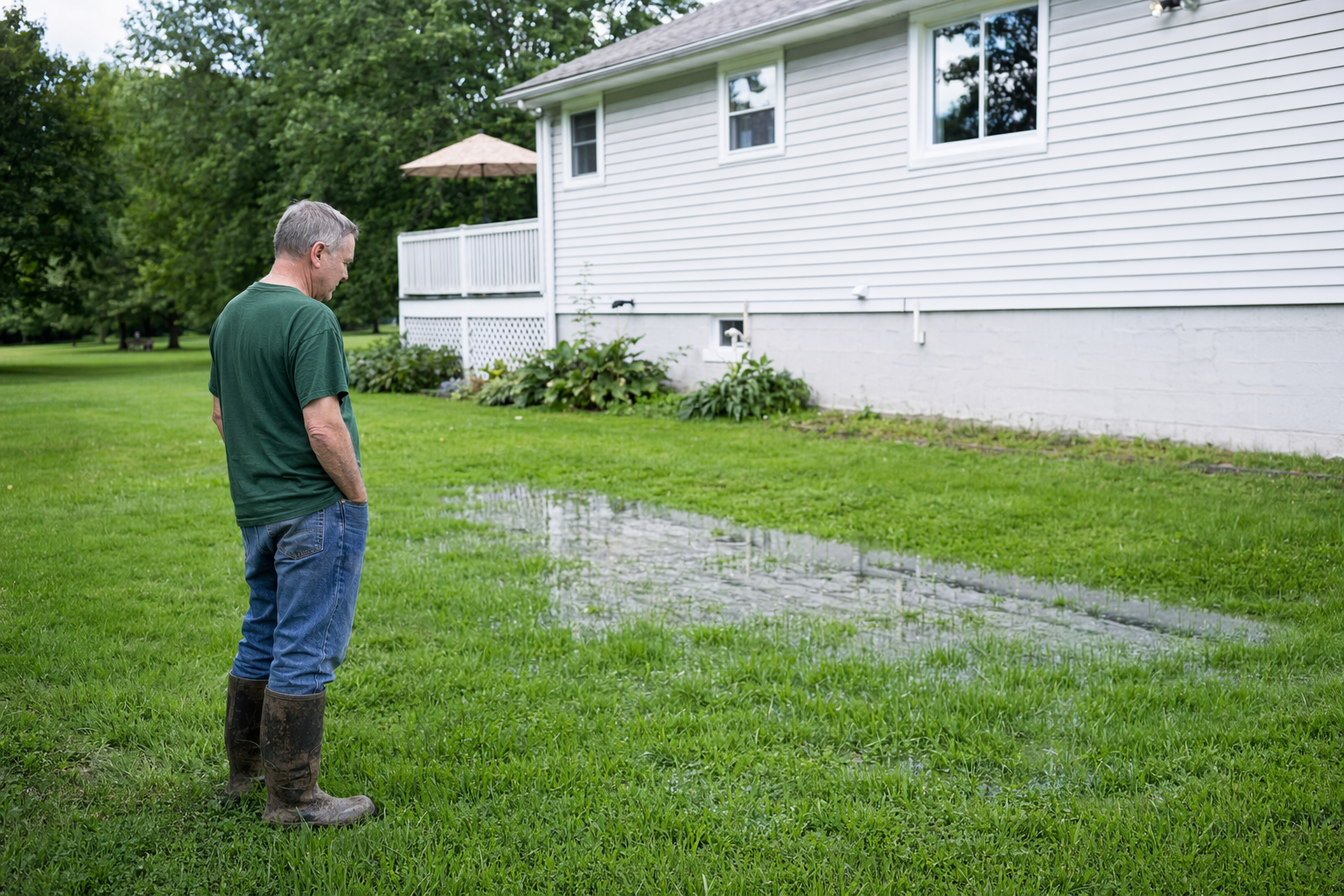
The result can be slow drains, sewage odors, backups, or wet spots in the yard. If you are already seeing those signs, visit Quick septic answers or learn the common red flags in Septic warning signs — slow drains, odors, gurgling, and wet spots in the yard.

The short answer
Do not drive, park, store heavy equipment, pour concrete, install a shed, build a deck, or place other heavy loads over a drain field.
Light foot traffic and normal lawn care are usually different from heavy weight, but every property is different. If you are not sure where your field is, or whether an old project may have harmed it, have a licensed septic professional inspect the area.
If the system is already acting up, this is not a good DIY situation. Raw sewage and failing drain fields can expose your family, pets, and groundwater to harmful contamination. Keep children and pets away from wet or smelly areas, and use a licensed pro for diagnosis and repair.
What you need to know
Here are the main reasons this matters:
- Cars and trucks are heavy. Even one delivery truck or moving truck crossing the field can be too much, especially if the soil is already wet.
- Repeated pressure is often worse than one mistake. Parking the same vehicle in the same spot, week after week, can gradually compact the area.
- Buildings create long-term stress. Sheds, garages, room additions, pools, patios, and paved driveways add weight and can block access for future service.
- Drain fields need room to breathe and drain. Impermeable surfaces, meaning surfaces that do not let water pass through, can trap moisture and stop normal soil treatment.
- Damage may not show up right away. A field can seem fine for months, then start showing wet spots, odors, or indoor backup later.
It is also important to know that "building over it" does not only mean a full garage or house addition. Homeowners sometimes run into trouble with:
- shipping containers
- RV parking pads
- hot tubs
- gravel parking areas used by heavy vehicles
- stacked firewood or pallets stored for a long time
- large landscaping boulders
- retaining walls
If you think a field may already be failing, read Drain field and leach field repair — failing, flooded, or saturated systems. That page explains common repair situations and what pros usually look at first.
Also remember, septic work often requires permits and licensed or certified installers. Rules vary by county and state. Before any repair, replacement, or construction near the system, verify the permit, the contractor license, and your local health department requirements yourself.
Steps to take
If you suspect someone drove over your drain field, or you are planning a yard project, take these steps:
- Find the drain field location. Check your property records, septic diagram, inspection report, or old permit paperwork if you have them.
- Stop traffic now. Keep cars, trucks, trailers, and equipment off the area until a pro says it is safe.
- Look for warning signs. Watch for soggy ground, sewage smell, gurgling drains, or backup in the house.
- Delay construction plans. Do not pour a slab, add a structure, or regrade the area until you know exactly where the septic components are.
- Get a professional evaluation. A licensed septic contractor can inspect the condition of the tank, lines, and field, and tell you what options may exist.
- Get written quotes. If repair work is needed, compare written estimates and confirm the price before work starts. Typical ranges are not quotes.
If sewage is backing up into the home or surfacing in the yard, treat it as urgent. Limit water use and look at Emergency septic service — sewage backup, overflow, and what to do right now.
If you want help finding someone local, Get matched with a trusted septic pro. Leachstead is a free matching and information service. You compare options and choose who to contact.
Common mistakes
These are some of the most common drain field mistakes homeowners make:
- Using the area as extra parking. It may seem harmless if the grass looks normal, but the damage can build slowly.
- Assuming a light structure is safe. Even a small shed can create problems, especially if it blocks maintenance access or sits on a pad.
- Paving over the field. Asphalt, concrete, and similar surfaces are a bad idea over septic components.
- Planting the wrong things. Large trees and thirsty shrubs near the field can lead to root problems. If that may be part of your issue, see Quick septic answers.
- Ignoring early symptoms. Slow drains, odors, and wet patches are often the system asking for attention.
- Trying to "fix" a failing field with a shortcut. Additives, random digging, or home remedies are not a safe answer for a damaged drain field.
- Starting repair work without checking permits. Septic repairs and replacements often involve local approvals.
A good rule is simple: keep the drain field clear, light, and easy to access. Grass is usually a safer cover than structures or heavy use.
Get matched with a pro
If you are worried that driving, parking, or building over your drain field caused a problem, it is smart to get it checked before the damage gets worse.
Leachstead is not a septic company. We do not perform repairs or give official inspection results. We are a free service that helps homeowners understand the issue and get matched with local septic pros for pumping, inspection, and repair.
You can also explore Septic services we help you find a pro for if you are not sure what kind of help you need.
When you talk to a contractor, ask:
- Are you licensed for septic work here?
- Will a permit be needed for this job?
- What testing or inspection do you recommend first?
- Can you provide a written quote before work starts?
- Are there steps I should take right now to protect the area?
If you are ready, Get matched with a trusted septic pro. It is free, and you decide who to contact.
Common questions
Can I put a shed or small deck over my drain field if it is not very heavy?
It is generally not a good idea. Even smaller structures can add weight, block airflow, interfere with drainage, and make future septic service harder. The safe approach is to keep structures off the drain field and confirm local rules before building.
What if someone already drove a truck over my drain field once?
One pass does not always mean obvious failure, but it can still cause damage, especially in wet soil. Stop any more traffic, watch for wet spots, odors, slow drains, or backup, and have a licensed septic pro inspect the system if you notice symptoms or are unsure.
Is it okay to walk on a drain field or mow the grass there?
Normal foot traffic and routine lawn mowing are often different from heavy vehicles or construction, but conditions vary by system and soil. Avoid heavy equipment, do not park there, and ask a licensed septic professional if you are unsure what your specific system can handle.