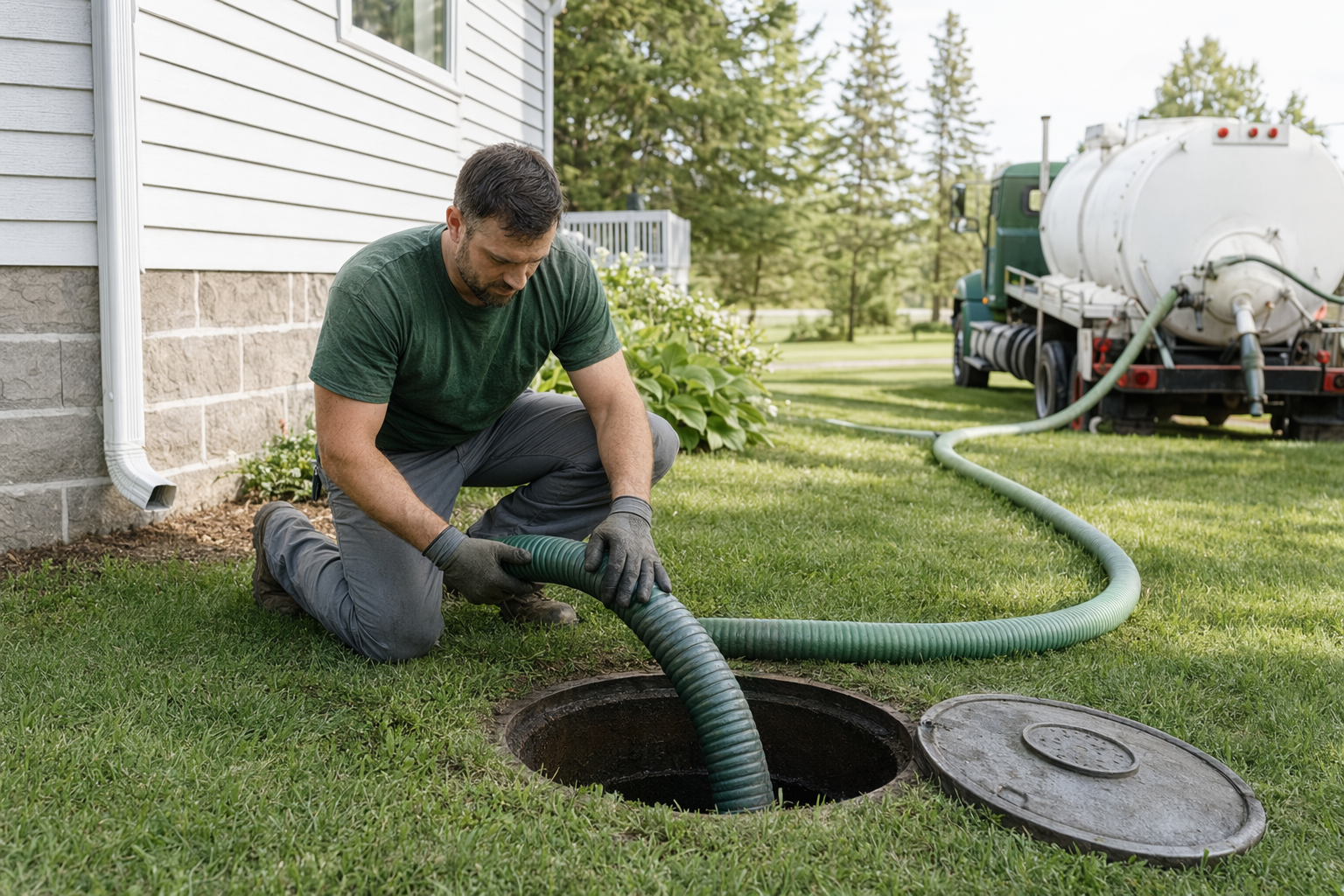
Can I Pump My Own Septic Tank?
Usually, no. Most homeowners should not pump their own septic tank.
A septic tank is not like a trash bin or a clogged sink trap. It holds raw sewage, dangerous gases, and layers of waste that need to be removed the right way. Pumping it out is only part of the job. The waste then has to be transported and disposed of legally, and the tank should be checked for signs of damage while it is open.
Even if you are handy, septic pumping is not a good DIY project. If you are dealing with a full tank, odors, slow drains, or a backup, it is safer to call a septic pumping company or other qualified local septic pro. If this is an urgent backup, see emergency septic service.

The short answer
Homeowners can sometimes open an access lid or uncover the tank, but actually pumping the tank themselves is usually not practical or safe.
Why?
- Septic waste carries bacteria and other germs.
- Septic tanks can contain toxic and low-oxygen gases.
- The tank needs special vacuum equipment, not a small shop pump.
- Waste must be hauled and disposed of at an approved site.
- Local rules may require permits, licensed haulers, or both.
In plain terms, this is usually a job for a licensed septic pumping pro, not a weekend rental. If you want to understand what the service includes, read septic tank pumping and cleaning.
What you need to know
There are three big issues: safety, equipment, and rules.
Safety
Raw sewage is a health hazard. A septic tank can also release gases that can make a person pass out quickly. Never climb into a septic tank. Never lean into an open tank. Keep children and pets away from the area. If there is sewage on the ground or backing up into the house, avoid contact and clean-up without proper protection.
Equipment
A proper pump-out usually uses a large vacuum truck. The crew removes liquid, sludge, and scum. They may also stir or backflush material so the tank is cleaned more fully. A small pump from a rental store is usually not enough, and using the wrong method can leave heavy solids behind.
Rules and disposal
The waste from a septic tank cannot just be dumped on your property, into a ditch, or anywhere convenient. Disposal is regulated. Septic work also often involves permits and licensed or certified contractors, depending on where you live and what work is being done. Always verify the license, the permit if needed, and your local health department rules yourself. For a general overview, see septic permits and regulations.
Pumping is not the same as fixing
A pump-out may help if the tank is due for service. But if you have a failing drain field, broken baffles, root intrusion, or other damage, pumping alone may not solve the problem. Slow drains, sewage smells, and soggy ground can point to bigger issues. You can read more in septic warning signs.
Steps to take
If you think your tank needs pumping, here is a safer way to handle it:
- Watch for warning signs. Slow drains, toilet gurgling, sewage smell, wet spots, or backup into the house all matter.
- Reduce water use right away. Take shorter showers, delay laundry, and avoid running the dishwasher until the problem is checked.
- Keep people and pets away from sewage or soggy areas. This is important for health and safety.
- Locate your tank if you can do so safely. If you know where the lid or riser is, that can help the pro. If not, do not dig blindly near utility lines.
- Call a local septic pumping or inspection pro. Ask what is included, whether they inspect the tank while pumping, and whether extra digging or lid access costs more.
- Get written pricing before work starts. Septic pumping has typical ranges, not one fixed price for every home. Confirm the total before the job begins.
- Keep records. Save the receipt, service date, tank size if known, and any notes about the condition of the system.
If you are not sure whether you need pumping, inspection, or repair, Leachstead can help you compare your options and get matched with a trusted septic pro.
Common mistakes
These are the mistakes that cause trouble most often:
- Trying to pump with the wrong equipment. It usually will not remove solids properly.
- Opening the tank and getting too close. Septic gases can be dangerous fast.
- Assuming pumping will fix every problem. If the drain field is failing, the problem may come back quickly.
- Skipping disposal rules. Septic waste has to go to an approved place.
- Ignoring signs after a pump-out. If odors, wet spots, or backups continue, ask about inspection or drain field evaluation.
- Shopping on price alone. A very low price may not include digging, filter cleaning, extra hose length, or a basic condition check.
A few more points help homeowners avoid surprises:
- Ask whether the quote includes locating the tank.
- Ask whether both compartments will be pumped, if your tank has two.
- Ask whether the crew will note cracked lids, damaged baffles, or heavy root issues.
- Ask whether permits or local reporting rules apply in your area.
If you want a fuller picture of costs, service steps, and maintenance, start at our septic services page or browse more quick answers in Help.
Get matched with a pro
If you are dealing with a full tank, slow drains, sewage odors, or a backup, the safest next step is to talk to a local septic pro.
Leachstead is a free matching and information service. We are not a septic company, and we do not do the work ourselves. We help homeowners understand what may be going on and connect with local pros for pumping, inspection, or repair.
You compare options, ask questions, and choose. Always confirm the pro's license, any required permit, the scope of work, and the total price before work starts. If you are ready, get matched.
Common questions
Can I at least open the septic lid myself?
Sometimes homeowners uncover or open an access lid, but it still carries risk. Lids can be heavy or damaged, and open tanks are dangerous. If you do not know the condition of the lid or the tank location, it is safer to let a septic pro handle it.
Is pumping my own septic tank illegal?
It can be, depending on local rules and how the waste is handled. The biggest issue is usually hauling and disposal, not just opening the tank. Septic rules vary by area, so verify your local health department requirements, permits, and contractor licensing rules yourself.
Will pumping fix slow drains and sewage smells?
Sometimes, but not always. If the tank is overdue for pumping, service may help. But slow drains and odors can also mean a clog, damaged tank parts, or a drain field problem. If symptoms continue after pumping, ask about an inspection or further diagnosis.