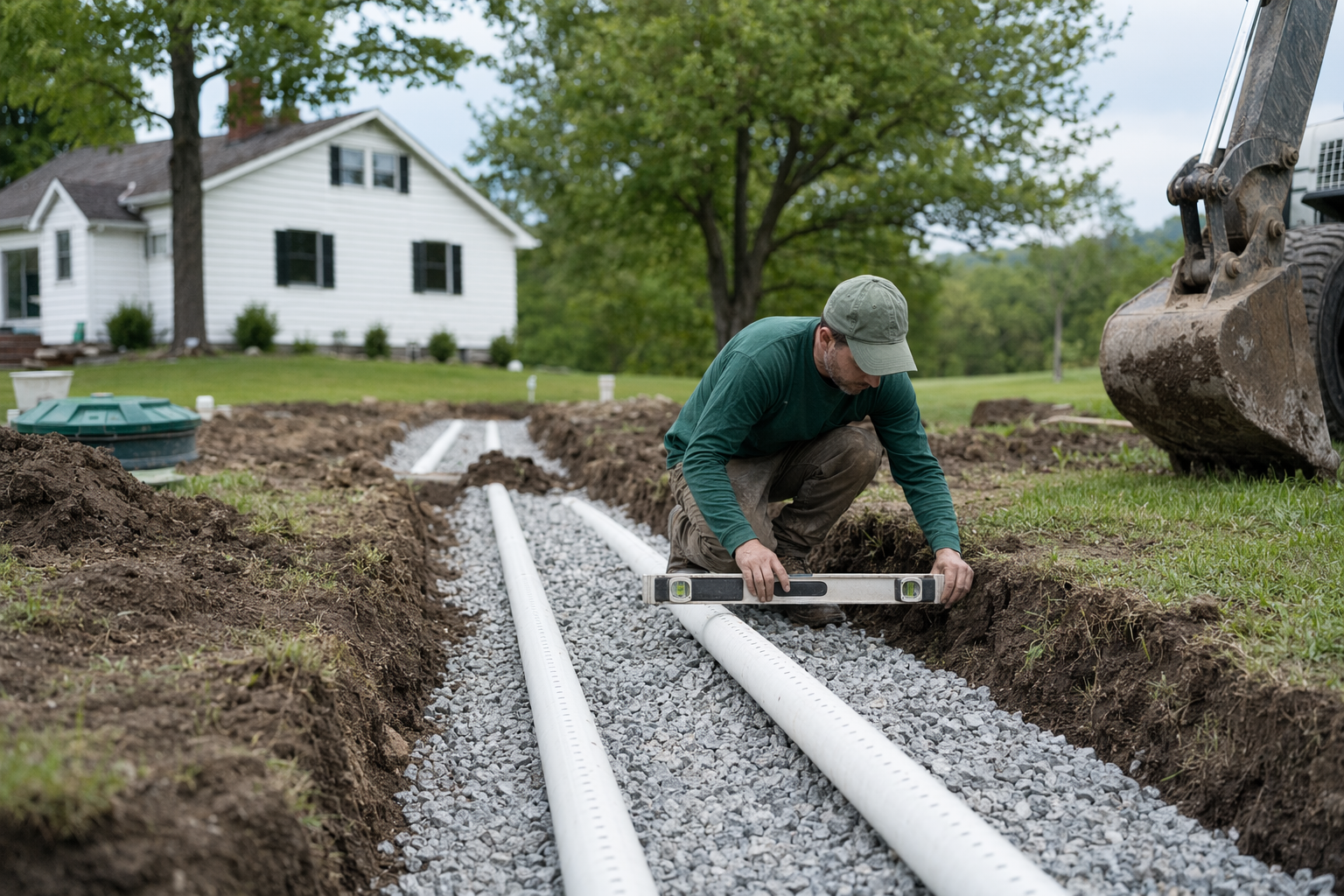
Can a failing drain field be saved?
Maybe. That is the honest answer.
A drain field, also called a leach field, can sometimes be brought back into working condition if the cause is limited and found early. Examples include an overloaded system, a tank that has not been pumped on time, minor root intrusion, or surface water flowing into the field.
But if the soil is badly clogged, the field is saturated for a long time, sewage is reaching the surface, or the system was installed wrong or is too old, a simple fix may not be enough. In those cases, repair may be possible, or replacement may be the safer path.
The key point is this. A soggy yard, sewage smell, slow drains, or backup into the house does not automatically mean "you need a whole new system." It also does not mean a failing field can always be saved. You need a licensed septic pro to inspect the system and tell you what condition it is in.
If you are seeing warning signs now, review Septic warning signs and avoid guessing.

The short answer
A failing drain field can sometimes be saved, but not always.
What matters most is:
- how long the problem has been going on
- what caused it
- whether sewage is backing up or surfacing
- the age and design of the system
- soil and groundwater conditions on your property
- whether the tank, baffles, lines, and field are all still structurally sound
A pro may recommend pumping, clearing a blockage, redirecting runoff, limited repair, or resting part of the field if the system design allows it. In more serious cases, they may recommend replacing part or all of the drain field, or even the full septic system.
Typical ranges are not quotes, but costs can vary from a smaller service call or repair to a much larger replacement project. If you want a broader overview, see drain field repair and get written quotes before any work starts.
What you need to know
First, a drain field is where wastewater leaves the septic tank and filters through soil. If that soil becomes clogged with solids, grease, or biological buildup, or if the area stays too wet, the field cannot absorb water the way it should.
Common reasons a drain field starts failing include:
- the septic tank was not pumped often enough, so solids moved into the field
- too much water use in a short time, which overloads the system
- vehicles, sheds, patios, or heavy equipment compacted the soil
- tree roots damaged pipes
- roof runoff or yard drainage keeps the field too wet
- the system is simply old or undersized for the home
A few important safety points:
- Raw sewage is a health hazard.
- A failing drain field can affect groundwater and nearby wells.
- Keep children and pets away from wet or contaminated areas.
- Do not dig into, open, or try to rebuild a failing field yourself.
Also, be careful with quick-fix promises. Additives, miracle treatments, and aggressive DIY methods do not reliably solve a failing drain field. In some cases they waste time and money, or make diagnosis harder. If you are curious about that topic, read Are Septic Tank Additives and Treatments Worth It?.
Septic repair and replacement work often needs permits. Rules vary by county and state. Always verify the contractor's license, the permit, and your local health-department requirements yourself.
Steps to take
If you think your drain field is failing, take these steps.
1. Reduce water use right away.
Take shorter showers. Delay laundry. Do not run the dishwasher unless necessary. The goal is to reduce stress on the system until it is evaluated.
2. Keep people and animals away from wet or smelly areas.
If sewage is surfacing or the yard is soggy over the field, treat that area as contaminated.
3. Do not drive, park, dig, or build over the area.
Compacted soil makes a bad problem worse.
4. If sewage is backing up into the house, treat it as urgent.
Use as little water as possible and consider emergency septic service.
5. Schedule a professional evaluation.
A licensed septic contractor or qualified inspector may check the tank level, baffles, lines, signs of blockage, and the condition of the field. In some cases they may recommend pumping first, in others inspection first.
6. Ask for the cause, not just the fix.
A good written estimate should explain what is wrong, what work is proposed, and what is not included.
7. Get more than one written quote for major work.
If someone says the field is unsalvageable, it is reasonable to ask for a second opinion, especially before a full replacement.
8. Keep records.
Save inspection notes, pumping receipts, repair estimates, permits, and site drawings if available. They help now and later if you sell the home.
If you want help finding someone local, you can get matched for free. You compare options and choose who to contact.
Common mistakes
Homeowners often make these mistakes when they are stressed and trying to act fast:
- Waiting too long. Small problems can turn into bigger ones.
- Assuming a pump-out alone will fix everything. Pumping may help diagnose or relieve symptoms, but it does not cure every drain field problem.
- Using lots of additives or drain chemicals. These can be unhelpful or harmful.
- Ignoring roof runoff, sump discharge, or yard drainage near the field.
- Letting anyone start major work without a clear written scope and price.
- Hiring without checking license, insurance, permit needs, and local rules.
- Driving over the field or placing heavy objects on it.
Another common mistake is thinking a "saved" drain field is guaranteed to last for years. No one honest can promise that without knowing the exact cause, soil conditions, design, and history of the system. Septic work is very site-specific.
For a bigger picture of repair versus replacement, browse more homeowner resources in Quick septic answers or ask a pro what options fit your property.
Get matched with a pro
Leachstead is a free matching and information service. We are not a septic company, and we do not diagnose systems, approve repairs, or set prices.
If you are dealing with slow drains, odors, a wet area over the field, or backup into the home, we can help you get matched with a trusted local septic pro. You can compare written quotes, ask questions, and decide what feels right for your home.
When you talk to a contractor, ask:
- What is the likely cause of the failure?
- Is there a repair option before full replacement?
- What testing or inspection supports that recommendation?
- What permits may be needed?
- What is the typical timeline?
- What are the total expected costs, and what could add to them?
If you are ready, get matched with a trusted septic pro. If you are still figuring out what kind of help you need, see services.
Common questions
Can pumping the septic tank save a failing drain field?
Sometimes pumping is part of the first response, but it does not automatically fix the drain field. It may relieve short-term symptoms or help a pro inspect the system, but a clogged, damaged, or saturated field may still need repair or replacement.
How do I know if my drain field is beyond repair?
You usually cannot know for sure without a professional inspection. Warning signs like sewage at the surface, repeated backups, strong odors, and a constantly soggy yard can point to a serious problem, but the cause and severity still need to be checked on site.
Should I get a second opinion before replacing a drain field?
Yes, for major septic work, a second written opinion is often wise. Ask each contractor to explain the cause of the problem, the repair options, the permit needs, and the full expected scope of work. Then compare, and verify local rules yourself.