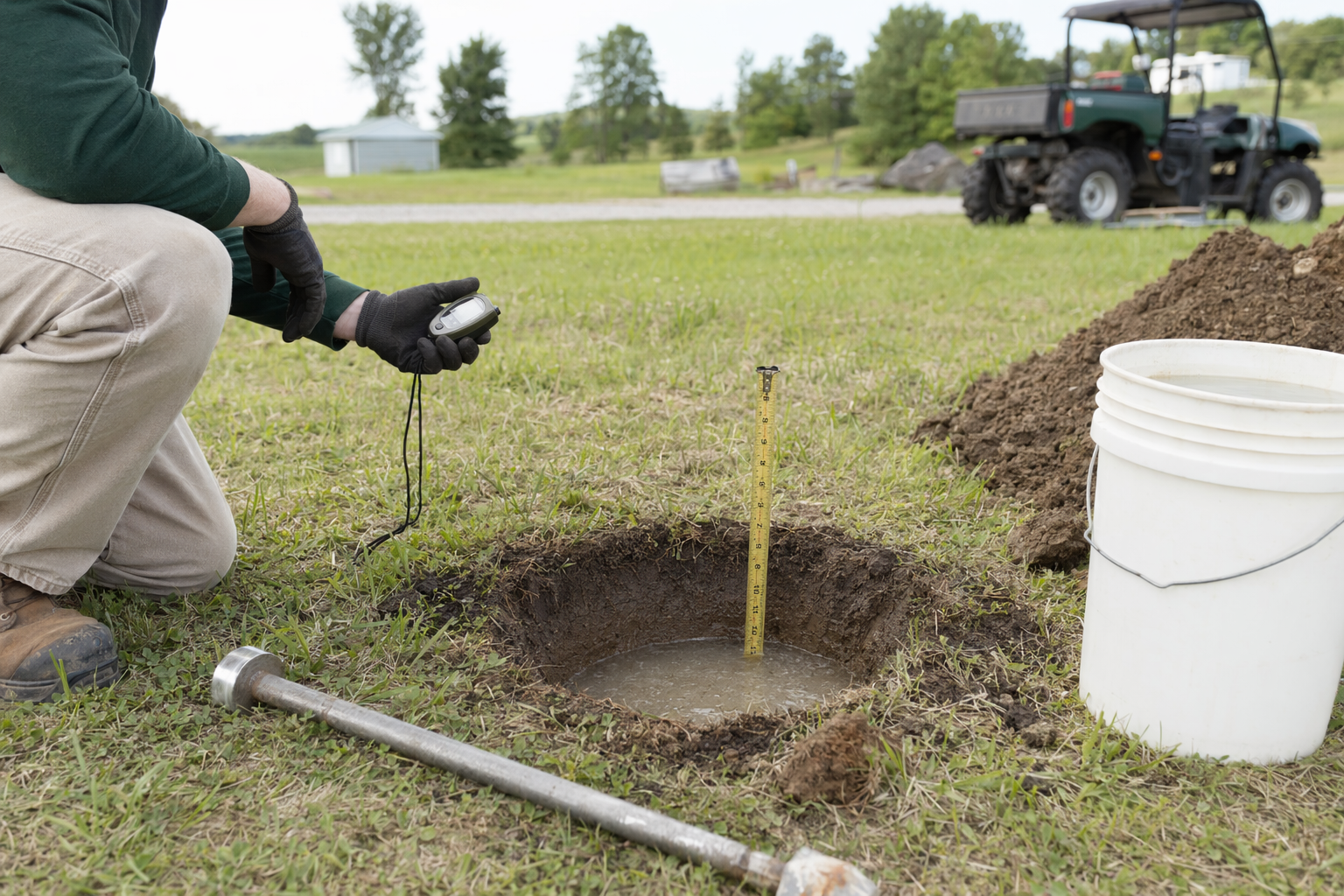
What Is a Perc Test and Why Does It Matter?
A perc test, short for percolation test, is a soil test. It helps show whether the ground can absorb water at a rate that may work for a septic drain field.
That matters because a septic system does not end at the tank. After wastewater leaves the tank, it usually goes into the drain field, where the soil helps filter and disperse it. If the soil drains too slowly, wastewater can back up, surface in the yard, or overload the area. If it drains too quickly, the soil may not treat wastewater the way local rules require.
In plain terms, a perc test helps answer a basic question: can this property likely support a septic system here, and if so, what kind?
A perc test is often part of planning for a new system or replacement. It is also common when buying land, adding a bedroom, or changing how a property will be used. Rules vary by county and state, so always check your local health department requirements and permit process yourself. If you want more background on the full process, see Septic system installation and replacement — new tanks, drain fields, and permits.

The short answer
A perc test measures how quickly water moves into the soil.
It matters because septic systems depend on the right soil conditions. The result can affect:
- whether a septic system may be allowed on the property
- where the system can go
- what type of system may be needed
- the size and design of the drain field
- whether extra engineering or other testing is required
A perc test is not a DIY guess. It is usually part of a permitted process handled under local rules, often with a licensed septic designer, installer, soil evaluator, or engineer, depending on where you live.
It is also not the same as pumping or inspecting an existing tank. If you are having current septic trouble, you may need Septic services we help you find a pro for or a Septic inspection before buying, selling, or after a problem — what inspectors check.
What you need to know
A few things confuse homeowners, so here are the basics.
First, a perc test looks at soil absorption, not just whether a tank exists. A property can have an old septic system and still fail to meet current standards for a replacement in the same spot.
Second, a perc test result is not just pass or fail in a simple way. In many places, the result is one piece of the decision. Officials or septic professionals may also look at:
- soil type and layers
- seasonal high groundwater
- depth to rock or hardpan
- slope of the land
- setbacks from wells, streams, ponds, and property lines
- lot size and planned bedroom count
Third, timing matters. Some areas only allow soil testing in certain seasons, especially when groundwater levels are easier to judge. If you wait until the middle of a project, you can hit delays.
Fourth, different soil conditions can lead to different system types. A conventional drain field may work on one lot, while another lot may need an alternative design. You can read more in How a septic system works — tank, drain field, and the bacteria that do the job and Quick septic answers.
Finally, a perc test does not tell you every future cost by itself. Costs depend on the site, design, permits, excavation, local labor, and the kind of system approved. Typical ranges are not quotes, and the final price should always be confirmed in writing before work starts.
Steps to take
If you think you need a perc test, take it step by step.
1. Find out why you need it.
Common reasons are new construction, replacing a failed system, adding bedrooms, or buying vacant land.
2. Check local requirements.
Call or visit your county or local health department website. Ask what testing is required, who can perform it, and what permits or applications come first.
3. Gather property records.
Look for old septic permits, plot plans, as-built drawings, prior inspections, and repair records. These can save time.
4. Ask who must be licensed or certified.
Requirements vary. Verify the license, the permit, and the local rules yourself before hiring anyone.
5. Get written quotes.
Ask what the quote includes, such as site visit, holes, soil evaluation, application fees, and any follow-up design work. Confirm the price before work starts.
6. Keep expectations realistic.
A test may show the lot needs a different layout or a different system type. Sometimes more testing is needed.
7. Stay safe if the current system is failing.
If you have sewage backup, strong sewage odors, or a wet drain field, keep children and pets away from the area. Raw sewage can be a health hazard. Do not dig into or try to fix a failed system yourself.
If you are dealing with an active problem while figuring this out, Get matched with a trusted septic pro and compare local options.
Common mistakes
These are common homeowner mistakes around perc tests.
- Waiting too long. Some people learn they need a perc test after plans are already underway.
- Assuming an old system means automatic approval. Older systems may not match current codes or site conditions.
- Using the word "passed" too loosely. The final decision may depend on several site factors and local review, not one number alone.
- Comparing verbal prices only. Always ask for written quotes and ask what is included.
- Skipping permit questions. Septic work usually involves permits. Do not assume the contractor handles every step unless it is clearly stated.
- Trying DIY digging or testing. Septic siting and failed systems are not safe DIY projects.
- Ignoring water and well setbacks. Safe distances matter for groundwater protection and local compliance.
If you are seeing warning signs right now, like slow drains, sewage odors, or soggy ground, that is a separate issue from soil testing. Those symptoms may point to a current septic problem that should be evaluated promptly by a qualified pro.
Get matched with a pro
Need help figuring out the next step? Leachstead is a free matching and information service. We can help you connect with a local septic professional for inspection, pumping, repair, or installation-related needs.
You compare options, ask questions, and choose who to hire. We do not perform septic work, and we cannot promise a result, approval, or price. But we can help you start with the right kind of local pro.
Use Get matched with a trusted septic pro if you need help now. If you are still learning, browse Septic services we help you find a pro for to see the kinds of help available.
Common questions
Do I need a perc test if the property already has a septic system?
Sometimes. An existing system does not always mean the site will meet current requirements for a new or replacement system. If you are rebuilding, expanding, adding bedrooms, or replacing a failed system, your local agency may require new testing.
How long is a perc test good for?
It depends on local rules. Some areas treat results as valid for a certain number of years, while others may require updated testing if conditions, plans, or regulations change. Check with your local health department.
Can a perc test tell me the exact cost of a new septic system?
No. It can help show what kind of system may be possible, but total cost depends on many things, including design, permits, excavation, site conditions, and local labor. Ask for written quotes and confirm what is included.